Hackaday Podcast Episode 290: IPhone’s Electric Glue, Winamp’s Source Code, And Sonya’s Beautiful Instructions

This week, Hackaday Editors Elliot Williams and Tom Nardi start things off by acknowledging an incredible milestone: 20 years of Hackaday! Well, probably. When a website gets to be this old, it’s a little hard to nail down when exactly things kicked off, but it seems like September of 2004 is about right. They’ll also go over the latest updates for the fast-approaching Hackaday Supercon, and announce the winner of another tough What’s That Sound challenge.

From there, the conversation makes its way from the fascinating electrically-activated adhesive holding the latest iPhone together to pulsed-power lasers and a high flying autonomous glider designed and built by a teenager. You’ll also hear about 3D printing on acrylic, home biohacking, and the Tiny Tool Kit Manifesto. Stick around to the end to hear the duo discuss the fine art of good documentation, and an incredible bodge job from Arya Voronova.

Check out the links below if you want to follow along, and as always, tell us what you think about this episode in the comments!

Download in DRM-free MP3 and savor at your leisure.
Continue reading “Hackaday Podcast Episode 290: IPhone’s Electric Glue, Winamp’s Source Code, And Sonya’s Beautiful Instructions”

An Ode To The SAO

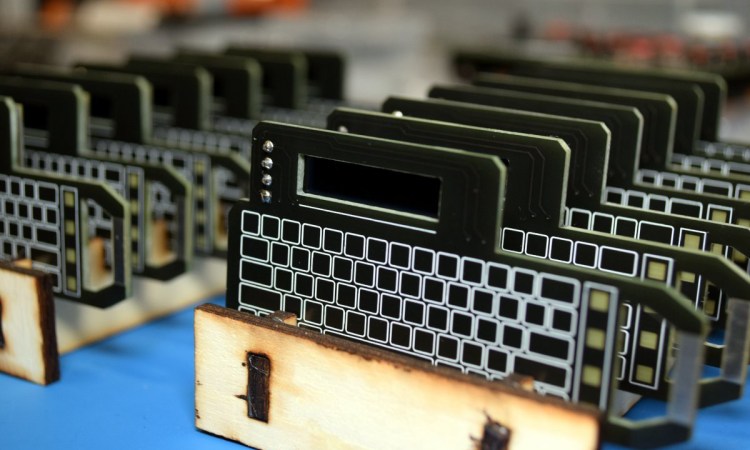
There are a lot of fantastic things about Hackaday Supercon, but for me personally, the highlight is always seeing the dizzying array of electronic bits and bobs that folks bring with them. If you’ve never had the chance to join us in Pasadena, it’s a bit like a hardware show-and-tell, where half the people you meet are eager to pull some homemade gadget out of their bag for an impromptu demonstration. But what’s really cool is that they’ve often made enough of said device that they can hand them out to anyone who’s interested. Put simply, it’s very easy to leave Supercon with a whole lot more stuff than when you came in with.

Most people would look at this as a benefit of attending, which of course it is. But in a way, the experience bummed me out for the first couple of years. Sure, I got to take home a literal sack of incredible hardware created by members of our community, and I’ve cherished each piece. But I never had anything to give them in return, and that didn’t quite sit right with me.

So last year I decided to be a bit more proactive and make my own Simple Add-On (SAO) in time for Supercon 2023. With a stack of these in my bag, I’d have a personalized piece of hardware to hand out that attendees could plug right into their badge and enjoy. From previous years I also knew there was something of an underground SAO market at Supercon, and that I’d find plenty of people who would be happy to swap one for their own add-ons for mine.

To say that designing, building, and distributing my first SAO was a rewarding experience would be something of an understatement. It made such an impression on me that it ended up helping to guide our brainstorming sessions for what would become the 2024 Supercon badge and the ongoing SAO Contest. Put simply, making an SAO and swapping it with other attendees adds an exciting new element to a hacker con, and you should absolutely do it.

So while you’ve still got time to get PCBs ordered, let’s take a look at some of the unique aspects of creating your own Simple Add-On.

Continue reading “An Ode To The SAO”

ESP32 Powers Custom Darkroom Timer

Developing your own film is an unabashedly analog process, which is one of the reasons people still gravitate towards it. After spending all day pushing buttons and looking at digital displays, spending some quiet time in the dark with pieces of paper and chemicals can be a way to decompress. But that doesn’t mean there isn’t room for a bit of modern digital convenience.

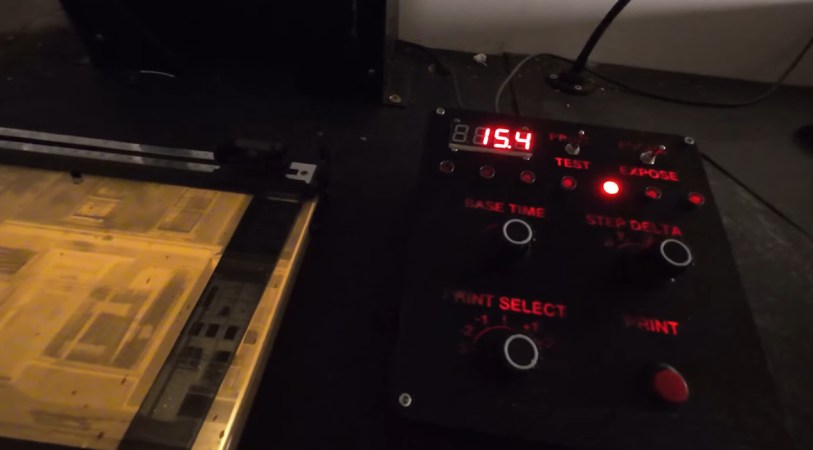
Specifically, [John Jones] wanted a timer that offered more features than his old school analog model, so he decided to build one himself. He took the long away around to make sure the end result would be a tool he could rely on, which meant getting a custom PCB made, 3D printing a case to fit in with his existing workspace, and designing a control panel that he could operate in the dark.

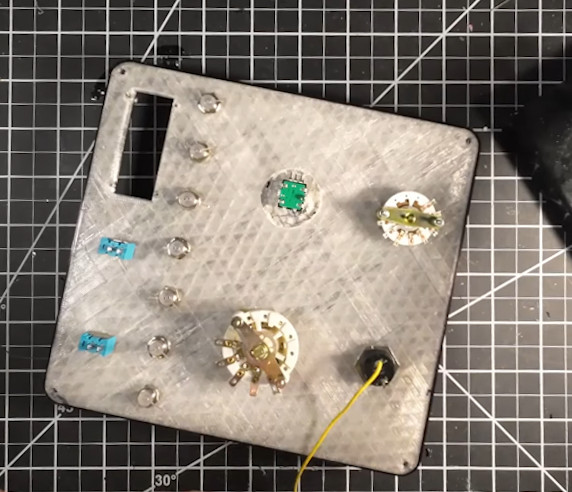
The PCB plays host to an ESP32 development board and an I/O expander that connects up to the array of LEDs, switches, and buttons on the front panel. The bottom-half of of the 3D printed enclosure is pretty simple, but the control panel is quite a piece of work.

Borrowing a trick from the flight sim community, [John] switched over to a clear filament after laying down the first few layers of the panel. This essentially created an integrated light diffuser, and with the addition of a few red LEDs, he had very slick backlit labels on his panel with relatively minimal effort.

We’ve covered custom darkroom tools in the past, from this relatively simple enlarger to an automated system that will develop the film for you.

Continue reading “ESP32 Powers Custom Darkroom Timer”

StratoSoar Glider Flies Itself From High Altitude

As the technology available to the average hacker and maker gets better and cheaper each year, projects which at one time might have only been within the reach of government agencies are inching closer to our grasp. Take for example the impressive work [Charlie Nicholson] has put into his StratoSoar series of autonomous gliders.

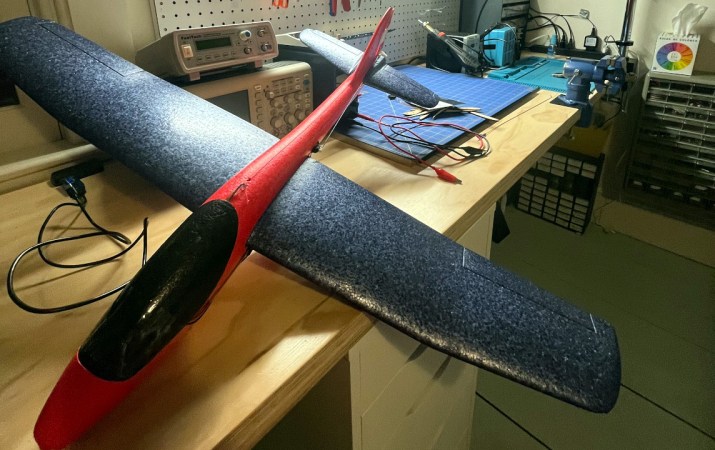
Dropped from several thousand feet by a high-altitude balloon, the glider’s avionics are designed to either guide it along a series of waypoints or head directly towards a specific target. Once at the given coordinates it can initiate different landing programs, such as spiraling down to the ground or releasing an onboard parachute. It’s an ambitious combination of custom hardware and software, made all the more impressive by the fact that it’s been put together by somebody who’s not yet old enough to have a driver’s license.

[Charlie] originally experimented with developing his own airframe using 3D printed components, but at least for now, found that a commercial off-the-shelf foam glider was a more practical option. All that’s required is to hollow out some areas to mount the servos, battery, and the avionics. This takes the form of a custom PCB that contains a ATSAMD21G18 microcontroller, an ICM-20948 inertial measurement unit (IMU), connections for GPS and LoRa modules, as well as several onboard sensors and some flash storage to hold collected data.

The goal of this open source project is to make these sort of unmanned aerial vehicles (UAVs) cheaper and more accessible for hobbyists and researchers. Eventually [Charlie] hopes to offer kits which will allow individuals to build and operate their own StratoSoar, making it even easier to get started. He’s currently working on the next iteration of the project that he’s calling StratoSoar MK3, but it hasn’t had a flight test yet.

We’ve seen various attempts to launch autonomous gliders from balloons in the past, but none from anyone as young as [Charlie]. We’re eager to see the StratoSoar project develop, and wish him luck in future test flights.

Continue reading “StratoSoar Glider Flies Itself From High Altitude”

Brass Propeller Gets Impressive Hand Trimming

Whether you’re a landlubber or an old salt, you’ve got to appreciate the effort that [The Aussie boat guy] puts into cutting an old brass propeller down into a far smaller and sleeker specimen. Especially since he does the entire thing with hand tools, a couple different calipers, and that most valuable of natural resources: experience.

The whole process was made somewhat easier by the fact that [The Aussie boat guy] had a model to work from — his friend had a small propeller that was already known to perform well, it was just a matter of cutting the larger prop down to match its dimensions. Using what appears to be pieces of leather (presumably for its flexibility), a template was made to accurately map out the front face of the blade.

As Bob Ross would say — “Here comes your bravery test”

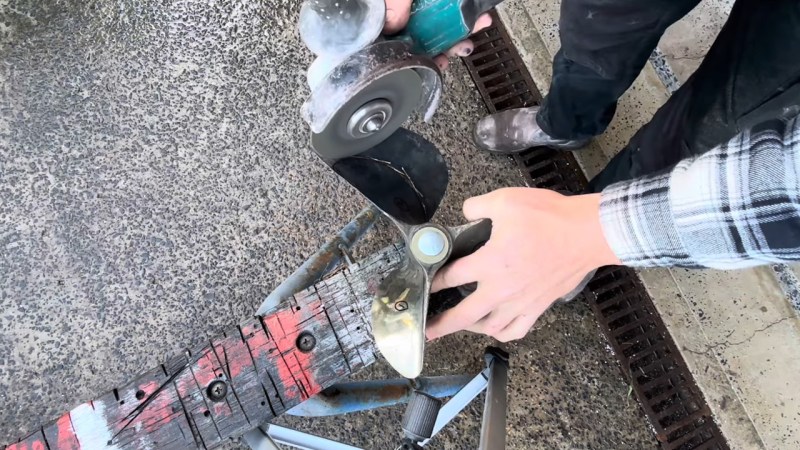
By measuring out from the hub of the prop with his calipers, [The Aussie boat guy] was able to make sure the template was properly positioned before scribing its shape into the larger prop. An angle grinder was used to cut the shape out of each blade, followed by a smoothing off with a flap wheel.

But there was still a problem — the blades were the right shape, but they were far too thick. So he took the angle grinder to the back of each one to start removing material, using another set of calipers to occasionally spot-check them to make sure they were thinning out at roughly the same rate.

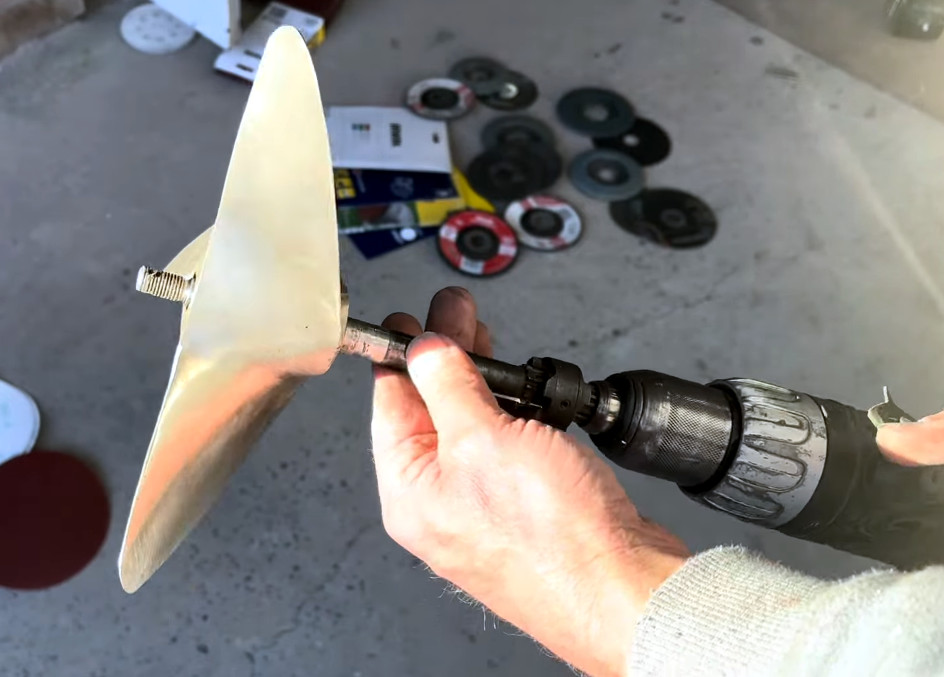
This thinning out process continued until the prop was brought into balance. How do you check that, you might be wondering? Well, if you’re a madman like [The Aussie boat guy], you chuck the thing into a power drill and spin er’ up to see how badly it shakes. But this only gives you a rough idea, so he has to move over to a somewhat more scientific apparatus that uses a set of parallel bars to help determine which blade is heavier than its peers.

Continue reading “Brass Propeller Gets Impressive Hand Trimming”

Meet The Winners Of The 2024 Tiny Games Contest

Over the years, we’ve figured out some pretty sure-fire ways to get hackers and makers motivated for contests. One of the best ways is to put arbitrary limits on different aspects of the project, such as how large it can be or how much power it can consume. Don’t believe us? Then just take a look at the entries of this year’s Tiny Games Contest.

Nearly 80 projects made it across the finish line this time, and our panel of judges have spent the last week or so going over each one to try and narrow it down to a handful of winners. We’ll start things off with the top three projects, each of which will be awarded a $150 gift certificate from our friends at DigiKey.

First: Sub-Surface Simon

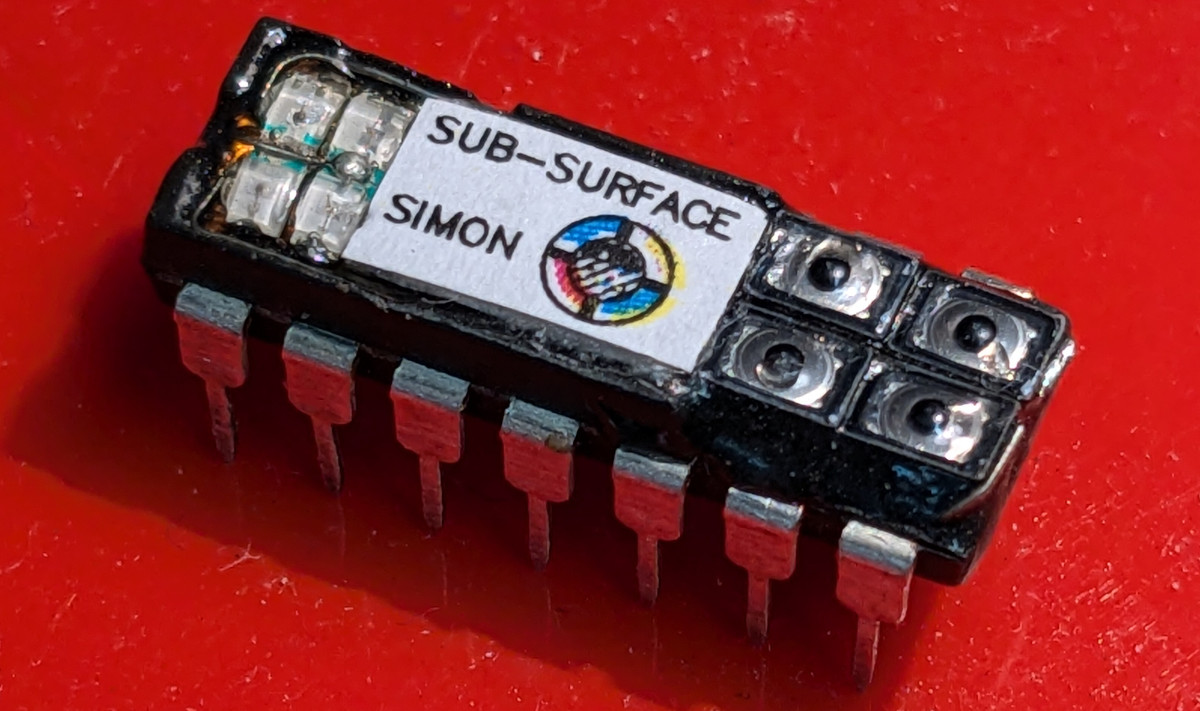
While this contest saw a lot of excellent entries, we don’t think anyone is going to be surprised to see this one take the top spot. Earning an exceptionally rare perfect ten score from each of our judges, Sub-Surface Simon from [alnwlsn] grabbed onto the theme of this contest and ran like hell with it. Continue reading “Meet The Winners Of The 2024 Tiny Games Contest”

Bringing The Horror Of Seaman Into The Real World

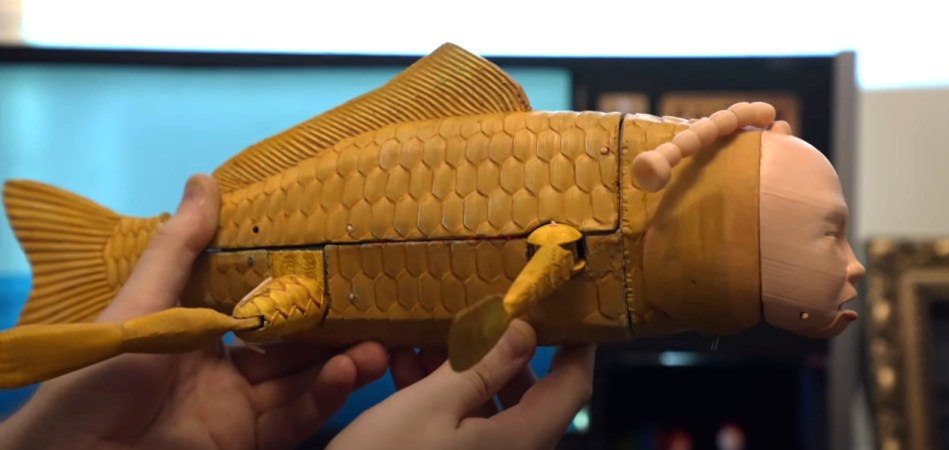
A little under 25 years ago, a particularly bizarre game was released for Sega’s Dreamcast. In actually, calling it a “game” might be something of a stretch. It was more of a pet simulator, where you need to feed and care for a virtual animal as it grows. Except rather than something like a dog or a rabbit, your pet is a talking fish with a human face that doesn’t seem to like you very much. Oh, and Leonard Nimoy is there too for some reason.

Most people in the world don’t even know this game ever existed, and frankly, their lives are all the better for it. But for those who lovingly cared for (or intentionally killed) one of these rude creatures back in the early 2000s, it’s an experience that sticks with you. Which we assume is why [Robert Prest] decided to build this incredibly faithful physical recreation of Seaman

Continue reading “Bringing The Horror Of Seaman Into The Real World”