The Eyes Have It: Stare Down Your Lighting

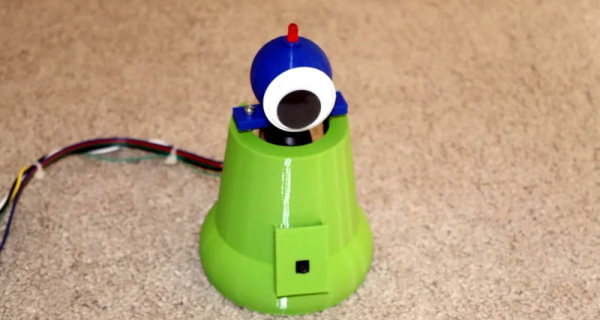
You know how you can feel when someone is looking at you? Thanks to a person detector, [Michael Rigsby’s] little robotic light switch also knows when you are looking at it. As you can see in the video below, when it notices you are looking at it, it lights up an LED. If you continue to gaze at it, it will turn to stare back at you. Keep staring it down and it will toggle the state of a remote control light switch.

This all works because of the person sensor module by Useful Sensors. The little module has a camera and face detection built into it. It doesn’t draw much power at 150 milliwatts. It can sense faces, including where they are and how many people are looking.

Continue reading “The Eyes Have It: Stare Down Your Lighting”

Your Phone Is A 200X Microscope — Sort Of

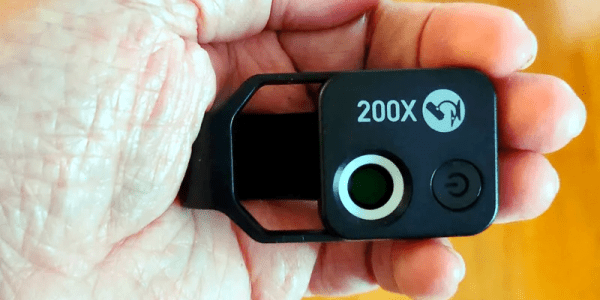
[A. Cemal Ekin] over on PetaPixel reviewed the Apexel 200X LED Microscope Lens. The relatively inexpensive accessory promises to transform your cell phone camera into a microscope. Of course, lenses that strap over your phone’s camera lens aren’t exactly a new idea, but this one looks a little more substantial than the usual piece of plastic in a spring-loaded clip. Does it work? You should read [Cemal’s] post for the details, but the answer — as you might have expected — is yes and no.

On the yes side, you can get some pretty neat photomicrographs from the adapter. On the negative side, your phone isn’t made to accommodate microscope samples. It also isn’t made to stay stable at 200X.

Continue reading “Your Phone Is A 200X Microscope — Sort Of”

MEMS Teardown And Macroscopic Models

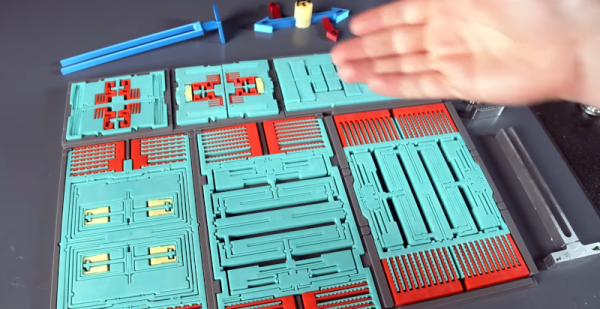
There is a bit of a paradox when it comes to miniaturization. When electronics replaced mechanical devices, it was often the case that the electronic version was smaller. When transistors and, later, ICs, came around, things got smaller still. However, as things shrink to microscopic scales, transistors don’t work well, and you often find — full circle — mechanical devices. [Breaking Taps] has an investigation of a MEMS chip. MEMS is short for Micro Electromechanical Systems, which operate in a decidedly mechanical way. You can see the video, which has some gorgeous electron microscopy, below. The best part, though, is the 3D-printed macroscale mechanisms that let you see how the pieces work.

Decapsulating the MPU-6050 was challenging. We usually mill a cavity on the top of an IC and use fuming nitric on a hot plate (under a fume hood) to remove the remaining epoxy. However, the construction of these chips has two pieces of silicon sandwiched together, so you need to fully expose the die to split them apart, so our usual method might not work so well. Splitting them open, though, damaged parts of the chip, so the video shows a composite of several devices.

Continue reading “MEMS Teardown And Macroscopic Models”

What Does An Electron Look Like?

In school, you probably learned that an atom was like a little solar system with the nucleus as the sun and electrons as the planets. The problem is, as [The Action Lab] points out, the math tells us that if this simplistic model was accurate, matter would be volatile. According to the video you can see below, the right way to think about it is as a standing wave.

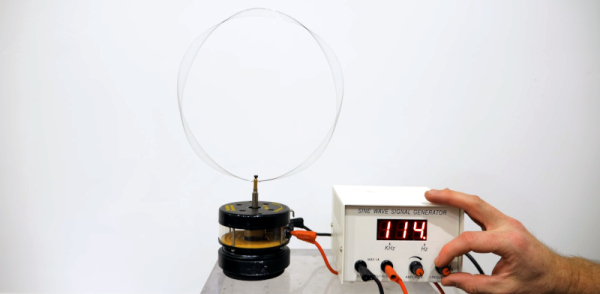
What does that mean? The video shows a very interesting demonstrator that shows how that works. You can actually see the standing waves in a metal ring. This is an analog — still not perfect — for the workings of an atom. An input frequency causes the ring to vibrate, and at specific vibration frequencies, a standing wave develops in the ring.

Continue reading “What Does An Electron Look Like?”

Review Of The YARD Stick One Radio Dongle

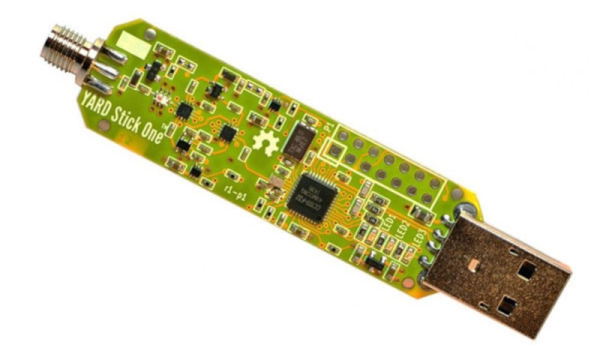
When it comes to SDR, you can usually find cheap products that receive and expensive products that can also transmit. The YARD Stick One bucks that trend. It can send and receive from 300 MHz to 928 MHz, thanks to the onboard TI CC1111 chip. [Wim Ton] on Elektor put the device through its paces. While the frequency range isn’t as broad as some devices, the price is right at about $99. YARD, by the way, stands for Yet Another RF Dongle.

The frequency range isn’t as cut and dry as it might seem. According to the product’s home page: “official operating frequencies: 300 MHz – 348 MHz, 391 MHz – 464 MHz, and 782 MHz – 928 MHz; unofficial operating frequencies: 281 MHz – 361 MHz, 378 MHz – 481 MHz, and 749 MHz – 962 MHz.” The unofficial operating frequencies are not supported by the chip but appear to work in practice.

Continue reading “Review Of The YARD Stick One Radio Dongle”

No Wheels, No Mercy

We always like when a designer does something different. After all, it is easy just to do what everyone else is doing. But to see things a different way is always interesting to us. When you think of a battle bot, you probably think of a robot with wheels or tracks, attacking other robots in an arena. But [Shea Waffles Johns] created Big Cookie, a combat bot with no wheels. Instead, it is a spinning wheel of death that moves relatively slowly. The robot makes up for that by having a mini-robot helper that brings Big Cookie its prey.

With no wheels and motors for locomotion, the robot can focus on armor and weapon force. It certainly looks dangerous spinning on the floor.

Continue reading “No Wheels, No Mercy”

FDM Printing With Resin Update

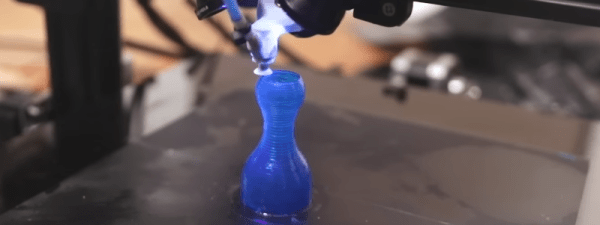
[Proper Printing] is at it again. He’s trying to perfect his hybrid printer that works like an FDM printer but uses UV-curable resin gel instead of filament. You can see the latest update video below. If you missed our take on his early attempts, you might want to catch up with those earlier videos first.

The latest update brings a new nozzle, an improved light source, and changes to the formula of the resin. The nozzle and light source improvements hinge on conical lenses that convert the laser beams from a spot to a ring. The initial nozzles looked like the business end of a syringe, but this wasn’t very stable. The new video shows a conventional nozzle which also had some issues. This resulted in a custom-made nozzle that solved all the issues with the conventional nozzle and the syringe tips.

The resin formula is particularly crucial. The second attempt used resin with glass beads to give thickness. That wasn’t without problems, though, so it was switched this time with fused silica, as suggested by some comments on a previous video. They also used aggressive mixing and air removal. The consistency of the previous resins was that of a paste, but according to the video, the new mixture is more like a gel.

At some point, things started going badly. There were several equipment failures. Exasperated, he was ready to give up and was editing the video when he had an epiphany. We’re glad he didn’t give up because the new results are pretty impressive.

These printers remind us of some strange laser CNC. It also reminds us a little of people curing resin outside of the normal print process.

Continue reading “FDM Printing With Resin Update”