Software Defined Radio Academy Goes Virtual

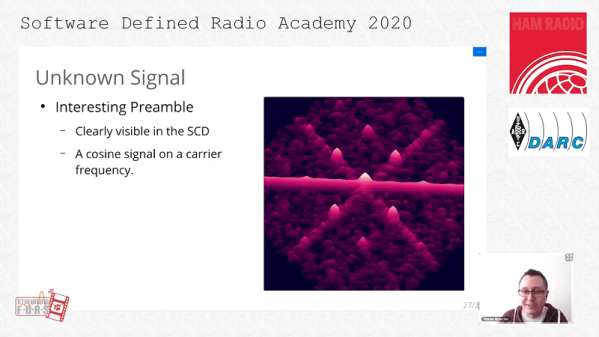
They say every cloud has a silver lining. It’s hard to find a positive among all the bad news about the current global pandemic, but it has pushed more conferences and events to allow online participation either live or after the fact. A case in point: The Software Defined Radio Academy’s annual event is all on a YouTube channel so you can attend virtually.

Not all the videos are there yet, but the keynote along with some very technical talks about techniques ranging from FPGAs to spectrum monitoring and spectral correlation density — you can see that video, below. We presume you’ll eventually be able to watch all the presentations listed in the program.

Continue reading “Software Defined Radio Academy Goes Virtual” →
Breadboard Breaks The Speed Barrier

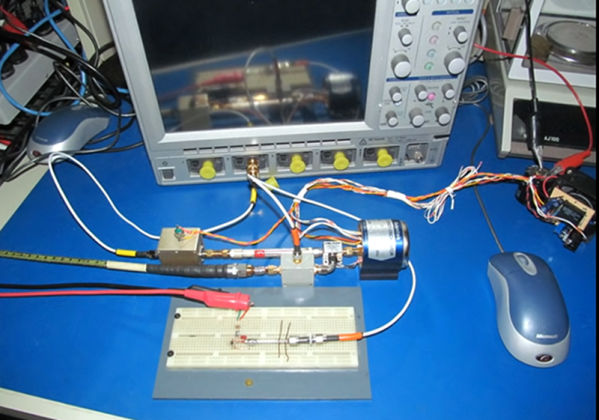
It is common wisdom that solderless breadboards are only good for low frequencies. But how fast can they really go? There’s been a contest going on to see who can make the fastest breadboard-mounted oscillator and [Joe Smith] has been trying to keep his leading position. He’s already managed 6 GHz and now he’s shooting for 20 GHz, as you can see in the video below.

One of the biggest challenges at these frequencies is just measuring your output. You may have a scope, but how does it do at 20 GHz? So half of the story is how [Joe] managed to monitor his output.

Continue reading “Breadboard Breaks The Speed Barrier” →

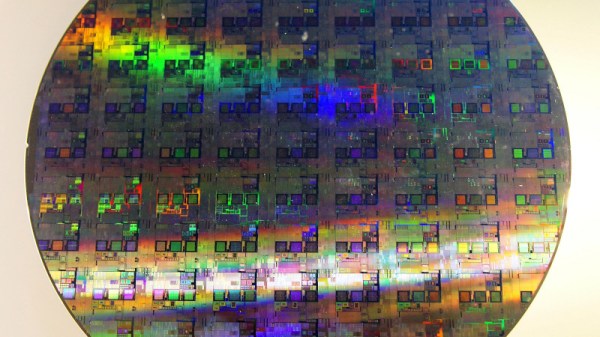
Your Own Open Source ASIC: SkyWater-PDK Plans First 130 Nm Wafer In 2020

You might have caught Maya Posch’s article about the first open-source ASIC tools from Google and SkyWater Technology. It envisions increased access to make custom chips — Application Specific Integrated Circuits — designed using open-source tools, and made real through existing chip fabrication facilities. My first thought? How much does it cost to tape out? That is, how do I take the design on my screen and get actual parts in my hands? I asked Google’s Tim Ansel to explain some more about the project’s goals and how I was going to get my parts.

The goals are pretty straightforward. Tim and his collaborators would like to see hardware open up in the same way software has. The model where teams of people build on each other’s work either in direct collaboration or indirectly has led to many very powerful pieces of software. Tim’s had some success getting people interested in FPGA development and helped produce open tools for doing so. Custom ASICs are the next logical step.

Continue reading “Your Own Open Source ASIC: SkyWater-PDK Plans First 130 Nm Wafer In 2020” →

Implementing The Exponential Function

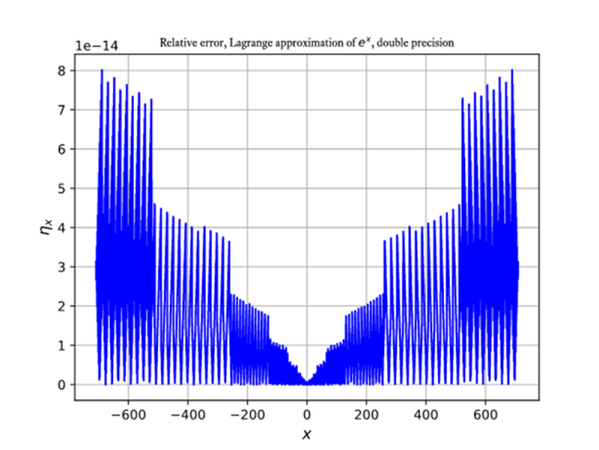
Ask ordinary software developers how to code an exponential function (that is, ex) and most will tell you to simply write an expression in their favorite high level language. But a significant slice of Hackaday readers will program tiny machines down to the bare metal or need more speed or precision than available with a customary implementation. [Pseduorandom] knows quite a few ways to do the calculation, and while it isn’t light reading for the math-phobic, it is an interesting tour.

The paper covers a variety of ways to calculate the function ranging from various Taylor series approximations, Lagrange interpolation, and Chebyshev interpolation. The paper is somewhat abstract, but there are Python and C++ examples to help make it concrete.

Continue reading “Implementing The Exponential Function” →

Linux-Fu: Parallel Universe

At some point, you simply run out of processing power. Admittedly, that point keeps getting further and further away, but you can still get there. If you run out of CPU time, the answer might be to add more CPUs. However, sometimes there are other bottlenecks like memory or disk space. However, it is also likely that you have access to multiple computers. Who doesn’t have a few Raspberry Pis sitting around their network? Or maybe a server in the basement? Or even some remote servers “in the cloud.” GNU Parallel is a tool that lets you spread work across multiple tasks either locally to remote machines. In some ways, it is simple, since it looks sort of like xargs but with parallel execution. On the other hand, it has myriad options and configurations that can make it a little daunting to use. Continue reading “Linux-Fu: Parallel Universe” →

Hantek 3-in-1 Instrument Reviewed

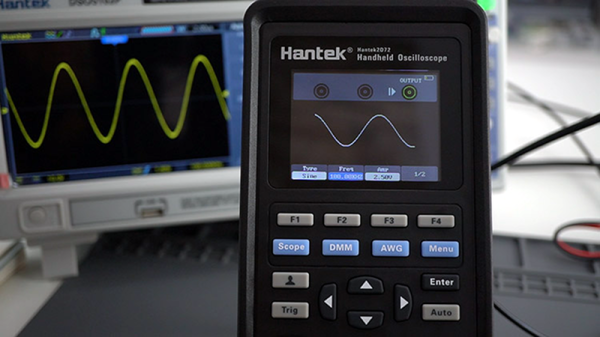
What kid doesn’t want a Swiss Army knife? Maybe that was the idea behind Hantek’s 3-in-1 instrument that [Rui Santos] reviewed in a recent blog post. You can also watch the video version, below. The instrument is a combination oscilloscope, multimeter, and signal generator. The device is pretty inexpensive and comes in 40 MHz and 70 MHz versions. You can also get versions that drop the function generator if you want to save a little bit more.

The multimeter does 4000 counts and has the usual scales along with capacitance measurements. Rechargeable batteries make it portable, and the signal generator is capable up to 25 MHz. The scope is dual channel, but the sampling drops in half (125 megasamples per second) when using both channels.

The 2.8 inch color screen isn’t as big as your bench scope, but it’s good for a portable device. The review also mentions that there are few buttons so many operations require a lot of menu navigation, but — again — that’s a function of being small. Overall, [Rui] seemed to like the meter well enough. We’ve spent more on a good digital meter, so if this can do that function plus also give you a reasonable scope and signal generator, it seems like a fair deal.

This reminded us of a very polished version of the EM125 we took a look at a few years ago, although that didn’t have a color screen, a second channel, or a signal generator. Of course, signal generators are cheap enough if you want to keep it separate.

Continue reading “Hantek 3-in-1 Instrument Reviewed” →

Calcuino Is An Arduino Calculator

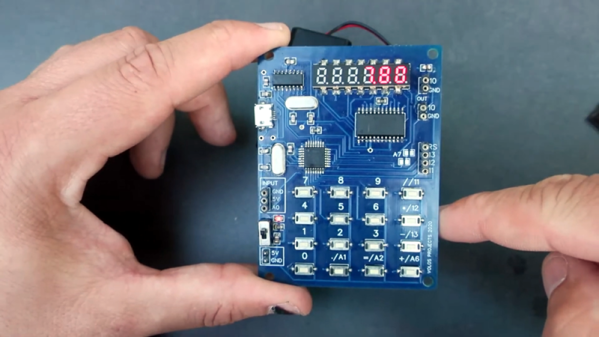
All by itself, a calculator based on an Arduino isn’t necessarily very novel. However, [Danko Bertović] of Volos Projects has a nice board that, of course, looks like a calculator. There are 16 keys and an LED display. But it seems to us the real value would be using this as a base for other projects.

As an inexpensive development board, it’s handy to have a simple processor with a keyboard and a display. There’s some extra I/O pins and the first example in the video below shows using the setup as a simple organ, for example. We’d love to see an option to replace the LED with an LCD and maybe even some different CPU options, as well.

The board is essentially an Arduino with a standard USB to serial chip and a MAX7219 display driver. Of course, you could breadboard up all of these things, but it wouldn’t be as neat looking. One unusual thing about the keyboard is that it is not multiplexed. Each button has a label that indicates what Arduino pin it connects with. So key 6 connects to pin 6 and pin A2 connects to the key marked =/A2.

With the availability of inexpensive PC boards, we’re seeing many nice designs out there that would be easy to repurpose for other things. For example, we thought this board would easily run the Kim Uno, with some modifications to the I/O routines. Might even be able to work out a clone of an even older computer to fit on the board.

Continue reading “Calcuino Is An Arduino Calculator” →