OTA ESP32 GUI Makes Updates Simple

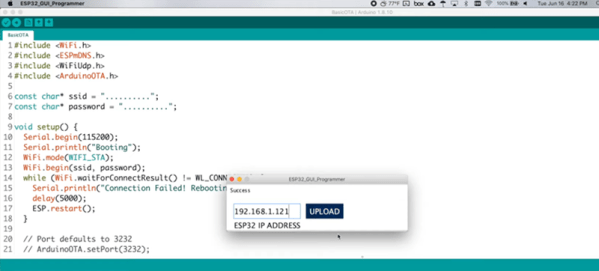
One of the disadvantages of having cheap WiFi-capable boards like those based on the ESP32 is that you have to update them. If you have even a few in every room of your house, it can be a pain to pull them out and connect them to a cable for programming. Over the air programming is a great answer, and [Kevin] shows how you can control the update via a simple GUI. You can see a video demonstration of how it works below.

[Kevin] uses a ready-made OTA library to do the work, but creates a GUI configuration and downloader tool. There is a manual step to force the board into the OTA mode, which might be a mild inconvenience, but it improves security since you need physical access to the device to do an update.

Continue reading “OTA ESP32 GUI Makes Updates Simple” →

Educational Radio, Educates

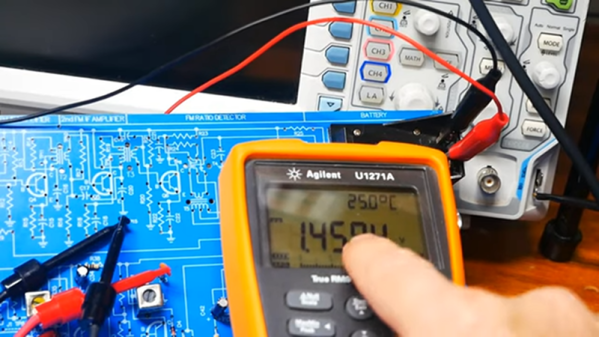
Analyzing and troubleshooting a modern AM/FM radio, digital radio, or TV can be a pretty daunting task. However, a common AM radio is easy to understand, experiment with, and repair. Learning about that will help you understand more complex circuits later. That’s the idea behind the Elenco AM radio which is built on a wide-open PCB with markings for all the important sections. [The Offset Volt] uses one of these to explain how a receiver works, especially how a diode detects the signal and how the automatic gain control works.

Between a series of diagrams and live scope demonstrations, you can see the effects of capacitance in the receiver along with other circuit effects.

Continue reading “Educational Radio, Educates” →

Decapsulating A Dual Triode

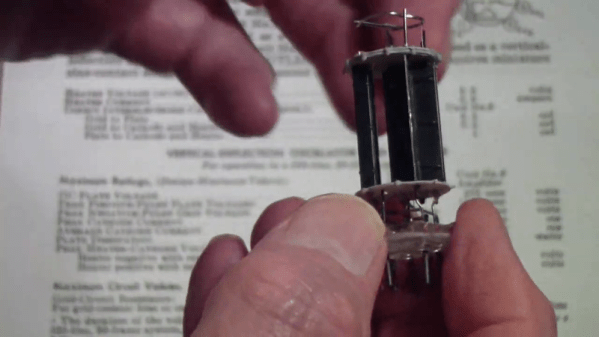
We see quite a bit of work where people decapsulate ICs or other solid state devices to expose their inner workings. But how about hollow state? [Tomtektest] had a dual triode that has lost its vacuum integrity — gone to air, as he calls it — and decided to open it up to better expose its inner workings. (Video, embedded below.)

Of course, you can always see the innards through the glass, but it is interesting to have the envelope out of the way. Apparently, how you remove the glass is a bit tricky if you don’t want to damage the working bits as you remove it.

Continue reading “Decapsulating A Dual Triode” →

Simulate Your World With Hash.ai

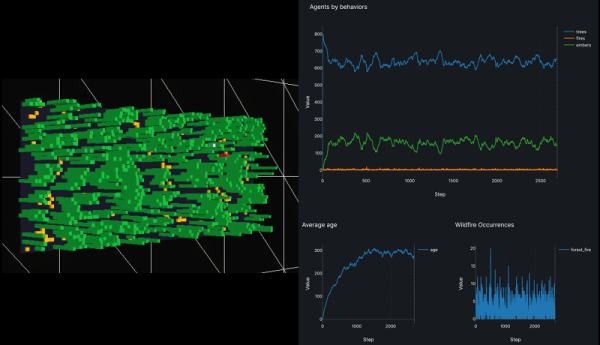
We will admit that we often throw together software simulations of real-world things, but we’ll also admit they are usually quick and dirty and just dump out text that we might graph in a spreadsheet or using GNUPlot. But with Hash.ai, you can quickly generate simulations of just about anything quickly and easily. The simulations will have beautiful visualizations and graphs, too. The tool works with JavaScript or Python and you don’t have to waste your time writing the parts that don’t change.

The web-based tool works on the idea of agents. Each agent has one or more behaviors that run each time step. In the example simulation, which models wildfires in forests, the agent is named forest, although it really models one virtual tree. There’s also a behavior called forest which controls the tree’s rate of growth and chance of burning based on nearby trees and lightning. Other behaviors simulate a burning tree and what happens to a tree after burning — an ember — which may or may not grow back.

Continue reading “Simulate Your World With Hash.ai” →

Dipole Antenna Is Off Balance

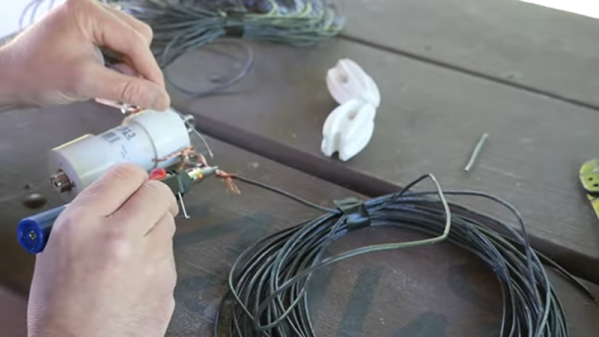
A dipole antenna is easy, right? Two wires, each a quarter wavelength long, emanate from a coax or other feedline. Unless it is an off-center dipole. The length is still the same, but you move the feed point to a different part. [KB9VBR] explains how this changes the antenna’s impedance from the nominal 70 ohms of a standard dipole.

Why would you want to do that? The trick is to find a feed point that has acceptable impedance on multiple ham radio bands. Most automatic tuners can handle a certain range of mismatch so using an antenna like this with a tuner can allow one antenna to serve multiple bands with no traps or switches.

Continue reading “Dipole Antenna Is Off Balance” →

Learn Quantum Computing With Spaced Repetition

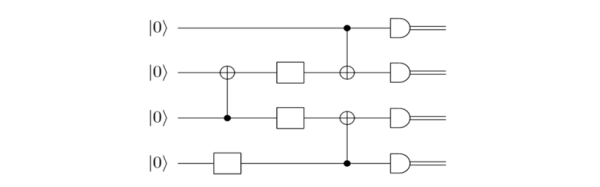
Everyone learns differently, but cognitive research shows that you tend to remember things better if you use spaced repetition. That is, you learn something, then after a period, you are tested. If you still remember, you get tested again later with a longer interval between tests. If you get it wrong, you get tested earlier. That’s the idea behind [Andy Matuschak ‘s]and [Michael Nielsen’s] quantum computing tutorial. You answer questions embedded in the text. You answer to yourself, so there’s no scoring. However, once you click to reveal the answer, you report if you got the answer correct or not, and the system schedules you for retest based on your report.

Does it work? We don’t know, but we have heard that spaced repetition is good for learning languages, among other things. We suspect that like most learning methods, it works better for some people than others.

Continue reading “Learn Quantum Computing With Spaced Repetition” →

Loading Coils, The Heaviside Condition, And Pupin Coils

When we draw schematics, we have the luxury of pretending that wire is free. There are only a few cases where you have to account for the electrical characteristics of wire: when the wire is very long or the frequency on the wire is relatively high.

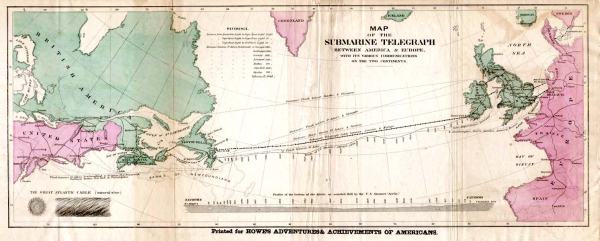
This became apparent after the first transatlantic cable went into service for telegraph communications. Even though the wire was linear, there was still distortion on the line so severe that dots and dashes would overlap each other. The temporary solution was to limit speeds so slow that operators had trouble sending and receiving at those speeds. How slow? An average character took two minutes to send! That’s not a typo. Two minutes per character. By custom, Morse code assumes a word is five characters, so you could send a word every 10 minutes.

The first transatlantic cable went into service in 1858 and was virtually the moon landing of its day. Frustrated with how slow the communications were, an electrician by the name of Whitehouse decided to crank up the voltage to over 1,000 volts which caused the cable to fail after only three weeks in service. Whoops. Later analysis showed the cable was probably going to fail quickly anyway, but Whitehouse took the public blame.

The wire back then wasn’t as good as what we have today, which led to some of the problems. The insulation was made from multiple coats of a natural latex, gutta percha, which is what dentists use to fill root canals. The jackets were made from tarred hemp and bound with iron wire. There was no way to build an underwater amplifier in 1858, so the cables were just tremendous wires laying on the ocean floor between Newfoundland and Ireland.

Continue reading “Loading Coils, The Heaviside Condition, And Pupin Coils” →