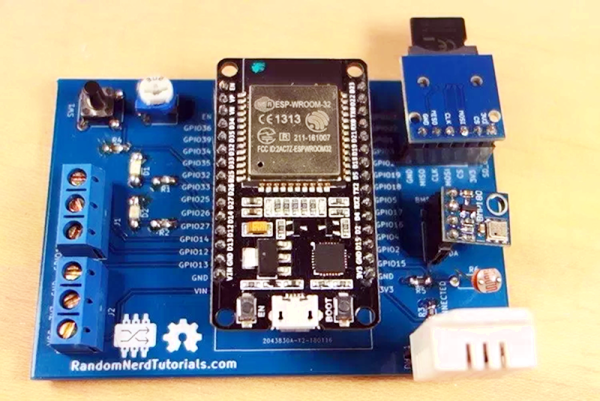
We see lots of ESP8266 projects, but considerably fewer for the ESP32. So this good-looking weather station on a PCB using an ESP32 caught our eye. The board has a few sockets for common weather gear, but with a little modification, it would be a great carrier for an ESP32. Since the PCB layout is available, you could change things around to suit you. You can see a video from [Rui Santos] about his project and its progress from breadboard to PCB in the video below.
Author: Al Williams4503 Articles
Voice User Interface Design Practices
Websites used to be uglier than they are now. Sure, you can still find a few disasters, but back in the early days of the Web you’d have found blinking banners, spinning text, music backgrounds, and bizarre navigation themes. Practices evolve, and now there’s much less variation between professionally-designed sites.
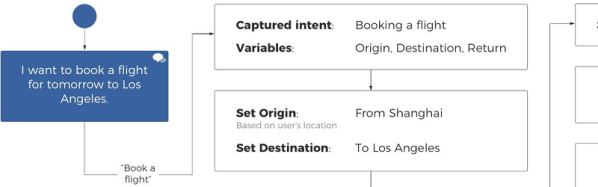
In a mirror of the world of hypertext, the same thing is going to happen with voice user interfaces (or VUIs). As products like Google Home and Amazon Echo get more users, developing VUIs will become a big deal. We are also starting to see hacker projects that use VUIs either by leveraging the big guys, using local code on a Raspberry Pi, or even using dedicated speech hardware. So what are the best practices for a VUI? [Frederik Goossens] shares his thoughts on the subject in a recent post.
Truthfully, a lot of the design process [Frederik] suggests mimics conventional user interface design in defining the use case and mapping out the flow. However, there are some unique issues surrounding usable voice interactions.
Quantum Searching In Your Browser
If you’ve made it through the last two posts on quantum computing (QC), then you’ve seen the Quirk simulator, a little of IBM’s web-based offering, and how entanglement and superposition can do strange and possibly wonderful things. However, the superdense encoding I showed you didn’t really feel like a real computer algorithm. This time we will look at Grover’s algorithm which is often incorrectly billed as an “unstructured database search.” In reality, it is an algorithm for making a state — that is a set of qubits — match some desired state without simply setting the state.
By analogy, consider a web service where you guess a number. Most discussions of Grover’s algorithm will tell you that the service will only tell you if the number is correct or not. If the number was from 1 to 16, using traditional computing, you’d have to query the values one at a time to see which is correct. You might get lucky and hit the first time. Or it might take 16 times. With qubits you can get the same result in only four attempts. In fact, if you try more times, you might get the wrong answer. Of course, what you really get is an answer that is probably correct, because that how QC works.
ESP32, We Have Ways To Make You Talk
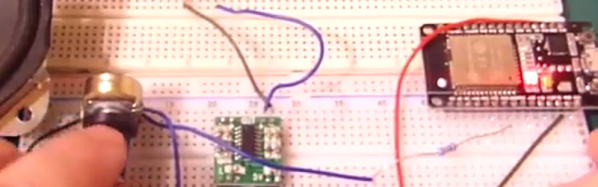
One of our favorite scenes from the [James Bond] franchise is the classic exchange between [Goldfinger] and [Bond]. [Connery] (the One True Bond) says, “You expect me to talk?” And the reply is, “No Mr. Bond, I expect you to die!” When it comes to the ESP32, though, apparently [XTronical] expects it to talk. He posted a library to simplify playing WAV files on the ESP32. There is also a video worth watching, below.
Actually, you might want to back up to his previous post where he connects a speaker via one of the digital to analog converters on the board. In that post, he just pushes out a few simple waveforms, but the hardware is the same setup he uses for playing the WAV files.
Water Cooling A 3D Printer
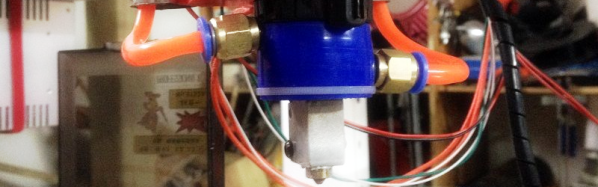
It may seem like a paradox, but one of the most important things you have to do to a 3D printer’s hot end is to keep it cool. That seems funny, because the idea is to heat up plastic, but you really only want to heat it up just before it extrudes. If you heat it up too early, you’ll get jams. That’s why nearly all hot ends have some sort of fan cooling. However, lately we have seen announcements and crowd-funding campaigns that make it look like water cooling will be more popular than ever this year. Don’t want to buy a new hot end? [Dui ni shuo de dui] will show you how to easily convert an E3D-style hot end to water cooling with a quick reversible hack.
That popular style of hot end has a heat sink with circular fins. The mod puts two O-rings on the fins and uses them to seal a piece of silicone tubing. The tubing has holes for fittings and then it is nothing to pump water through the fittings and around the heat sink. The whole thing cost about $14 (exclusive of the hot end) and you could probably get by for less if you wanted to.
Linux Fu: A Little Help For Bash
It isn’t uncommon these days for a programmer’s editor to offer you help about what you are typing, ranging from a pop up with choices to a full-blown code template. If you have written a million lines of code in the language, this might even annoy you. However, if you use it only occasionally, these can be very helpful. I’ve used Unix and Linux for many years, but I realize that there are people who don’t use it every day. With the Raspberry Pi, Linux servers, and Windows 10 having a bash shell, there are more people using a shell “every once in a while” than ever before. Could you use a little help? If so, you might try bashelp: a little something I put together while writing about bash completion.
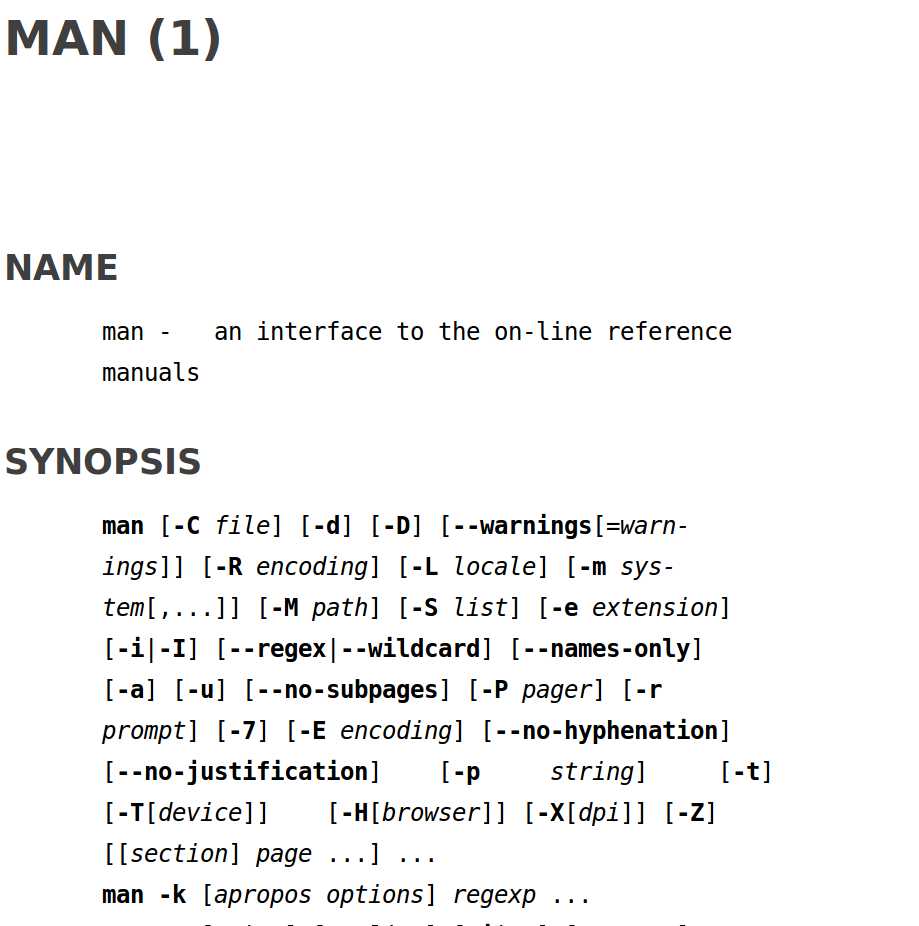
There’s good news and bad news. The good news is that Unix has a built-in help command — man — and has for some time. The bad news is that you need to stop what you are typing and enter a man command to use it. Man, by the way, is short for manual.
There are GUI front-ends to man (like yelp, on the left) and you can even use a web browser locally or remotely. However, none of these are connected to what you are typing. You have to move to another window, enter your search term, then go back to your typing. That got me to thinking about how to get a sort of context-sensitive inline help for bash.
Quantum Communications In Your Browser
Quantum computing (QC) is a big topic, and last time I was only able to walk you through the construction of a few logic gates, but you have to start somewhere. If you haven’t read that part, you probably should, because you’ll need to understand the simulator I’m using and some basic concepts.
I like to get right into practice, but with this topic, there’s no avoiding some theory. But don’t despair. We’ll have a little science fiction story you can try by the end of this installment, where we manage to pack two bits of information into a single physical qubit. Last time I mentioned that qubits have 1 and 0 states and I hinted that they were really |1> and |0> states. Why create new names for the two normal binary states? Turns out there is more to the story.
What’s the Vector, Victor?
In Dirac notation, |1> is a vector. So is |hackaday> and |123>. You can get into a lot of math with these, but I’m going to try to avoid most of that. This is also called ket notation (the last part of the word bracket) so you’ll hear people say “one ket” or “hackaday ket.” Either way, the vector can represent one or more qubits and there are several ways to represent them.