A Few Laser-Cut Cases For Your SBCs

Single-board computers, usually featuring ARM processors, have revolutionized the world of the hardware hacker over the last decade. The computing power you would have found in a desktop computer not so long ago, mounted on a small PCB and powered from a mobile phone charger.

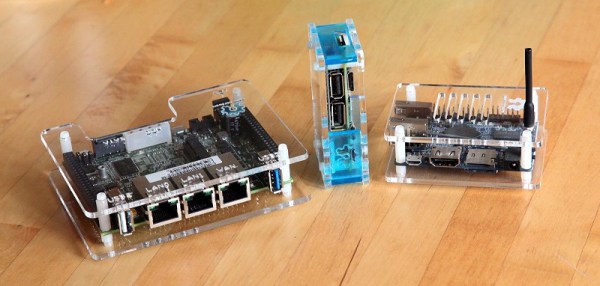
With a few notable exceptions though, these single board computers are just that, boards. No cases in the pack, which has, of course, spawned a huge aftermarket of commercial offerings and a pile of homemade ones of varying sophistication. If these homemade offerings are your fancy then today’s link may be of interest, some very well-designed laser-cut cases from [Nick Smith] for a selection of popular and less well-known boards.

The Orange Pi Lite and Raspberry Pi Zero are both familiar enough, but one of the delights of writing for Hackaday reveals itself in the discovery of the more esoteric Marvell ESPRESSObin, an SBC with multiple network ports and serial ATA.

Are cases your passion? Step back in time for our round-up of case designs for the first Raspberry Pi.

Via Hacker News.


Beating Life-Force Amulet

It’s one thing to see science-fiction slowly become reality, but quite another to take that process into your own hands. Inspired by a movie prop, [Eric Strebel] decided to build himself a 21st science-fiction artifact: a pulsing, life-force amulet.

At the — aheam — heart of this amulet is a blinking LED circuit which [Strebel] modified into a slow pulse with the help of his friends. To add to the surreal quality of the amulet, he sourced a stone from a local gem show, bringing his circuit along to get an idea of what the final product would look like. Once [Strebel] had shaped the stone to a more manageable size, he took a polyester filler mold of its rear face to use as a base from which to cast a durable resin housing for the circuit.

[Strebel] is using a pair of coin cell batteries which fit snugly behind the glowing LED, and in case he ever needs to get inside the amulet, he’s attached the stone to the rear with sew-on straps — super-gluing them to each piece. He went for a bit of an industrial look for the necklace — a braided oil line with a modified quick-release clasp that works like a charm.

How does this amulet stack up to one from the 23rd century? You be the judge!

A 3D Printable Raman Probe

Scientific instruments are expensive. In a lot of cases, really expensive, so if you have spent any time in a well-equipped lab, the chances are that it would have been one backed up by the resources of a university, or a large company. Those experimenters who wish to pursue such matters outside those environments have traditionally had to rely on obsolete instruments from the surplus market. A fascinating endeavor in itself, but one that can sometimes limit the opportunity to pursue science.

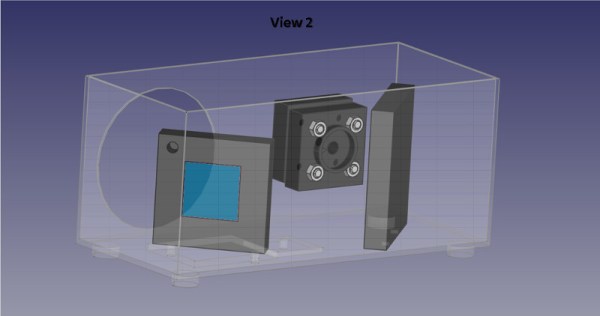
It has been interesting then to see the impact of the arrival of affordable 3D printing on the creation of self-built scientific instruments. A fantastic example has come our way, [David H Haffner Sr]’s 3D printable Raman probe. A Raman spectroscope is an instrument in which the light scattered from the sample exposed to an incident monochromatic source is collected, as opposed to that reflected or transmitted through it. Scattered light can be a huge magnitude weaker than other modes, thus the design of a Raman probe is critical to its success. (If you are curious, read this multi-part explanation on Raman spectroscopy.)

This is a work in progress at the time of writing, but it still makes for an interesting examination of Raman probe design. Interestingly the sensor is a standard DSLR camera, which though not a cheap device is possibly more affordable than a more dedicated sensor.

This isn’t the first Raman spectrometer we’ve seen on these pages, we’ve also brought you a Fourier transform spectrometer, and plenty of more conventional instruments.

Towards Sensible Packaging For 3D Printer Filament

Filament-based 3D printers are remarkably wasteful. If you buy a kilogram of filament from your favorite supplier, the odds are that it will come wrapped around a plastic spool weighing about 250 grams. Use the filament, and that spool will be thrown in the trash. Very, very few products have such wasteful packaging as 3D printer filament, with the possible exception of inkjet cartridges or getting a receipt with your purchase at CVS.

For the last few years, [Richard Horne], better known as RichRap, has been working towards a solution to the problem of the wasteful spools for 3D printer filament. Now, it looks like he has a solution with the MakerSpool. It’s the perfect solution for a 3D printing ecosystem that doesn’t waste 20% of the total plastic on packaging.

The design of the MakerSpool is fairly straightforward and also 3D printable. It’s a plastic filament spool, just a shade over 200mm in diameter, consisting of two halves that screw together. Add in some RepRap ‘teardrop’ logos, and you have a spool that should fit nearly any machine, and will accept any type of filament.

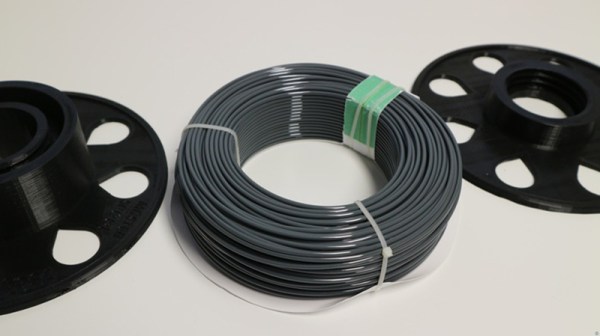
The trick with this system is, of course, getting the filament onto the spool in the first place. Obviously, filament manufacturers would have to ship unspooled filament that’s somehow constrained and hopefully vacuum packed. Das Filament, a filament manufacturer out of Germany, has already tested this and it looks like they have their process down. It is possible to ship a kilogram of 1.75 filament without a spool, and held together with zip ties. Other filament manufacturers also have packaging processes that are amenable to this style of packaging.

Whether this sort of packing will catch on is anyone’s guess, but there are obvious advantages. There is less waste for the environmentalists in the crowd, but with that you also get reduced shipping costs. It’s a win-win for any filament manufacturer that could also result in reduced costs passed onto the consumer.

Boost Tube Replacement Through 3D Printing

[Sam] is the lucky owner of a 1990 VW Corrado G60. To the uninitiated, that’s the souped-up, go fast version with the fancy supercharger on top. While performing some mods to the air intake (car-speak for “hacks”), there came a need for a custom tube to eliminate the original silencer box. With available options costing up to $400, suddenly 3D printing a replacement seemed like a better answer.

3D printing intake parts for a supercharged vehicle has some unique challenges. The intake must be able to take the boost pressures seen by the engine, in this case up to around 10 psi. There must be no air leaks at all as this risks confusing the sensors that measure how much air is entering the engine. Lastly, the tube must be able to withstand the hot, and often oily environment under the hood.

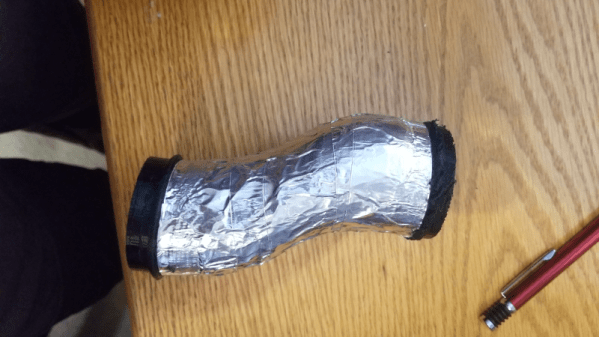
The first attempt was completed with TPU filament, which unfortunately did not hold pressure. A followup with PLA fared better, but was unable to withstand the heat present in the engine bay. After some experimentation, a successful print was made in PETG which was more robust. In the final design, [Sam] applied a rubber coating and then some aluminum tape, to both help seal any micro-holes in the 3D printed surface as well as help protect against heat.

After over a month of testing, [Sam]’s data logs indicate the tube is performing well and holding boost. It goes to show that with some perseverance and iterative design, 3D printed parts can often save the day.

Perhaps you’re inspired by this hack but need to jack up your car to work on it? Never fear, you can 3D print those too.

SiFive Introduces RISC-V Linux-Capable Multicore Processor

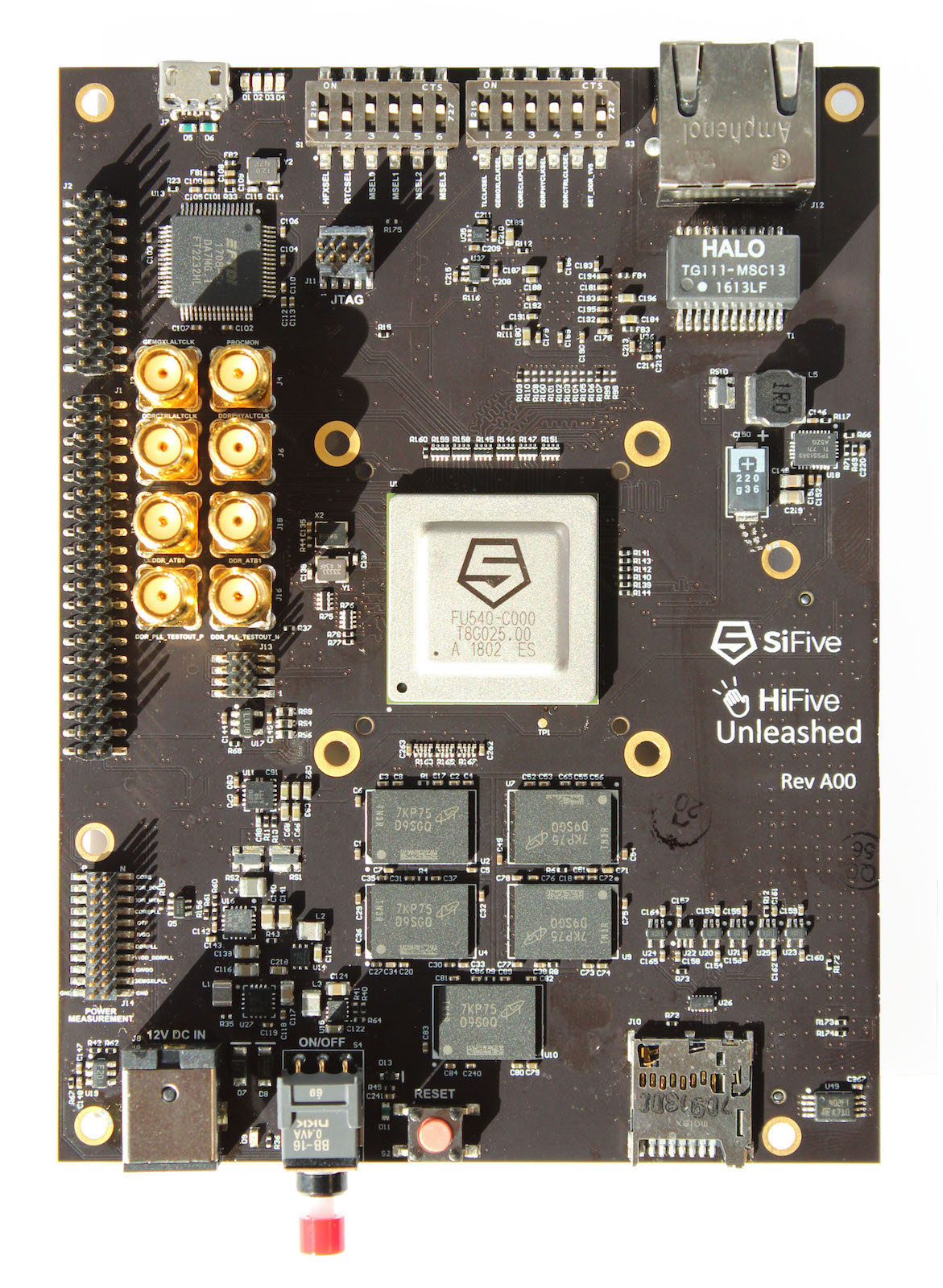
Slowly but surely, RISC-V, the Open Source architecture for everything from microcontrollers to server CPUs is making inroads in the community. Now SiFive, the major company behind putting RISC-V chips into actual silicon, is releasing a chip that’s even more powerful. At FOSDEM this weekend, SiFive announced the release of a Linux-capable Single Board Computer built around the RISC-V ISA. It’s called the HiFive Unleashed, and it’s the first piece of silicon capable or running Linux on a RISC-V core.

SiFive’s HiFive Unleashed

The HiFive Unleashed is built around the Freedom U540 SOC, a quad-core processor built on a 28nm process. The chip itself boasts four U54 RV64GC cores with an additional E51 RV64IMAC management core. This chip has support for 64-bit DDR4 with ECC and a single Gigabit Ethernet port. Those specs are just the chip though, and you’ll really need a complete system for a single board computer. This is the HiFive Unleashed, a board sporting the Freedom U540, 8GB of DDR4 with ECC, 32MB of Quad SPI Flash, Gigabit Ethernet, and a microSD card slot for storage. If you don’t mind being slightly inaccurate while describing this to a technological youngling, you could say this is comparable to a Raspberry Pi but with a completely Open Source architecture.

News of this caliber can’t come without some disappointment though, and in this case it’s that the HiFive Unleashed will ship this summer and cost $999. Yes, compared to a Raspberry Pi or BeagleBone that is an extremely high price, but it has to be borne in mind that this is a custom chip and low-volume silicon on a 28nm process. Until a router or phone manufacturer picks up a RISC-V chip for some commodity equipment, this architecture will be expensive.

This announcement of a full Single Board Computer comes just months after the announcement of the SOC itself. Already, GCC support works, Linux stuff is going upstream, and the entire Open Source community seems reasonably enthusiastic about RISC-V. It’ll be great to see where this goes in the coming years, and when we can get Linux-capable RISC-V chips for less than a kilobuck.

Crowdfunding Is Now A Contract Between Company And Backer

Kickstarter is not a store. Indiegogo is not a store. Crowdfunding is not buying something — you’re merely donating some money, and you might get a reward for your pledge. Caveat emptor doesn’t apply, because there is no buyer, and no one can figure out what the correct Latin translation for ‘backer’ is. These are the realities that have kept Indiegogo and Kickstarter in business, have caused much distress in people who think otherwise, and have been the source of so, so many crowdfunding follies.

Now, finally, crowdfunding is being legally recognized as a store. The Register reports a court in England has ruled against Retro Computers Ltd and said it had formed a contract of sale with crowdfunding backer Rob Morton. For one person, at least, for one of their pledges, Indiegogo is a store.

The crowdfunding campaign in question is the Retro Computers’ Sinclair ZX Spectrum Vega Plus, a small device not unlike the Commodore 64 direct to TV joysticks. The Spectrum Vega simply plugs into your TV, reads an SD card, and plays old ‘speccy games. Clive Sinclair, the genius who brought us the Spectrum, strange flat CRTs, and a host of other inventions, was involved in this campaign. In the years since the campaign ended, there have been numerous updates and Retro Computers still says they intend to deliver the device. Morton, apparently fed up with the delays, brought a suit against Retro Computers for the grand sum of £584: £85 for the Spectrum pledge, £5 for shipping, and the remainder for travel expenses and lost wages for the court date.

District Judge Clarke of Luton County Court heard the case and ruled against Retro Computers, finding there was a contract of sale between Morton and Retro Computers Ltd.. Evidence included a number of copies of Morton’s order, a document the judge pointed out as saying ‘this order’ and not ‘this pledge’. Additionally, the judge found the fine print on Indiegogo does not negate a contract of sale; there was still an implied agreement between Morton and Retro Computers, and Retro Computers had breached the contract by not delivering a Spectrum.

It should go without saying that this finding does not apply to every project on Indiegogo, it does not apply to Kickstarter, and nor does it apply to every crowdfunding campaign. This does not even apply to all backers of the Spectrum Vega Plus. Still, there are hundreds of thousands of backers for crowdfunding projects that haven’t received what they paid for, and if nothing else this story gives just a little bit of satisfaction to anyone that’s still waiting on an undelivered product.