Wireless Garage Door Indicator

[Sixerdoodle’s] garage door indicator tells him if the door is open or closed. He was inspired by the hack from last September but wanted to make it wireless. The setup uses an RF transmitter/receiver pair from Sparkfun, each controlled by an ATtiny13 microcontroller. We found his battle with RF interference from other devices to be interesting. Working out those bugs made for a great learning experience.

Lunkenheimer Steam Whistle, Doorbell

We’re going to straight out agree with [Pete] on how surprisingly quiet doorbells are now a days, and if we had it our way we would put his Lunkenheimer train whistle doorbell in every home*. The setup he uses is surprisingly simple, opting for a pre-built wireless doorbell that signals a microcontroller which in turn drives a relay and solenoid. While he does include a video, we felt it didn’t quite show the intensity of these whistles.

*HaD is not responsible for hearing loss and subsequent melted brains.

Cat Door Unlocks Via Facial Recognition

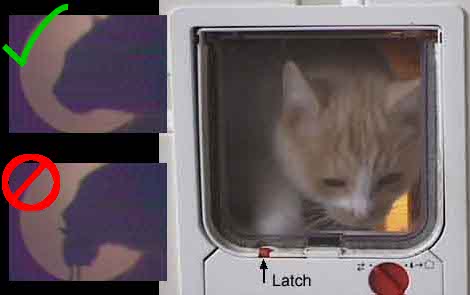
Faced with critters trying to get in and a cat that loved to show them her latest kill, the folks at Quantum Picture came up with a system that unlocks the cat door based on image recognition. As you can see above, it uses a camera to capture the profile of anything approaching the cat door. That image is compared to stored positive identification sets, making up a feline positive identification protocol. Don’t think this is necessary? In the writeup there’s a couple of images showing the outline of a skunk. Sounds like this system is a necessity.

We wonder if this lucky cat also has an Internet enabled cat feeder?

[Thanks Stephen]

Automated Chicken Coop Door

[youtube=http://www.youtube.com/watch?v=qUKIlZIZDqc]

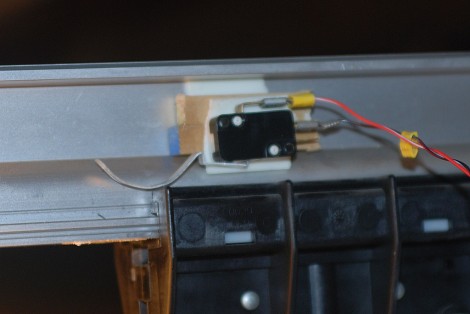
Here’s a pretty cool implementation of an automated door, built for a chicken coop. The electronics are fairly standard, an Arduino and a used cordless drill. The end product will be not only wireless, but automated based off of ambient light as well.  We also found the locking mechanism quite elegant. He also supplied a link to another automated chicken coop door which has a decent writeup with schematics and such. Next, he’ll have to automate their feeding as well.

[Thanks Jeri]

Time Delay Door Alarm

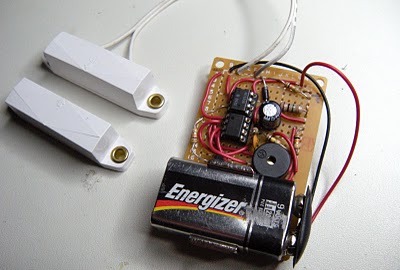
Ever accidentally left your front door ajar and had a pet escape? [BlackCow] came up with a simple solution to this problem. The circuit is fairly rudimentary but a great example of using the basics to get the job done. Now, instead of having an alarm that sounds as soon as the door is open, he has a 30 second delay. This helps avoid the “boy who cried wolf” effect also known as the “vista security warning” effect of being bothered too many times for a non issue.  We also have to say that we like his taste in blog layouts.

[via Hacked Gadgets]

More Cellphone Controlled Door Locks

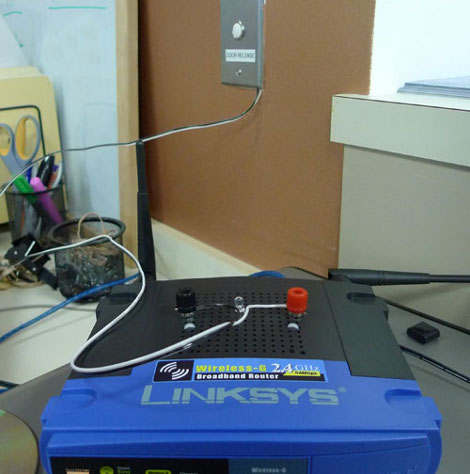
[Tom Lee] and his colleagues just moved to a new office. The doors are setup like a security checkpoint with electronic strikes and buttons on the inside to allow entry. The button simply completes a low-voltage circuit, activating the strike which made it quite easy to patch into. They build an interface board with a small relay to complete that circuit. As we’ve seen before, Linksys routers have plenty of extra room in the case so there was no problem housing the new circuit in this tiny network device. Now [Nicko] and his friends can use a custom app to input an access code or to verify a device ID from a cell phone and gain entry. The door still has keyed locks in case of a power outage. In fact, the only change made to the system was the addition of two wires to the “door release” button as seen above. See the one-touch device ID authentication in the video after the break.

This hack is similar to the GSM door entry from last year. In this case, the phones are communicating with the door via web interface and not the GSM network.

Continue reading “More Cellphone Controlled Door Locks”

GSM Enabled Security Door

The security door at the front of [Oliver’s] building uses an intercom system to let in guests remotely. Each unit has an intercom handset with a button that unlocks the door. [Oliver] wanted a way to enter without carrying any extra items so he built a system to unlock the door with his cell phone.

He patched into the intercom and attached a GSM module. The module runs python so he wrote a script that will monitor the entryway buzzer, then wait for an approved cell phone connection to unlock it. He went through a couple of different iterations for the final project. The first attempt used XBee modules to communicate between the intercom handset and the GSM module. For the final version, he snaked cable through his wall using rare-earth magnets (creative!) in order to forgo the use of a battery in the handset.

Who doesn’t carry a cell phone with them?  Because of this, the use of GSM modules in automation is a trend we think will continue to gain popularity.