Lazy Bluetooth: Build With BLE, Don’t Reinvent It

It is a good bet that you have at least one Bluetooth device hanging around. Headsets, mice, keyboards, and speakers have become increasingly common. Bluetooth forms a short range wireless network and can also perform file transfers and create virtual serial ports.

If you have ever had to stop listening to music to recharge a Bluetooth headphone, you know Bluetooth won’t run long on batteries. In 2006, Nokia introduced Wibree, which would later become Bluetooth Low Energy (or BLE). These days it’s used in everything and it’s well worth your time to gather a basic understanding of this technology.

Continue reading “Lazy Bluetooth: Build With BLE, Don’t Reinvent It”

Peering Inside The GPU Black Box

Researchers at Binghamton University have built their own graphics processor unit (GPU) that can be flashed into an FGPA. While “graphics” is in the name, this GPU design aims to provide a general-purpose computing peripheral, a GPGPU testbed. Of course, that doesn’t mean that you can’t play Quake (slowly) on it.

The Binghamton crew’s design is not only open, but easily modifiable. It’s a GPGPU where you not only know what’s going on inside the silicon, but also have open-source drivers and interfaces. As Prof. [Timothy Miller] says,

 It was bad for the open-source community that GPU manufacturers had all decided to keep their chip specifications secret. That prevented open source developers from writing software that could utilize that hardware. With contributions from the ‘open hardware’ community, we can incorporate more creative ideas and produce an increasingly better tool.

That’s where you come in. [Jeff Bush], a member of the team, has a great blog with a detailed walk-through of a known GPU design. All of the Verilog and C++ code is up on [Jeff]’s GitHub, including documentation.

If you’re interested in the deep magic that goes on inside GPUs, here’s a great way to peek inside the black box.

FBI Vs Apple: A Postmortem

By now you’ve doubtless heard that the FBI has broken the encryption on Syed Farook — the suicide terrorist who killed fourteen and then himself in San Bernardino. Consequently, they won’t be requiring Apple’s (compelled) services any more.

A number of people have written in and asked what we knew about the hack, and the frank answer is “not a heck of a lot”. And it’s not just us, because the FBI has classified the technique. What we do know is that they paid Cellebrite, an Israeli security firm, at least $218,004.85 to get the job done for them. Why would we want to know more? Because, broadly, it matters a lot if it was a hardware attack or a software attack.

Continue reading “FBI Vs Apple: A Postmortem”

Rotary Subwoofer Combines A Speaker Coil W/ A Fan

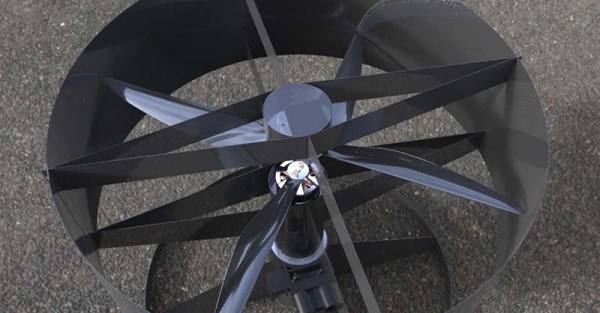
What happens when you combine a fan with a sub-woofer? Apparently, you get a high-efficiency ultra low hertz (3-5hz) rotary subwoofer!

First thing’s first, believe it or not, these things really do exist. [Chris] got the idea to build his own after seeing the TRW-17, a commercial offering of a rotary subwoofer.

The concept is pretty simple. If you use a giant subwoofer, you can get low frequency response, but it uses an immense amount of power to move a giant speaker coil. So what if you put something on a smaller speaker coil to increase airflow? Like, a fan or something?

Continue reading “Rotary Subwoofer Combines A Speaker Coil W/ A Fan”

MRRF: Innovating Extruders And Dissolvable Filament

Think laying down molten plastic on a 3D printer is as easy as squeezing plastic filament out of a hot tube? It’s not, and anyone who had a 3D printer in 2009 would tell you as such. There were hobbed bolts that stripped the plastic into a gooey paste, extremely large x carriages that made everything wobbly, and nothing worked as well as it does today.

Technology marches on, and this year’s Midwest RepRap Festival had people showing off the latest advances in pushing plastic, and something that hasn’t seen much use yet – dissolvable filament.

Continue reading “MRRF: Innovating Extruders And Dissolvable Filament”

Nanocounter: Frequency Counter With An Android UI

Have you ever started a project, run into an issue, started a new project to solve the issue, and completely forgot about the original project? [Andy] went down a rabbit hole of needing a tool to calibrate an MCU oscillator, but not having an accurate way to measure frequency. Most people would just buy a frequency counter and be done with it, but [Andy] decided to build his own.

The Nanocounter is an accurate, open source frequency counter that uses an Android phone as its display. It’s based on a high accuracy temperature compensated crystal oscillator (TCXO) fed into a phase locked loop (PLL) to create a high frequency, accurate reference clock.

This reference clock, along with the signal to be measured, are sent into a Xilinx FPGA which uses a method called equal precision measurement to determine the frequency. A STM32F072 microcontroller uses a SPI interface to get this data out of the FPGA, and controls the whole system. Finally, a cheap HC-06 Bluetooth module facilitates communication with an Android device.

The project achieves the goal of frequency counting, though [Andy] doesn’t remember what project sparked the idea to build it. (Classic yak shaving!) But the result is a great read of a detailed writeup, and you can watch a video of the Nanocounter in action after the break. That’s a win in our book.

Continue reading “Nanocounter: Frequency Counter With An Android UI”

Bare Metal Media Centre

Sometimes, along comes a build that is simple and bare, and yet exemplifies “hacking” – an art form that uses something in a way in which it was not originally intended. We’ve featured a few Raspberry Pi builds, but this one is less about the Pi and more about putting the rest of the hardware nicely together. [Garage Tech] built this Raspberry-Pi Stand and the end result is brilliant.

MediaPlayerSide-6-5-4It is nothing more than a metal book holder – the kind you are likely to pick up a pair for a few bucks at a charity shop or flea market. He was lucky to also snag a JBL On Stage IIIP Speaker Dock for cheap. Quickly spotting an opportunity, he decided to put together an OpenELEC based media centre using his bounty. Having made up his mind, he needed a couple of other parts to make sure this build looked, and sounded, good. An iQuadio Pi DAC+ , the Pi-DAC+ case from ModMyPi which comes with all the necessary hardware, and the official DSI touch screen.

With all of the stuff on hand, the rest of the build involved a short time at the workbench drilling some holes and slots in the aluminium book holder plate to mount the Pi-DAC case and the display. He drilled the holes and slots such that he can fix the display on either side. Along the way, he discovered an interesting issue regarding the display orientation – check it out. The final result is a nice looking media centre that sits proudly on top of his audio rig.