THP Semifinalist: NSA Away

Back when we started The Hackaday Prize, security, big brother, and the NSA were making headlines every day. Since that time, there has been enough bread and circuses in the news to wipe the consequences of these leaks out of the public consciousness, but work is still being done by hackers and tinkerers the world over to give you the tools to protect your data.

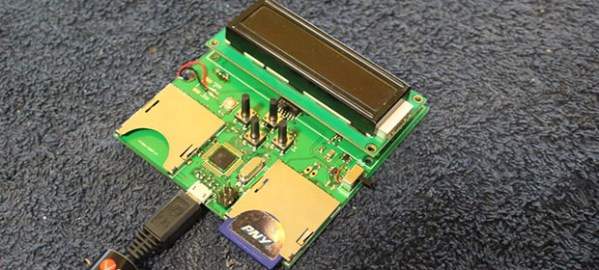
NSA Away is one of these tools. The first part of the project is a standalone key generator that writes the same random bits to a pair of SD cards simultaneously. With their random number generator, this is perfect encryption. The only way to crack the one time pad the team is using for encryption is to 1) use parts of the pad more than once, 2) have a terrible RNG, or 3) do something really stupid like sell the one time pad in a store.

The other part of the build is an Android-based encryption device with a camera, keyboard, SD card reader, and a USB port. This device reads the ‘OTP SD cards’ and reads data with the camera using OCR and decrypts it on the screen. Provided the OTP doesn’t fall into the wrong hands, this is a perfectly secure way to transmit data to anyone.

As far as progress goes, the members of the team have a fully functional pad generator, writing random data to SD cards. This device can also output random bits to a computer as a USB HID device, should you want to transmit your pad over unsecured mediums.

It’s an impressive bit of work, especially in the RNG department. The team is using eight avalanche noise generators in the circuit description. This part of the build isn’t quite working yet, but that’s really not needed for a proof of concept.


SpaceWrencherThe project featured in this post is a quarterfinalist in The Hackaday Prize.
Intel Edison on a box

Running Golang On The Intel Edison

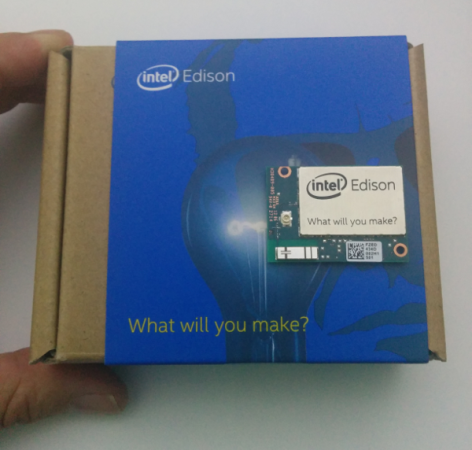
While most embedded development is still done in C and/or assembly, some people are working with more modern languages. The team over at Gobot has successfully managed to get Go running on the Intel Edison.

The Go programming language, which has been around for about five years, compiles to machine code like C. It has a number of modern features including concurrency, garbage collection, and packages.

We’ve looked at the Edison on Hackaday before, and even took a detailed look at the hardware. It features a Quark SoC, Bluetooth, and WiFi, which makes it well suited for connected devices.

Getting Go to work on the Edison hardware wasn’t particularly difficult, since it supports the Pentium instruction set and MMX. However, a library was needed to interface with the Edison’s peripherals. The Gobot team whipped up gobot-intel-iot, which makes it easy to work with GPIO, I2C, and PWM.

After the break, the team demos PWM on the Edison using Go.
Continue reading “Running Golang On The Intel Edison”

A Wrist-Mounted Flamethrower? Sure, Why Not?

There are three types of booths at Maker Faire. The first is the strange corporate booth, like Pepsi ‘revolutionizing fluid intake’ or some such nonsense. That one had the longest line of any booth, in case you’re wondering. The second type of booth is the people you would expect to be there – Atmel, TI, and Makerbot all came out in full force.

The third type of booth were a little hard to find. They’re the ‘show and tell’ spirit of Maker Faire, and [Stephen Hawes] was one of the best. Why? Wrist-mounted flamethrower, that’s why.

The flamethrower is fueled with a propane bottle originally meant for a camping stove, with a microcontroller and pot setup taking care of the height of the flame. Buttons underneath [Stephen]’s thumb takes care of the propane flow and tazer-based ignitor. The wrist measurement sensor can rescale to adjust the height of the flame to how far the wearer can move their wrist.

All in all, a great project for the Faire, although we did feel a little sorry for the NYC fire marshal that was assigned to [Stephen] for the entire faire. As an aside, we’re applauding [Stephen] for not referencing whatever comic book character has fire shooting out of his hand.

Exposed Flip Clock

Exposed Clock Is Flippin’ Cool

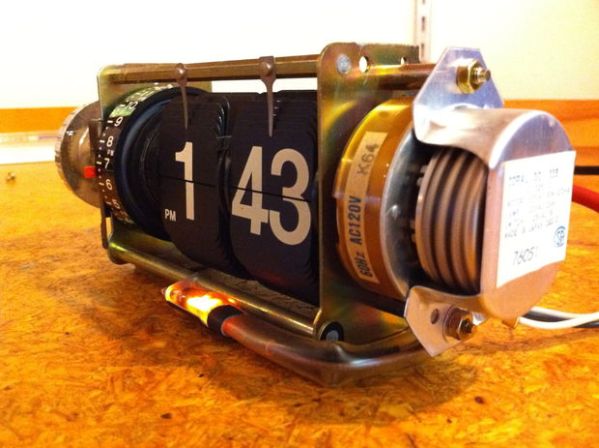
Some hacks are triumphs of cleverness, others…are just cool. [Super Cameraman’s] exposed retro flip clock tends toward the latter half of that spectrum—it may not be the most complex, but we’re relieved that for once there isn’t an Arduino crammed into the back of it.

You can buy pared down, exposed flip clocks at museums for an arm and a leg, or you can trudge through eBay and local thrift shops until you come across a cheapo clock radio. [Super Cameraman’s] clock cost him exactly $2, and is split into two sections: a clock side and a radio side. Prying off the knobs and popping open the case reveals all the shiny mechanisms and electronics, most of which he trashed. The radio and even the transformer were removed, leaving only the flip clock, which he re-wired directly to the plug—it seems these types of clocks run straight off 120VAC. Check out the video below.

Continue reading “Exposed Clock Is Flippin’ Cool”

Thermal Printer Brain Transplant

Thermal Printer Brain Transplant Is Two Hacks In One

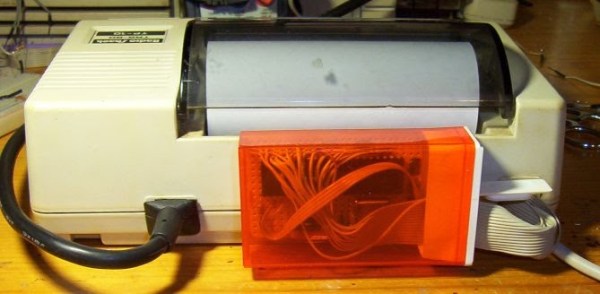
You know how sometimes you just can’t resist collecting old hardware, so you promise yourself that you will get around to working on it some day? [Danny] actually followed through on one of those promises after discovering an old Radio Shack TRS-80 TP-10 thermal printer in one of his boxes of old gear. It looks similar to a receipt printer you might see printing receipts at any brick and mortar store today. The original printer worked well enough, but [Danny] wasn’t satisfied with its 32 character per line limitation. He also wanted to be able to print more complex graphics. To accomplish this goal, he realized he was going to have to give this printer a brain transplant.

First, [Danny] wanted to find new paper for the printer. He only had one half of a roll left and it was 30 years old. He quickly realized that he could buy thermal paper for fax machines, but it would be too wide at 8.5 inches. Luckily, he was able to use a neighbor’s saw to cut the paper down to the right size. After a test run, he knew he was in business. The new fax paper actually looked better than the old stuff.

The next step was to figure out exactly how this printer works. If he was going to replace the CPU, he was going to need to know exactly how it functioned. He started by looking at the PCB to determine the various primary functions of the printer. He needed to know which functions were controlled by which CPU pins. After some Google-Fu, [Danny] was able to find the original manual for the printer. He was lucky in that the manual contained the schematic for the circuit.

Once he knew how everything was hooked up, [Danny] realized that he would need to learn how the CPU controlled all of the various functions. A logic analyzer would make his work much easier, but he didn’t happen to have one lying around. [Danny] he did what any skilled hacker would do. He built his own!

He built the analyzer around an ATMega664. It can sample eight signals every three microseconds. He claims it will fill its 64k of memory in about one fifth of a second. He got his new analyzer hooked up to the printer and then got to work coding his own logic visualization software. This visualization would provide him with a window to the inner workings of the circuit.

Now that he was able to see exactly how the printer functioned, [Danny] knew he would be able to code new software into a bigger and badder CPU. He chose to use another ATMega microcontroller. After a fair bit of trial and error, [Danny] ended up with working firmware. The new firmware can print up to 80 characters per line, which is more than double the original amount. It is also capable of printing simple black and white graphics.

[Danny] has published the source code and schematics for all of his circuits and utilities. You can find them at the bottom of his project page. Also, be sure to catch the demonstration video below. Continue reading “Thermal Printer Brain Transplant Is Two Hacks In One”

THP Semifinalist: B10N1C Yourself

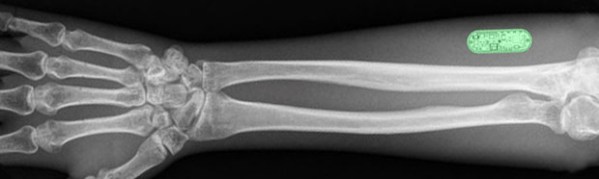
The Hackaday Prize has had a few medical devices make the semifinalist cut, and of course wearables are on the list. How about implantables? That’s what Bionic Yourself 2.0 (or B10N1C) is doing with an implantable microcontroller, battery, and sensor system.

The hardware in B10N1C includes a electromyography sensor for measuring muscle activity, an accelerometer, a vibration motor, RFID reader/writer, temperature sensor, and – get this – a LED bar graph that will shine a light through the skin. That’s something we’ve never seen before, and if you’re becoming a cyborg, it’s a nice feature to have.

As with anything you would implant in your body, safety is a prime consideration for Bionic.the Lithium battery can be overcharged (yes, through a wireless charging setup) to 10V without a risk of fire or explosion, can be hit with a hammer, and can even be punctured. The enclosure is medical grade silicone, the contacts are medical grade stainless steel, and there’s a humidity sensor inside that will radio a message saying its time to remove the device if the moisture level in the enclosure increases.

Because the device is implanted under the skin, being able to recharge and update the code without a physical connection is the name of the game. There’s a coil for wireless charging, and a lot of work is going into over the air firmware updating. It’s an astonishing project, and while most people probably won’t opt for a cyborg implant, it will look really cool.


SpaceWrencherThe project featured in this post is a quarterfinalist in The Hackaday Prize.
Speakers At Hackaday’s 10th Anniversary

It is with great pleasure that we are able to announce the final slate of speakers for Hackaday’s 10th Anniversary on October 4th in Pasadena. There are still around 30 tickets left for the conference so get yours now!

The most recently confirmed speaker is a man of many names. [Ryan Clarke] may be better known as [LosT], [1o57], or [Lostboy]. For years he has been driving the flagship contest at DEFCON by generating cryptographic puzzles that run far and deep through the 4-day conference and beyond. His talk will venture into the art and science of putting together these challenges, and the lengths at which determined hackers will go to solve them. His site gets taken over each year for DEFCON, so you might want to explore his Twitter account if you’re looking to learn more about this mysterious figure.

The other four speakers have already been mentioned in the initial announcement and last week’s follow-up. [Steve Collins] will discuss how his early interest in hacking led him to become an engineer at NASA. [Quinn Dunki] will have her scratch-built Veronica computer on hand and explain the adventure of the impressive project. [ThunderSqueak] will help us wrap our minds around the concept of non-binary computing, and [Jon McPhalen] will present the benefits of multi-core embedded processing versus traditional interrupt-based design.

We can’t wait for this amazing afternoon of talks which is just one week from Saturday. We hope to see you there!