London’s 44Con Is Looking For A Few Good Hackers

44con_banner

While we see plenty of security-related conferences here in the US, our friends across the pond were apparently anxious to hold a large-scale security conference of their own. At the helm of the first ever 44Con are DEF CON Goon [Adrian] and Penetration Tester [Steve Lord]. The pair are quite involved in London’s security community and are looking to bring like-minded individuals together over four days of security talks and workshops.

While 44Con’s list of speakers has been wrapped up, they are still looking for people to help run workshops on the 1st and 2nd of September. They are requesting that any hackers in the area drop them a line if interested.

Taking a look at their site, you can see that they have a nice selection of talks lined up catering to those on the business side of Information Security as well as deep technical discussions about threats and vulnerabilities. If you plan on hitting up the conference, be sure to let us know in the comments section.

Building A One-instruction Computer

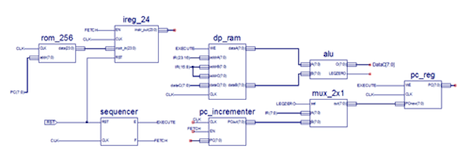
[Hasith] sent in this project where he goes through the process of designing a one instruction CPU in Verilog. It may not win a contest for the coolest build on Hack A  Day, but we really do appreciate the “applied nerd”  aspect of this build.

With only one instruction, an OISC is a lot simpler than the mess we have to deal with today. There are a few instructions that by themselves are Turing-complete (like Subtract and branch if negative, and Move). Designing an OISC with one of these instructions means it can also emulate a Turing machine.

Continue reading “Building A One-instruction Computer” →

CircuitBee Makes Sharing Schematics And Circuit Diagrams Easy

circuit_bee_schematic_hosting

When looking for things to write about, there is nothing we like to see more than well-documented schematics and code available for download. In the case of schematics, we realize that they can be a bit of a pain to publish. Many times we see them in the form of blurry JPEGs or humungous PDF files, neither of which are incredibly convenient to use. The folks over at CircuitBee thought the same thing, and have been working diligently to make it easier for everyone to share their awesome ideas with the world.

Their free service requires registration, and not much else. Once you’re in, you are free to upload your Eagle or KiCAD circuit diagrams, which are then run through CircuitBee’s servers. They convert your drawings into embeddable objects which allow others to view your project without a lot of fuss. Their embeddable schematic window can be rendered in full screen mode, and gives users the ability to zoom in on any portion of the drawing to see the circuit’s finer details.

[Ben Delarre] from CircuitBee says that the product is in the alpha stages right now, so there are plenty of features and useful tools coming in the near future. If you like to build and share, it’s definitely something worth checking out!

[via Make]

[Thanks, Sanchoooo]

Add External MIC Input For Samsung HMX-T10 Videocamera

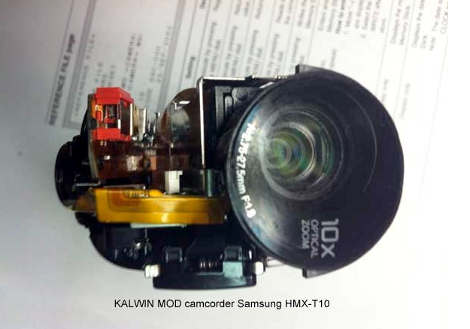
[Kalin] loved the picture from his new Samsung HMX-T10 camcorder, but the sound quality didn’t match up. Since it records video that can be directly imported to his editing suite of choice he didn’t want to just buy a different model, so he cracked it open and added an external mic input.

As with most consumer electronics these days, the hardest part of the hack is getting the thing apart and assembling it without any damage. [Kalin] had to get down to the bare circuit board to get to the audio input connections. He soldered up some shielded extension wire to an audio jack, then made some space in the case by cutting a bit of the plastic structure before finally gluing it in place. Details are a bit scarce, but it looks like he wired up the jack along with a couple of switches. We’d wager this still lets him use the stock microphone if he doesn’t feel like hauling around extra gear.

Auxiliary Display For Beat707 Works Via I2C

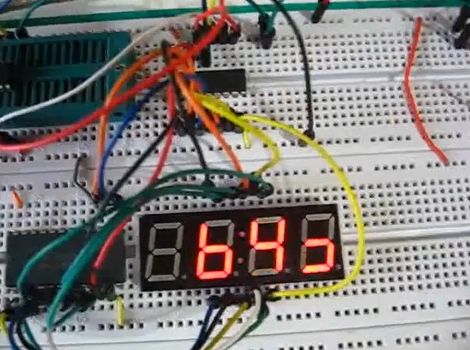
Bigtime is a simple way to create an auxiliary display for the Beat707 MIDI controller. The right half of the display shows the beat pattern that the drum machine is using, while the left half keeps track of the current measure.

Just a few components went into the extra hardware. A four-digit seven segment display is fed data from an ATtiny85. Since that microcontroller has only eight pins, a 595 shift register and CD4067 take care of translating serial data into the outputs necessary to light the display. The entire thing connects to the Beat707’s I2C bus, which means you don’t need to make hardware alterations to the original, and this leaves plenty of room for more addons.

The code package includes a Fritzing file, but for your convenience we’ve embedded a PNG of the hardware connections after the break. You’ll also find the demo video where [Guilherme] explains how this works.

Continue reading “Auxiliary Display For Beat707 Works Via I2C” →

Purdue IEEE ROV


Purdue University’s IEEE branch participated in this year’s Marine Advanced Technology Education Center Competition, taking second place for the Hybris ROV seen above. The competition included several compulsory functions, including the ability to cap an underwater oil well, collect biological samples, and take water samples at depth.

What they came up with is a quick and agile watercraft that easily overcomes a lot of the hardware hangups that typically plague ROV builds. There are eight thrusters, four for vertical motion and the other four take care of horizontal movement. The gripper mechanism can be clearly seen on the front of the craft, with two cylindrical containers housing the electrical components.

Don’t miss out on the project definition page. Each challenge is discusses in detail, along with the team’s solution. We were impressed by the amount of information they have posted, including overview of each electrical component as well as design files and source code. If you want to see how the first run of the competition went, click through the break to find embedded video.

Continue reading “Purdue IEEE ROV” →

Component Storage Roundup

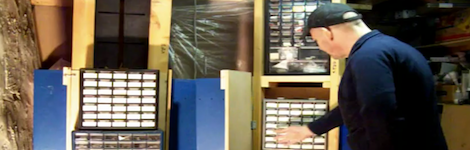
It’s been suggested that the first self-replicating computer virus was a single IC that eventually expanded into multiple plastic component storage boxes. Organizing components by their values is a huge PITA as well. Here’s some solutions we’ve found:

Photo Boxes

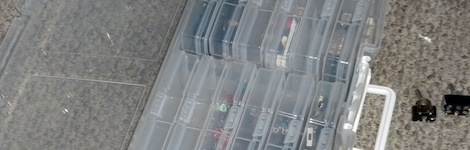
[Mathew] sent in his organization scheme that uses 4×6 photo boxes. Better get those boxes while they’re hot – we can’t remember the last time we used film.

Use a binder

This instructables uses binders for storage. Good for passives, but unless someone can find anti-static bags for a binder, we’ll keep our ICs separate.

The only way to organize resistors

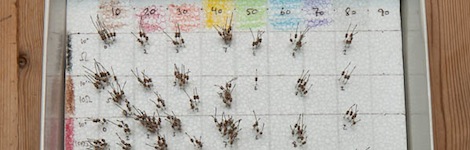
[Johannes] stores his resistors on a sheet of styrofoam. The grid has the first color band on the left side and the second color band on the top. Extremely, extremely clever. We’re wondering why we Radio Shack didn’t come up with this in the 70s. The grid could be laid out on a log scale, though.

If Susan is lazy, why does she do all the work?

[D.C. Boyce] hacked up a couple of lazy susans, built frames out of 2x4s and mounted plastic component drawers on them. The result is probably more space than we’ll ever need. To keep things simple, he wrote a database program to keep track of everything.