Even More Halloween Links

We know you just got a links post a couple hours ago, but more people tipped us off to some great Halloween stuff and we just couldn’t wait.


[Michael] came up with this fantastic idea for a flying ghost. He’s using a twin prop tilt rotor design to fly his ghost all over the neighborhood. It has a camera mounted on board and the footage is both fascinating and, toward the end, quite funny. Nothing beats chasing children down the street in first person from a flying ghost.


[Trey] wrote in to show off his 47 foot wide spider.  He made it himself out of black painters plastic that he heat welded together using a heat gun. In the video you can see his victim, a dummy mounted on a salvaged rotissierie.


[Floe] has been thinking about this one for quite some time. He finally decided to build his flame throwing jack-o-lantern, a concept we approve of. Using two servos, one to start a pilot light and one to spray a travel deodorant, it is pretty simple. He used a ceramic jack-o-lantern so it would be sturdy enough, and marginally less flammable.
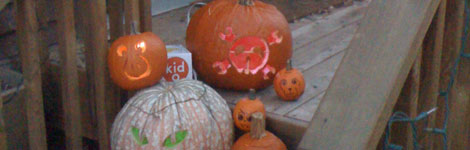
Here’s a safer Jack-o-lantern for you. [Paul] wrote in to show us his LED synchronized Jack-o-lanterns. While they may not be ground breaking, we just love seeing that logo out in the wild. Maybe we’re just egotistical, maybe those toothpicks just brought back fond memories. Why didn’t we ever run that Jack-0-lantern carving contest? Oh well, maybe next year. You can see a video of it in action after we get it uploaded correctly to our youtube channel.

Keyboard Concept Uses Magic Trackpad

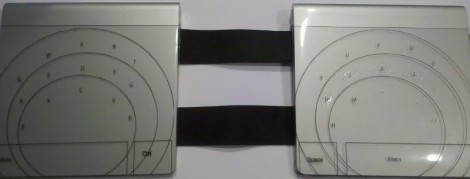
This is a keyboard alternative that [Sebastian] is building from two Apple Magic Trackpads. The multitouch devices are a good platform for this because they’re designed to pick up several events at the same time. To prototype the locations of the keys he’s using printable transparency sheets. He gives you a sense of where the home row is with a dab of clear fingernail polish that you can feel with your digits.

He may laser etch these pads once the key location is just right. This should give a bit of texture in itself and do away with the need for nail polish but we still like the ingenuity of that solution. The device is being developed in Linux, with some kernel hacking to handle the devices. We asked about source code and [Sebastian] is hesitant to post it because he’s been getting a lot of kernel panics. It sounds like once he cleans things up a bit he’ll share his work.

Don’t forget, there’s an easy hack to do away with the batteries in these things.

Halloween Props: Voice-changing Daft Punk Costume

[Dr. West] shared his Halloween costume with us; a Daft Punk inspired voice-changing helmet. He stared with a motorcycle helmet, cutting out a hole in the back for a sub-woofer speaker. Inside there’s an old computer mic and the amp circuitry for a portable stereo system. An Arduino is used to pick up the wearer’s voice from the microphone and perform the digital signal processing. Once the alterations have been made the signal is sent to an R-2R resistor ladder to perform the digital to analog conversion, and onto the amp for broadcast. Hear the result in the video after the break.

The rest of the helmet is window dressing. He found some kind of auto-body repair product called flex-edging to use as metallic hair. Those fins are accented with strings of red and blue LEDs. The faceplate finishes the look using speakers from the stereo system and a tinted visor.

He wan’t going for a replica, but we think his creation would be right at home with the look of the original.

Continue reading “Halloween Props: Voice-changing Daft Punk Costume”

Building The Banana Jr. 6000

[John’s] latest build strikes a chord of nostalgia by realizing the Banana Jr. 6000. The whimsical hardware is the product of the Bloom County comic strip. It first appeared in 1984, the same year as the Macintosh. [John] used a Mac Plus as the case but completely revamped the insides. An 8″ touchscreen takes the place of the original cathode ray tube. There’s also a Mac Mini and a couple of speakers salvaged from other Macs. To get things looking just right he altered the case’s logo, painted it yellow, and even altered the Leopard operating system. Now when you boot up you’ll see a Banana and not a partly consumed pomaceous fruit.

[Thanks Captain DaFt]

TV Out For TI Calculators Using The Link Port

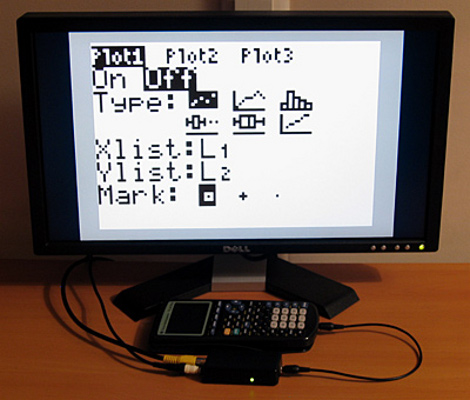
Do people enjoy wasting 300$ on a bulky convoluted system, that only works for special “Teacher Edition” calculators, and is several years out of date; E.G. the TI-Presenter? [Benryves] certainly does not. So instead of purchasing a TI-Presenter, he made his own TV out system for the TI brand of calculators by using an ATmega168, a few passive components, and some clever code. The only draw backs being: you save 280$, it fits in your pocket, and it works for almost any TI calculator. Bias aside, the system does actually have a few caveats compared to the commercial edition, but the pros far outweigh the cons.

Beginner Concepts: Electronics Basics From The Giz

Gizmodo University is open for business. This free educational series aims to educate about the basics of electronic theory. No prerequisite knowledge needed and they’re starting from the ground level. First lesson? Resistors! From there they’ve posted about voltage dividers, series/parallel circuits, Ohm’s law, and how to calculate a resistor value for an LED.

This is a great way to get the base knowledge that you need to start hacking like an EE. These are concepts that we assume you have already mastered if you’re following along with our AVR Programming series. We’re hard at work on part three but that’s still a little ways off. You’ve got time to do a review a GizU and reread our favorite book on electronic theory.