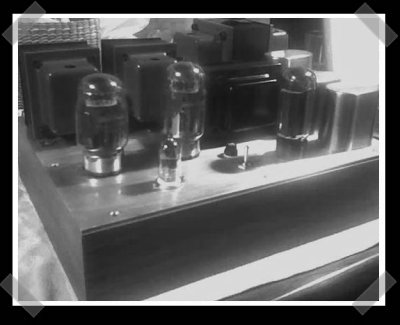
Here’s a classic project for the weekend. This KT88 based tube amplifier is surprisingly simple. The parts count is low, but the sound produced by the amplifier is considered quite pleasing. For the budget conscious, there are several optional tubes that can be used in place of the primary KT88.
Rear View Jacket

Is your popped collar so epic it emulates horse blinders? Are punk teens always skitching your coattails? Are you constantly moonwalking into power poles, trash cans, and the elderly? [Paul Coudamy]’s Hard-Wear Jacket solves all of these problems. It has a micro-camera embedded in the back of the neck and streams live video to a sleeve mounted monitor. The goal is to expand the perception of the wearer and how they interact with the environment. We know this is just a small step and doubt many people will be scrambling to never turn their neck again. It’s something interesting to contemplate though: how will people behave when brain taps allow their peripheral vision to have the same clarity as normal vision?
[via Gizmodo]
Free Web Development Tools

OStatic has a collected some great free tools for web developers. We talked about Quanta in an earlier post, but this article reaches beyond just HTML editors. LaunchSplash can be used to generate splash pages while you build. IBM, responsible for the Eclipse IDE, has built Project Zero to encourage web app development; even the IDE is web based. OpenX is an open ad server. Piwik is a free web analytics package. There are also quite a few open source CMS’s and sites collecting open source designs.
Receipt FAIL

Today’s fail comes courtesy of GNUCITIZEN‘s [pdp]. This would have made that TJX WEP crack much easier.
3x3x3 LED Cube
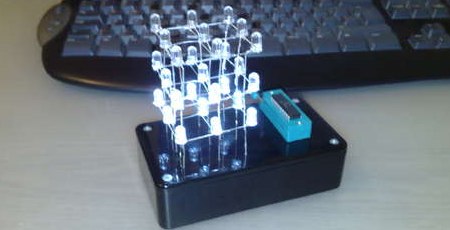
[portreathbeach] built this simple 3x3x3 LED matrix. It uses a PIC16F690 in a ZIF socket for the brains. Each layer has nine LEDs with the cathodes tied together. The anodes from each LED are connected to the LED below. The LEDs are multiplexed so that even though all layers appear to be on, they’re being addressed individually. He’s included software, so you can build your own animations. Video of the matrix in motion is after the break.
Dance Floor Power Generation
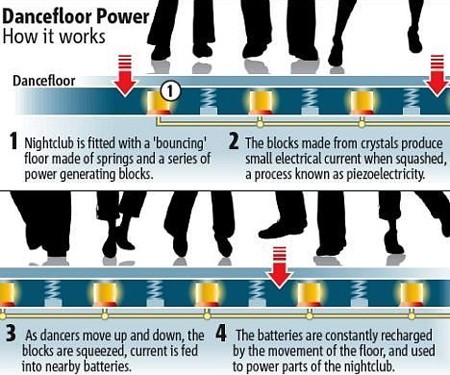
With concerns about the environment at an all-time high, do we roll up our sleeves and fix the situation or set our fears aside and dance the night away? [Andrew Charalambous], a nightclub owner in from Britain, doesn’t think we should have to choose, so he installed a dance floor that harnesses power from dancers into one of his clubs.
The dance floor uses piezoelectrics to collect the power: as clubgoers dance, electricity-producing crystals under the floor are compressed, producing a small current. The current is collect by embedded batteries, which in turn provide the power to lights, audio systems, and other parts of the club that consume electricity.
It’s certainly an interesting idea, but we’d like to know just how much power these floors are able to generate. Is this a gimmick or a genuinely practical solution? [Charalambous]’s club has adopted the somewhat hokey policy of forcing patrons to sign a pledge to be climate-conscious and do what they can to help the Earth, but that’s a small price to pay to earn green karma and have fun at the same time.
[via io9]
How-To: Make An RGB Combination Door Lock (Part 2)

In part 1 we showed you how to build your own prototype RGB keypad. Today we’ll show off some new ideas we worked on to create the project and turn it from prototype to fully functional battle station er door lock.
Continue reading “How-To: Make An RGB Combination Door Lock (Part 2)”