binary hierarchy

Ask Hackaday: Sequences Of Sequences

ask-hackaday-invariant-representations-featured-image


In a previous article, we talked about the idea of the invariant representation and theorized different ways of implementing such an idea in silicon. The hypothetical example of identifying a song without knowledge of pitch or form was used to help create a foundation to support the end goal – to identify real world objects and events without the need of predefined templates. Such a task is possible if one can separate the parts of real world data that changes from that which does not. By only looking at the parts of the data that doesn’t change, or are invariant, one can identify real world events with superior accuracy compared to a template based system.

Consider a friend’s face. Imagine they were sitting in front of you, and their face took up most of your visual space. Your brain identifies the face as your friend without trouble. Now imagine you were in a crowded nightclub, and you were looking for the same friend. You catch a glimpse of her from several yards away, and your brain ID’s the face without trouble. Almost as easily as it did when she was sitting in front of you.

I want you to think about the raw data coming off the eye and going into the brain during both scenarios. The two sets of data would be completely different. Yet your brain is able to find a commonality between the two events. How? It can do this because the data that makes up the memory of your friend’s face is stored in an invariant form. There is no template of your friend’s face in your brain. It only stores the parts that do not change – such as the distance between the eyes, the distance between the eye and the nose, or the ear and the mouth. The shape her hairline makes on her forehead. These types of data points do not change with distance, lighting conditions or other ‘noise’.

One can argue over the specifics of how the brain does this. True or not true, the idea of the invariant representation is a powerful one, and implementing such an idea in silicon is a worthy goal. Read on as we continue to explore this idea in ever deeper detail.


Continue reading “Ask Hackaday: Sequences Of Sequences”

Thumbnail that say The Hacklet

Hacklet 20 – Halloween Hacks

20

Hey, did you know that Hackaday.io is continuously being updated and improved? One of the coolest features this week is the new LaTeX based equation editor. That’s right, you can now put symbols, equations, and all sorts of other LaTeX goodies into your posts. Check out [Brian Benchoff’s] LaTeX demo project for more information.

Every holiday is a season for hacks, but Halloween has to be one of the best. From costumes to decorations, there are just tons of opportunities for great projects. We know that with an entire week left before the big day, most of you are still working on your projects. However a few early bird hackers already have Halloween themed projects up on Hackaday.io. We’re featuring them here – on the Hacklet!

pumpkin1[philmajestic] is in the Halloween spirit with his AVR Halloween Pumpkin. [Phil] created a motion activated Jack-o’-lantern with an ATmega328 as its brain. The AVR monitors a PIR motion sensor. When motion is detected, it flashes Jack’s LED eyes and plays spooky sound files from a WTV-020-16sd audio player. This is a great example of how a bit of work can create something cooler and infinitely more flexible than a store-bought decoration. Nice work [Phil]!

littlebitsPortraitThe littleBits crew have been working overtime on Halloween hacks this year. We definitely like their Halloween Creepy Portrait. A motion trigger, a servo, and a few glue bits are all it take to turn a regular portrait into a creepy one. When the motion detector is triggered, the servo moves a paper behind the portrait’s eyes. The replacement eyes look like some sort of demon or cat. Definitely enough to give us nightmares!

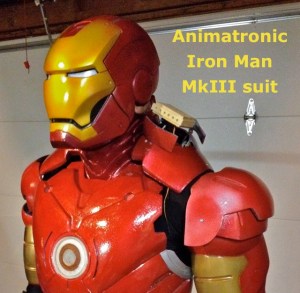
ironman[jeromekelty] helped his friend [Greg] build an incredible Animatronic Iron Man MKIII suit. The suit features RFID tags which trigger suit features. Since we’re talking about an Iron Man suit, “features” are things like shoulder rockets, boot thrusters, and a helmet that lifts up to reveal “Tony Stark”. No less than four Arduinos handle the various I/O’s. The suit even features an Adafruit WaveShield for authentic sounds! The electronics are just one piece of the puzzle here. [Greg] is a card-carrying member of the Replica Prop Forum. His MKIII suit is incredibly detailed. We especially like the weathering and battle damage!

tenticlesFinally, [Griff’s] son is going to be wearing a Crochet Cthulhu Mask, with Arduino controlled tentacles for Halloween this year. [Griff] is an experienced crochet hobbiest. He’s mixing his love of needlework with his love of electronics to build the animated Cthulhu mask for his 4-year-old son. The mask is based on a free crochet pattern from ravelry, though [Griff] is making quite a few changes to support his application. The mask will be smaller to fit a 4-year-old, and will contain servos to move the tentacles. We haven’t heard from [Griff] in a while, so if you see him, tell him to post an update on the mask!

If you haven’t started working on your Halloween hacks, get busy! But don’t forget to upload them to Hackaday.io! If we get enough, we’ll run a second Hacklet with even more great projects. Until then, you can check out our Halloween Projects List!

That’s about it for this frightful episode The Hacklet. As always, see you next week. Same hack time, same hack channel, bringing you the best of Hackaday.io!

Fail Of The Week: Project Frosty Mug Is Merely Chilly

Like many of us, [C] enjoys an ice-cold, refreshing soda while coding. Driven by a strong desire to keep a soda ice-cold indefinitely without using ice, [C] started Project Frosty Mug.

[C]’s stated goal is to keep a 20oz plastic bottle of soda at ~35F indefinitely while it sits in a room temperature environment. He started with a thermoelectric unit to cool an aluminium disc, like a cold coaster. Builds one and two made him realize that dealing with the generated heat was a big issue: it got so hot that it deformed the PLA frame. [C] also realized that bottom-only cooling wasn’t going to get the job done.

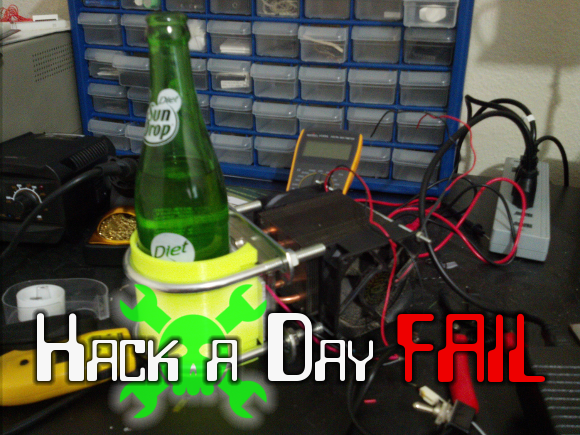
This project is now in its third build, which is pictured above. As you can see, it’s more koozie than coaster. That 3-D printed holster is lined with aluminium sheeting. Another flat piece covers the opening and attaches to the cooling element. A beefy CPU heat sink does its best, and a couple of U-brackets hold it all together.

[C]’s tested it with a glass bottle of Diet Sun Drop chilled to 38F. After 30 minutes in an ambient temperature of ~70F, the soda measured 45F. [C] lamented having not used a control bottle for comparison and reports that the power supply became quite warm. [C] isn’t going to give up that easily. Do you have any ideas for the fourth build?

Editor’s Note: This is one of the last Fail of the Week tips we have stored up. If you want to see the series continue on a weekly basis, we need help finding more documented fails! Please look back through your projects and document the ones that didn’t go quite right. We also encourage you to send in links to other fails you’ve found. Just drop the links in our tips line. Thanks!


2013-09-05-Hackaday-Fail-tips-tileFail of the Week is a Hackaday column which runs every Thursday. Help keep the fun rolling by writing about your past failures and sending us a link to the story — or sending in links to fail write ups you find in your Internet travels.


Retrotechtacular: Blue Collar, Red Nightmare

This week’s presentation is a well-cast piece of anti-Communist propaganda perpetrated by a division of the DoD that you’ve probably never heard of: the Directorate for Armed Forces Information and Education.

It’s narrated by Jack Webb of Dragnet and Adam-12 fame. He tells us of a fake American town located somewhere behind the Iron Curtain. It’s full of young comrades who sock hop and bebop while studying and playacting the bourgeoisie activities of the American economy and way of life. After introducing this, Webb pulls back the cushy, velvet curtain to profile a typical American household led by one [Jerry Donavan].

[Jerry] has it all: a wise-cracking wife played by Jeanne Cooper (most notably of The Young and the Restless), a son with a healthy interest in war games, a young daughter with pretty blond hair, and a beautiful older daughter who would go on to fame up the road at Petticoat Junction. After some unsettling news from this daughter at the dinner table, Jerry heads up to bed early to catch a few Zs.

Jack Webb denies [Jerry] any visions of sugar plums and instead drops him in the middle of Fakesville, USSR for a vivid nightmare of an America reconstructed by Communism. Watch as he figures out what’s going on and what the new regime means for him and his good-looking family.

Continue reading “Retrotechtacular: Blue Collar, Red Nightmare”

Thumbnail that say The Hacklet

Hacklet 19 – Ham Radio

19

Amateur, or ham radio operators have always been hackers. For much of the early 1900’s, buying a radio was expensive or impossible. Hams would build their own rigs, learning electronics and radio theory along the way. Time moves on, but hams keep hacking. Today we’re highlighting some of the best ham radio projects on Hackaday.io!

rtl

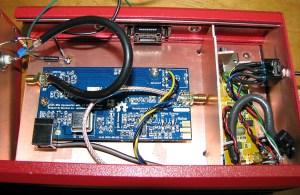
We start with [DainBramage1991] and his very practical RTL-SDR With Upconverter and Case. [DainBramage1991] fell in love with his low-cost RTL software defined radio dongle. He even added a Ham-It-Up upconverter to cover HF bands. The only problem was RF noise. the Realtek USB sticks tend to have little or no filtering, which means they are very susceptible to noise. [DainBramage1991] used the time-honored technique of insulating with copper clad board. Bits of PCB hold the RTL-SDR and upconverter in place. More PCB separates the two boards. Everything goes into a steel enclosure which keeps that unwanted RF at bay.

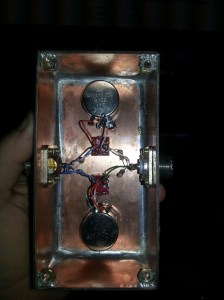
foxhunt-attenNext up is [Ryan Miller’s aka KG7HZQ]’s  ham radio fox hunt attenuator. Ham radio fox hunt’s don’t involve baying dogs or horses. In this case a fox hunt is a contest to find hidden low power transmitters. If you’ve never tried one, it’s a heck of a lot of fun. One of the challenges with a fox hunt is to find the direction to the transmitter when you’re very close. Even with directional antennas, reflections and swamped receivers make it hard to figure out just where the transmitter is. The solution is an attenuator, which simply reduces the signal to a more reasonable value. [Ryan] also used copper clad PCB for his circuit. Since the attenuator parts are soldered directly to the PCB, this is more of a Manhattan style design. Two ceramic 1k pots help him achieve his goal of near perfect linear attenuation. We’re betting this attenuator will help [Ryan] win some contests!

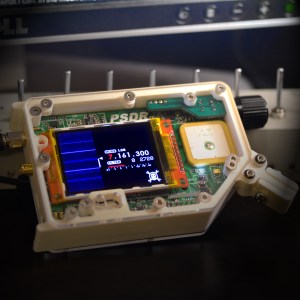
psdrWho says amateur radio won’t take you places? It may well be taking [Michael R Colton] to space! [Michael’s] project PortableSDR is one of the five finalists in The Hackaday Prize. We covered Michael earlier in the contest. PortableSDR started as a ham radio project: a radio system which would be easy for hams to take with them on backpacking trips. It’s grown into so much more now, with software defined radio reception and transmission, vector network analysis, antenna analysis, GPS, and a host of other features. We seriously love how [Michael] optimized a small LCD for waterfall display, tuning, and bandpass filter adjustment.

e2ra[W5VO] is working on an Ethernet to Radio Adapter. Every foot of coax in a radio system loses signal. Connections are even worse. It can all add up to several dB loss. [W5VO] wants to put an SDR at the antenna feed-point. With the signal path minimized, more watts make it out when transmitting, and more signal gets back to the receiver when listening. The interface between the SDR and host computer will be all digital; Ethernet to be precise. [W5VO] isn’t the first person to do something like this, microwave systems have had the transmitter and LNB at the antenna for years. That doesn’t take away from [W5VO’s] design at all  He’s been quiet for a while, but we’re hoping he continues on his design!

Where is everyone else? We’re a bit light on projects this week, but we have a good reason. There just aren’t enough ham radio projects on Hackaday.io! We’re hoping to change that though. Are you an amateur radio enthusiast? Document your project on the site. Get input from other hams and push the envelope! You might even find yourself on the Ham Radio List!

That’s all for this episode of The Hacklet. As always, QRX is next week. Same hack time, same hack channel, bringing you the best of Hackaday.io! 73’s!

Fail Of The Week: [Chris] Vs. The Gorn

This week, [Chris] tips the scales but ultimately fails. He’s on the road, hacking through the Great White North and improvising from a poorly-lit echo chamber that happens to have a vise.

Knowing nothing about firearms (do you believe that?), he decided to build a BB cannon out of pure scrap. Several kinds of sparks fly, starting with a Hitachi drill-as-lathe and ending with a tiny cupcake sparkler. [Chris] proceeds to bore out some redi-rod by eyeballing it and offers helpful tips for course correction should you attempt same. Having centered the cavity, he drills out a tiny hole for a fuse.

His first fuse is of the crushed up match head paste variety. It burns kind of slowly and does not launch the BB. Naturally, Plan B is to make napalm glue to adhere Pyrodex pistol powder to paper. As you might imagine, it worked quite well. The wadding was singed, but still no joy. After packing her full of propellant, it still didn’t explode and merely burned out the blowhole. So, what gives? Insufficient barrel length? Should have used bamboo instead of redi-rod? Didn’t want it badly enough? Give us your fodder below.

Continue reading “Fail Of The Week: [Chris] Vs. The Gorn”

Ask Hackaday: What Are Invariant Representations?

Your job is to make a circuit that will illuminate a light bulb when it hears the song “Mary Had a Little Lamb”. So you breadboard a mic, op amp, your favorite microcontroller (and an ADC if needed) and get to work. You will sample the incoming data and compare it to a known template. When you get a match, you light the light. The first step is to make the template. But what to make the template of?

“Hey boss, what style of the song do you want to trigger the light? Is it children singing, piano, what?”

Your boss responds:

“I want the light to shine whenever any version of the song occurs. It could be singing, keyboard, guitar, any musical instrument or voice in any key. And I want it to work even if there’s a lot of ambient noise in the background.”

Uh oh. Your job just got a lot harder. Is it even possible? How do you make templates of every possible version of the song? Stumped, you talk to your friend about your dilemma over lunch, who just so happens to be [Jeff Hawkins] – a guy whose already put a great deal of thought into this very problem.

“Well, the brain solves your puzzle easily.” [Hawkins] says coolly. “Your brain can recall the memory of that song no matter if it’s vocal, instrumental in any key or pitch. And it can pick it out from a lot of noise.”

“Yea, but how does it do that though!” you ask. “The pattern’s of electrical signals entering the brain have to be completely different for different versions of the song, just like the patterns from my ADC. How does the brain store the countless number of templates required to ID the song?”

“Well…” [Hawkins] chuckles. “The brain does not store templates like that”. The brain only remembers the parts of the song that doesn’t change, or are invariant. The brain forms what we call invariant representations of real world data.”

Eureka! Your riddle has been solved. You need to construct an algorithm that stores only the parts of the song that doesn’t change. These parts will be the same in all versions – vocal or instrumental in any key. It will be these invariant, unchanging parts of the song that you will look for to trigger the light. But how do you implement this in silicon?

Continue reading “Ask Hackaday: What Are Invariant Representations?”