Inside The Atari 2600

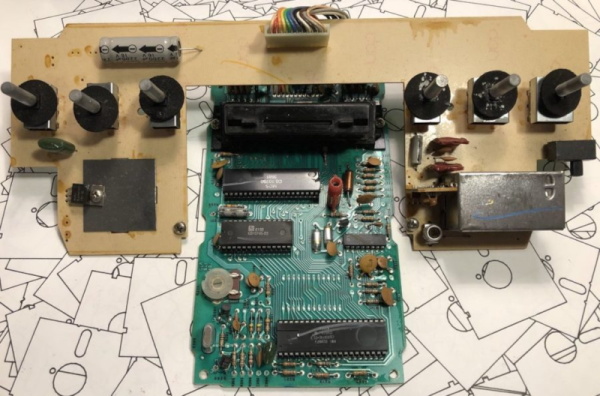
The Atari 2600 was an extremely popular yet very simple game console back in the 1970s. They sold, apparently, over 30 million of them, and, of course, these things broke. We’d get calls from friends and — remember, back then normal people weren’t computer savvy — nine times out of ten, we’d ask them to swap the controllers to show them it was a bad controller, and problem solved. But if you did have to open one up, it was surprising how little there was inside, as [Steve] notes in his recent teardown.

The bulk of the circuit board was switches, the power supply, and a TV modulator if you remember those. The circuit board was a tiny thing with a shrunk-down 6502, a 6532 RIOT chip, and a custom chip called a TIA. If you are familiar with those chips, you might wonder if the TIA had any memory in it. It didn’t. Nearly all the ROM and RAM for the game lived in the cartridge itself. Sure, the RIOT has 128 bytes of memory, but that’s not much.
Continue reading “Inside The Atari 2600”

Microsoft Returns To The Altair

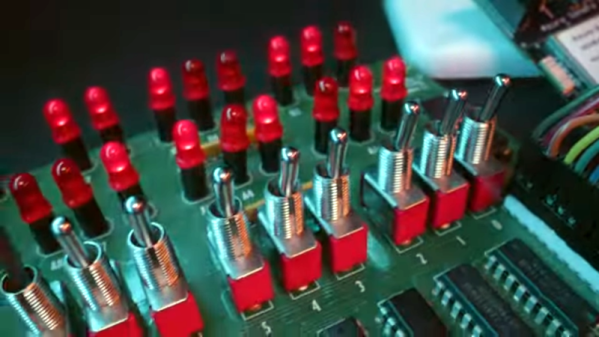
The Altair 8800 arguably launched Microsoft. Now [Dave Glover] from Microsoft offers an emulated and potentially cloud-based Altair emulation with CP/M and Microsoft Basic. You can see a video of the project below. One thing that makes it a bit odd compared to other Altair clones we’ve seen is that the emulator runs in a Docker environment and is fully cloud-enabled. You can interact with it via a PCB front panel, or a terminal running in a web browser.

The core emulator is MIT-licensed and seems like it would run nearly everywhere. We were a little surprised there wasn’t an instance in the Azure cloud that you could spin up to test drive. Surely a few hundred Altairs running at once wouldn’t even make a dent in a modern CPU.

Continue reading “Microsoft Returns To The Altair”

Swap The Clock Chip On The Mac SE/30 With An ATTiny85

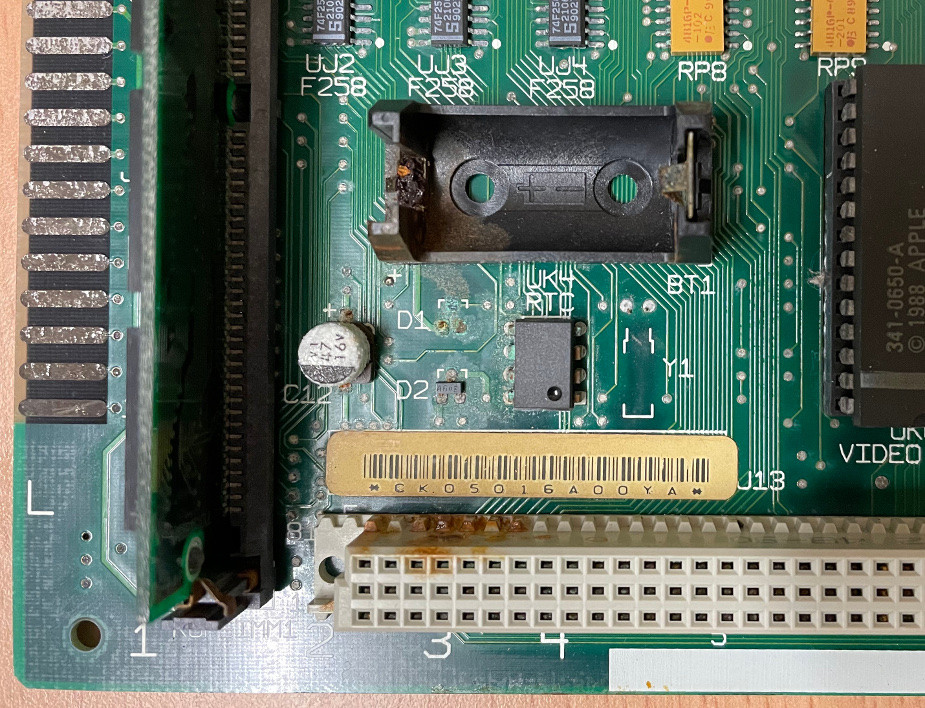
As [Phil Greenland] explains in the first part of his excellent write-up, the lithium battery used to keep the real-time clock (RTC) going on the Macintosh SE/30 has a nasty habit of exploding and leaking its corrosive innards all over the board. Looking to both repair the damage on a system that’s already had a battery popped and avoid the issue altogether on pristine boards, he started researching how he could replace the battery with something a bit more modern.

Damage from a ruptured RTC battery.

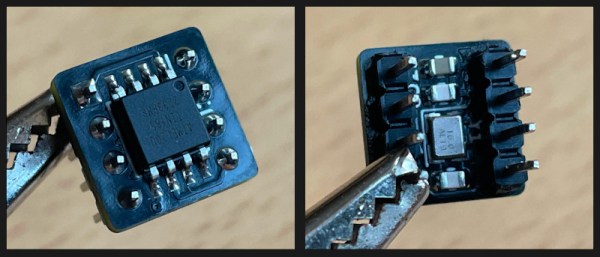
It turns out, the ATtiny85 is pin-compatible with the Mac’s original RTC chip, and indeed, [Andrew Makousky] had already written some code that would allow the microcontroller to emulate it. This is actually a bit more complex than you might realize, as the original RTC chip was doing double-duty: it also held 256 bytes of parameter random access memory (PRAM), which is where the machine stored assorted bits of info like which drive to boot from and the mouse cursor speed.

But after getting the mod installed, the computer refused to start. It turns out the project targeted earlier machines like the Macintosh Plus and SE, and not his higher-performance SE/30. Thanks to community resources like this KiCad recreation of the SE/30’s motherboard, contemporary technical documents, and his trusty logic analyzer, [Phil] was able to figure out that the timing was off — the code was simply struggling to respond to the faster machine. Continue reading “Swap The Clock Chip On The Mac SE/30 With An ATTiny85”

Maxing Out Your MacIntosh With A 4 MB Memory Stick Kit

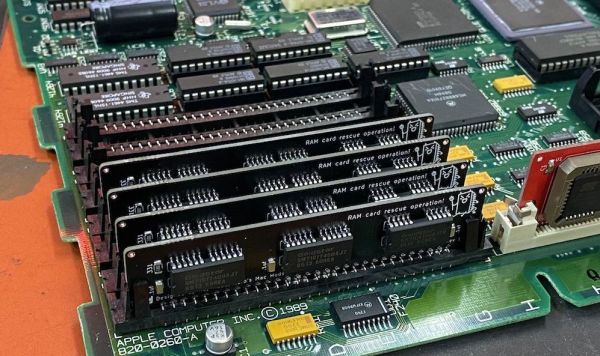
One fun aspect of retrocomputing is that you get to max out all aspects of these systems without having to take out a bank loan, as tended to be the case when these systems were new. Less fun is that decades after systems like the Apple MacIntosh SE/30 were last sold, the 30-pin SIMMs that form the expandable RAM for these systems has become rather scarce. This has led many to make their own SIMM PCBs, including [Kay Koba] with a PCB for 4 MB SIMMs along with information on which memory and parity ICs are suitable for these SIMMs.

For systems like the MacIntosh SE/30 with 8 30-pin memory slots, the maximum capacity is 128 MB, but this comes with many gotchas due to its ROM being ’32-bit dirty’. While this can be circumvented by swapping in a ROM from a later MacIntosh variant, the less invasive way is to enable the MODE32 system extension and install eight 4 MB SIMMs for a total of 32 MB RAM. RAM chips for such 30-pin SIMMs can be scavenged from the far more common 72-pin SIMMs, along with any old new stock one may come across.

These 4 MB SIMM PCBs are offered for sale by [Kay] with optionally the SMD components (capacitors, resistors and LED) included in the package. The original PCB card edge design is credited to work by [Zane Kaminski] whose GitHub profile also leads to e.g. this 30-pin SIMM project.

Have you modded your MacIntosh or other retro system yet to the maximum RAM and storage limits?

Classic Video Chip Drives A Modern TFT

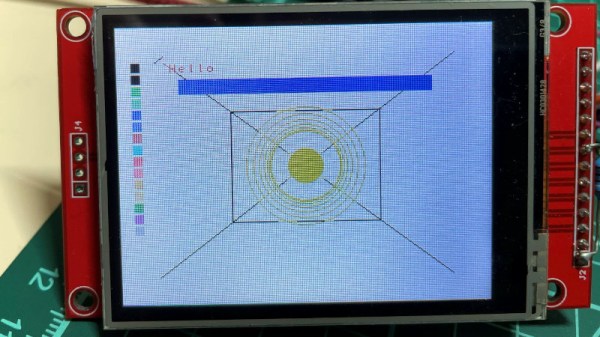
A lot of us have a soft spot for retrocomputers, and there’s nothing quite like running original hardware. Unfortunately if you’re after the truly original touch then that means carrying along the family TV from 1982, and that’s where life becomes annoying. What if there were a way you could easily drive an LCD panel from a classic video controller? Help is at hand for owners of TI TMS9928A video chips, courtesy of [umaker], with a clever interface board that drives an SPI or parallel TFT.

At its heart is not the FPGA you might expect, but an STM32G4 microcontroller on an STM Nucleo board. This digitizes the R-Y and Y components from the TMS chip which would originally have been destined for an NSC or PAL encoder, does the color conversion through its algorithm, and transfers the result to the screen. This is a task which would back in the day when NTSC or PAL were king have been seen as extremely computationally intensive, so it’s a mark of just how capable an STM can be that a few dollar microcontroller can do it.

We can see this technique proving to be extremely useful across a lot of different retro color graphic applications. We’re not sure whether its lag would be too much for a light gun game, but it would be nice to think that it would result in handheld retro machines.

We encountered this project previously, when as part of its development he needed a sync separator.

Is It A Game? Or A Calculator?

If you are a certain age, you probably remember the Mattel Football game. No LCD screen or fancy cartridges. Just some LEDs and a way to play football when you should be in class. While these might seem primitive to today’s kids, they were marvels of technology in the 1970s when they came out. [Sean Riddle] looks, well, not exactly at the games, but more like in them. As it turns out, they used chips derived from those made for calculators.

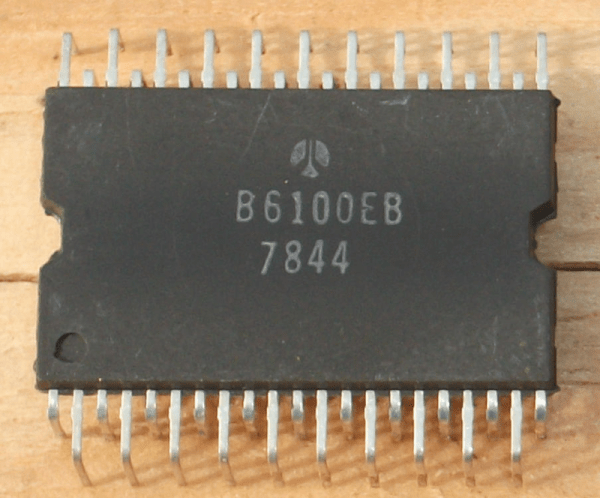
[Sean’s] post is a glimpse into this world of over four decades past. Football was actually the second electronic game from Mattel. The first one was Auto Race. There were also games called Space Alert, Baseball, and Gravity. Inside each are quad in-line packages with 42 pins, a Rockwell logo, and a custom part number.

Continue reading “Is It A Game? Or A Calculator?”

DIY GameTank Game Console Gets Upgraded Cartridge

Over the summer, you might recall seeing a homebrew 6502 game console called the GameTank grace these pages. The product of [Clyde Shaffer], the system was impressively complete, very well documented, and even had a budding library of games.

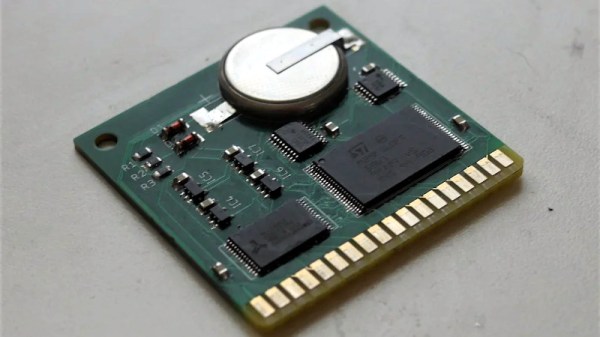
Recently, [Clyde] took to the r/electronics subreddit to show off the latest improvement to the GameTank: a revised removable cartridge. The biggest change this time around is the addition of 32 KB of battery-backed SRAM that gives games (or any other software that might be on the cartridge) some persistent storage to work with. Continue reading “DIY GameTank Game Console Gets Upgraded Cartridge”