No longer content with adding value to the thermostat in the hallway or making your fridge smarter than it should be, IoT vendors are pushing into the inner sanctum of homes, the holy of holies – the bathroom. Sure, you can spend big bucks on an electronically controlled valve to turn your shower into a remote-controlled spa that shares your bathing habits with the cloud, but if you’re on a more modest budget and have the hacker spirit, you might want to check out this DIY automated shower valve with IoT features.
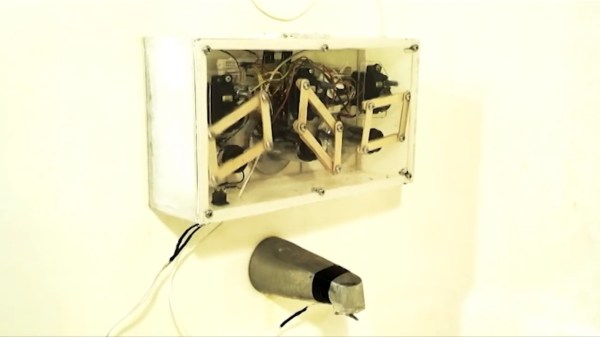
When we last ran into [TVMiller], he was opening gates using Jedi mind tricks, and before that he was shrinking a floating golf green to a manageable size. Such hacks work up a sweat, and while a clean hacker is a happy hacker, all that pesky valve-twisting and temperature-fiddling is so annoying. So with a few parts acquired from the waste stream, like an acrylic box, some salvaged servos, popsicle sticks, and a hell of a lot of caulk, [TVMiller] hacked together a feature-packed controller for his existing shower valves. An Arduino MKR1000 reads the water temperature and controls the servos that allow him to start the shower from his phone. Time and temperature data are sent to the cloud using ThingSpeak. You can see the whole thing in action in the mildly-NSFW video after the break.
Admittedly, this is a pretty janky setup, but it falls under the universal hacker disclaimer of “it’s just a prototype.” Still, we like the idea of retrofitting standard shower valves, and the popsicle-stick parallelograms for increasing leverage is a neat trick. We’ll be watching to see where this goes next.
Continue reading “Start Your Day The Arduino Way With This IoT Shower Controller”