A Salinometer Built For The Science Olympiad

This is a Digital Salinometer which [Daniel Kramnik] built as a Science Olympiad entry. He’s a Junior in High School and when looking for a project to enter into the Water Quality event he was interested in achieving greater accuracy than a mechanical hydrometer provides.

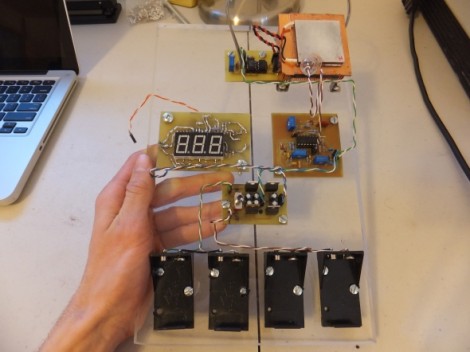
We think the circuit design is very impressive for anyone who hasn’t complete formal training as an engineer, and outstanding for someone as young as [Daniel]. Measurements depend on two main parts, a temperature control and a salinity sensor. These are both necessary because fluctuation in sample temperature will affect the salinity reading.

A Peltier element is used to heat the water sample if it doesn’t fall within a set range of temperatures. From there, an Op-Amp circuit conditions a signal running through the sample, passing an output to the ADC converter chip which drives the three-digit readout. [Daniel] calculates an accuracy within 0.0014%. He must be on the mark because he’s won his regional competition and will soon compete at the state level.

Making Pure Caffeine At Home

If you’ve ever thought about extracting caffeine from coffee beans, [Ben] is the guy for you. The last time we ran into him, he had already produced a few aerogel monoliths with a few chemicals, pipe fittings, and some CO2. We’re guessing he needed another use for his supercritical drying chamber, so after looking over a few patents, he decided to make pure caffeine in his garage.

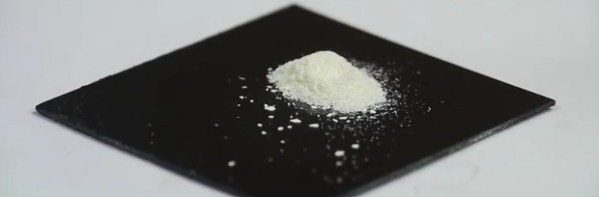
The extraction began with green coffee beans inside the drying chamber. Liquid CO2 is pumped in and heated to the supercritical point. After a few hours, the caffeine will have been extracted from the beans and can be drained from the chamber. Right now, the process results in an inky goo that contains caffeine. [Ben] refined this a little further with Methylene Chloride, a process he’ll document in a future video.

Of course it goes without saying that this build is a little bit on the dangerous side. We’re confident in [Ben]’s abilities to know what he’s doing, but we’re not going to endorse this for every joker on the Internet. Also, two spoonfuls of caffeine will kill you, so try not to screw around with that either.

Continue reading “Making Pure Caffeine At Home”

How To Grow Your Own EL Wire DNA Helix Lamp

el-wire-helix-lamp

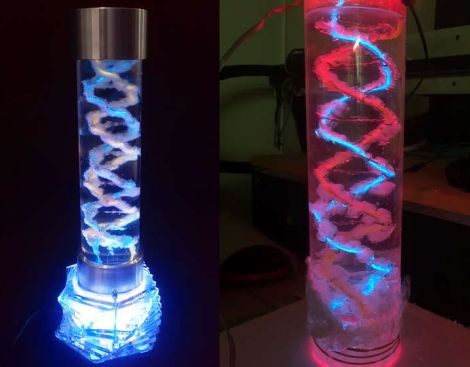
[LucidMovement] was looking for some crystal-based artwork and just couldn’t seem to find anything that fit the bill, so he decided to build something himself.

The inspiration for his desk lamp came from something we’re all familiar with, a DNA double-helix. To grow the crystals he built a helix-shaped growing substrate out of nichrome and EL wires, submerging them in a warm alum solution. Once he had a nice set of crystals, he mounted it in an acrylic tube, filling the air space with clear silicone to seal off the display. He then mounted the silicone-filled tube on top of a rotating acrylic stand that he had cut for the project. The stand is made from several sheets of acrylic and contains both the gearing for movement as well as RGB LEDs to light the display from the bottom.

The lamp looks great when sitting idle, but when he powers it on it really shines (no pun intended). [LucidMovement] put a ton of work into the lamp, and offers up all sorts of tips, tricks, and considerations for anyone looking to build their own. Be sure to check out his writeup for plenty more details, and stick around to see a short video of the lamp in action.

Continue reading “How To Grow Your Own EL Wire DNA Helix Lamp”

Making Paint With Inorganic Chemistry

Back during the Renaissance, great artists like Leonardo, Michelangelo, and Raphael would create their own paints. Of course paint is very cheap and readily available, but that doesn’t mean you can’t make your own paint by playing with chemistry.

Last summer, [Sean] at the Philly hackerspace Hive76 did some experiments with ferrofluids. For these experiments [Sean] prepared a bunch of magnetite from rusty iron screws. In the process a lot of iron hydroxide was formed, which can produce wonderful colors. The red-brown eye in the title pic was made from some of the stuff floating on the top of [Sean]’s beaker.

[Sean] was really after something really black, so he turned his efforts towards hematite, a very dark pigment and is now working with other metals to produce some interesting colors. Already he’s made green and yellow pigments with two copper compounds. We’ll just have to hope he uses a fume hood when he starts taking apart mercury switches to make red.

Making Aerogel At Home

[Ben] outdid himself. He successfully made monoliths of silica aerogel in his garage. Aerogel, the light-weight solid that has been referred to as ‘hard air’ is really freaking expensive especially in non-granulated form.

The techniques behind producing aerogels have been on the Internet for a fairly long time. A few uncommon chemicals and a supercritical drying chamber are required for production, meaning it takes a lot of know-how to make hard air at home. Somehow, [Ben] got ahold of some tetramethoxysilane, the hard to come by ingredient and made a supercritical drying chamber out of pipe fittings and liquid Carbon Dioxide.

In the end, [Ben] was able to make a few small pieces of aerogel. The size of his pieces were constrained by his “mold” (actually a syringe) and the size of his drying chamber. It’s very possible [Ben] could build a larger supercritical drying chamber and make larger pieces of aerogel that would be sold commercially for hundreds of dollars.

Check out the very informative walkthrough of [Ben]’s process after the break. It’s 10 minutes long and makes for a great lunch break video.

Continue reading “Making Aerogel At Home”

Can You Develop Film With Coffee And Vitamin C?

Are you feeling a little MacGyver-ish and have access to a film camera? Perhaps you want to try developing your pictures using coffee and vitamin C instead of a traditional developing solution. [Danish Puthan Valiyandi] does a great job of walking us through the steps he took, including precise measurements, temperatures, and timings involved in achieving great results. This is probably not for the first-timers, as he does use special equipment associated with traditional developing methods.

The process uses a couple of easily obtainable materials: instant coffee, vitamin C powder, and washing soda (sodium carbonate). Once the roll of film has been exposed, it’s put onto a jig for developing (Danish does this with the lights on to make the video after the break worth watching, but you’ll need to do it in the dark). Once nestled inside of the development container, he mixes up a batch of his diy developer and agitates according to a times schedule. When the development is finished, a chemical fixer–no diy alternative used here–is added to set the film. Dry out the strips and use a scanner to digitize your work. We’re surprised by the quality of the finished product, but we shouldn’t be… he certainly knows what he’s doing.

Continue reading “Can You Develop Film With Coffee And Vitamin C?”

anodizing_aluminum_without_battery_acid

Anodizing And Dyeing Aluminum Without Battery Acid

While many people have tried their hand at anodizing aluminum at home, there are plenty who would just as soon leave it up to the professionals due to the highly concentrated sulfuric acid required for the process. [Ken] started thinking about the process and wondered if there was a way to get comparable results using chemicals that are easier to obtain and dispose of.

Through some experimentation he found that sodium bisulfate (NaHSO4), which is a sodium salt of sulfuric acid, can easily be used in its place with great results. The chemical is typically advertised in hardware and pool stores as “Aqua Chem”, and can be had at a very reasonable price. When paired with the proper DC current along with a cathode, the sodium bisulfate easily anodizes an aluminum workpiece and renders it ready for coloring with RIT, readily available cloth dye.

We were impressed with the results, and when looking at [Ken’s] test pieces, it seems that the metal dyed with sodium bisulfate has a more uniform, less streaky coloring to it. It’s also worth mentioning that [Ken] has found it is fairly easy to etch the aluminum before anodizing using a solution of sodium hydroxide, which is great for individuals who prefer a more matte finish.

If this is something that interests you, be sure to swing by his site. He has a posted nice video overview of the process that may be of some help.