
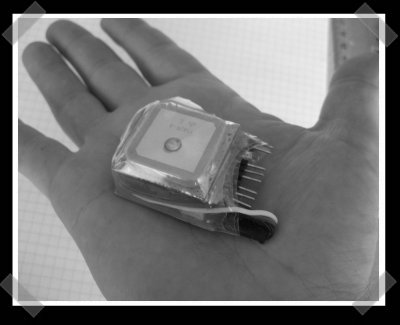
This is a nice, compact gps logger that’s built around a PIC16F872 and some eeprom chips. It was designed for a particular GPS receiver, but should be easily adaptable to others since the unit ouputs standard sentences at 4800 baud. Full schematics and board layout are available on the project page.
classic hacks2866 Articles
Tesla Coil Tuner
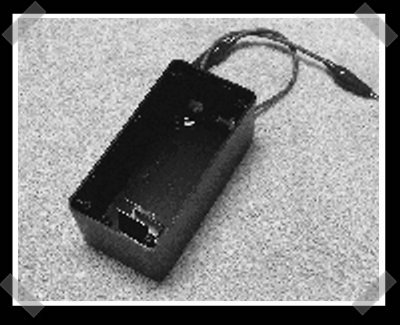
Here’s one more use for the insanely handy LM555 chips. [Terry] put together a Tesla coil tuner around one. The 555 is used to generate a range of frequencies while a simple double LED arrangement indicates the presence of an output spike from a coil due to the resonance.
Non-destructive Breakdown Voltage Tester
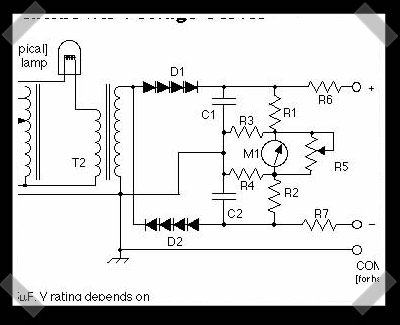
This applies more to older vacuum technology than your average solid state hardware, but [Richard] put together an interesting project. It’s designed to test a component for its breakdown voltage without destroying it. The general idea of the ‘BVT’ is to increase the voltage applied to a device until some current leakage is detected. Of course, any device that includes notes on probable arc length in relation to kilovolts is awesome by definition.
Motorcycle Throttle Bodies For Your Car

[Dem_z] modded his Honda VTEC engine to use a set of individual throttle bodies from a 2001 Suzuki GSX-R motorcycle. The fuel injection bungs on the throttle bodies were epoxied shut and the bodies were only used to provide individual butterflies for each cylinder. This one doesn’t quite make our to do list, but it’s definitely a hack.
[bender386] caught my blunder first, so I’ll be sending him a bit of Hack-A-Day swag. In the meantime, here’s a little bonus: Check out this home built anamorphic lens. Native 2.35:1 projectors have started showing up, but they’re insanely expensive. By adding some image processing and a lens to stretch the projected image, you can get full width projection and use all the pixels on the projector.
KT88 Tube Amplifier
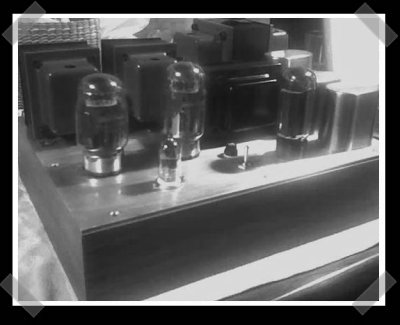
Here’s a classic project for the weekend. This KT88 based tube amplifier is surprisingly simple. The parts count is low, but the sound produced by the amplifier is considered quite pleasing. For the budget conscious, there are several optional tubes that can be used in place of the primary KT88.
How-To: Make An RGB Combination Door Lock (Part 2)
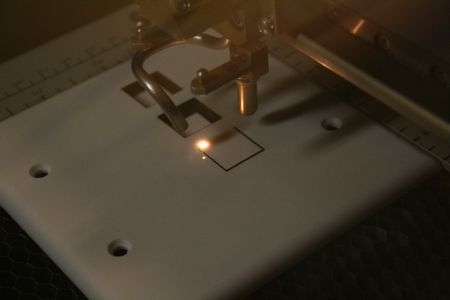
In part 1 we showed you how to build your own prototype RGB keypad. Today we’ll show off some new ideas we worked on to create the project and turn it from prototype to fully functional battle station er door lock.
Continue reading “How-To: Make An RGB Combination Door Lock (Part 2)”
Waterproof USB For Underwater Cameras
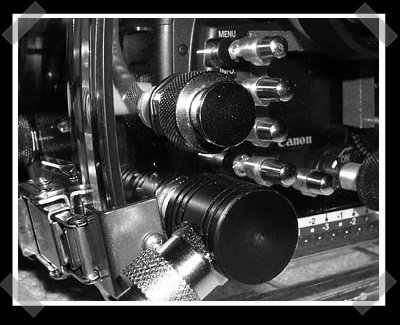
Underwater camera housings work great – but they are prone to humidity, dirt and dust problems if you open them more often than needed. In order to download the images off of his digital camera between dives, [Matt] decided to add a waterproof external USB port to his housing. He had an extra 5 pin strobe bulkhead installed by Ikelite (makers of excellent housings). Then he spliced on a mini-usb cable for the camera and spliced a standard USB end onto a strobe cable. During dives, the port is closed with an o-ring sealed cap.









