New Arduino Nano Line Rolls Out In Four Flavors At Maker Faire Bay Area

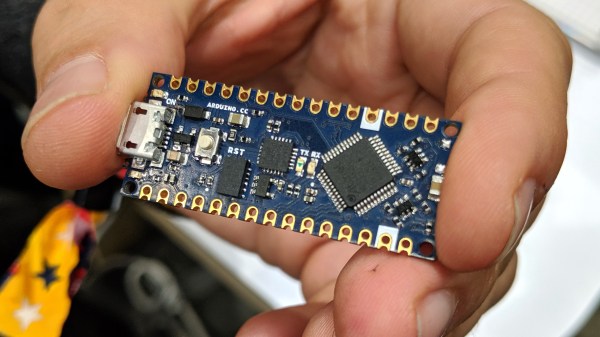
Arduino has announced a new line of Nano boards that will begin shipping next month. From the design, to the chips and features on the board, to the price, there’s a lot that is new here. I stopped by their booth at Maker Faire Bay Area for a look at the hardware.

Immediately noticeable is the new design for the pins on either side of the board, which has transitioned from through-hole to a castellated through-hole hybrid. The boards can be ordered with or without pin headers soldered in place. If you get them without, you can reflow these nano boards as modules on a larger PCB design. Recommended footprints are not yet available but I’m told they will be published soon.
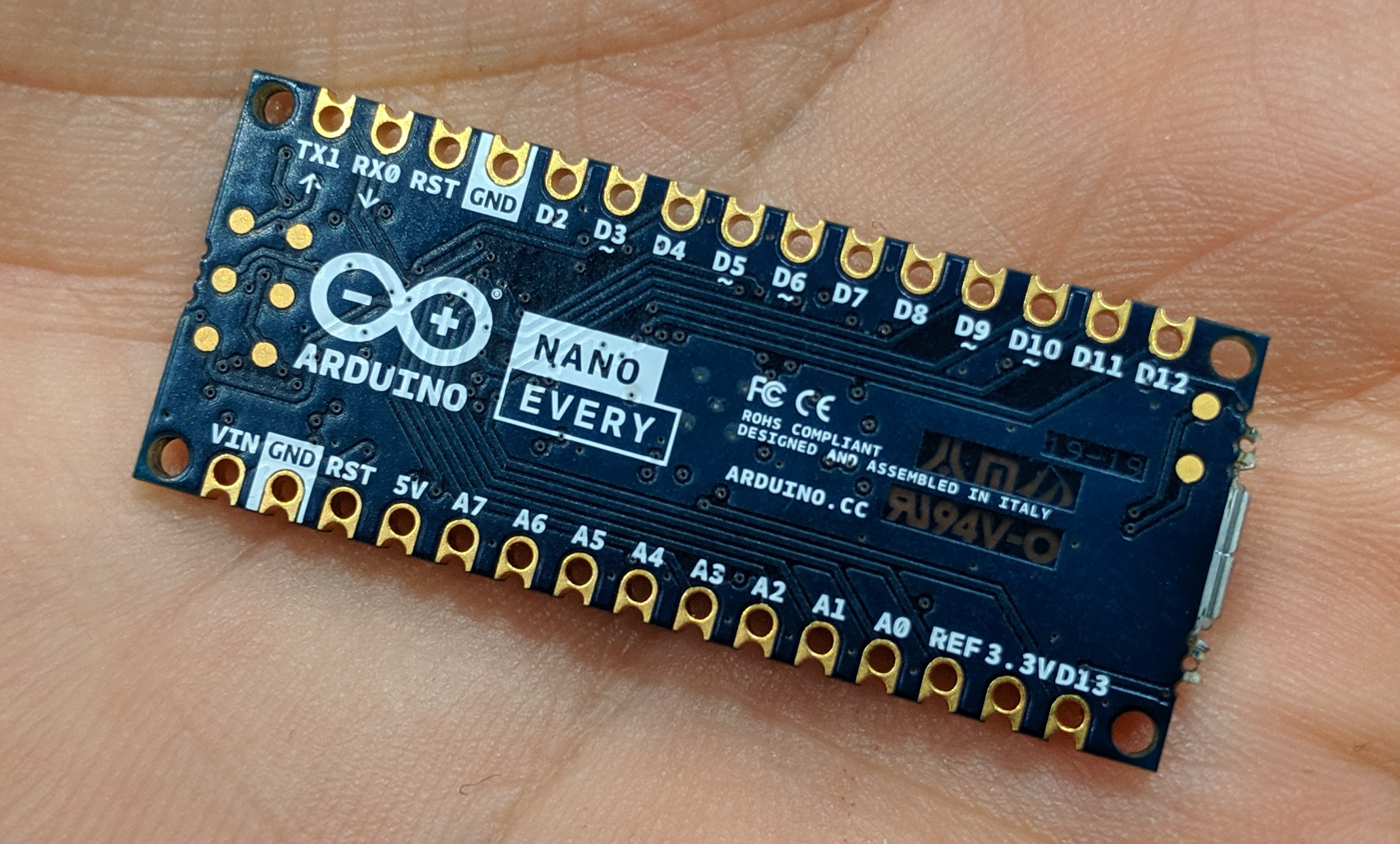
The most basic model in this lineup is the “Nano Every”, a 5V board with the ATmega4809 at its center. This brings 48 KB of flash and 6 KB of RAM to the party, running at 20 Mhz. A really nice touch is the inclusion of power regulation that turns up to 21 V of input into the regulated 5 V for the chip, with the added bonus of sourcing up to 1 A for external components through the 5 V pin on one of the headers. For the hackers out there, you can choose to inject your unregulated power through the VIN line, or the USB header.

All of this is a really nice upgrade to the previously available Nano design, with the $9.90 price tag making it a really desirable board for your 8-bit microcontroller needs. The one critique that comes to my mind is that the pins are labeled nicely on the bottom silk screen, but I would also have liked to see these labels on the top layer. When used in a breadboard, or soldered to another PCB, pin labels will be hidden.
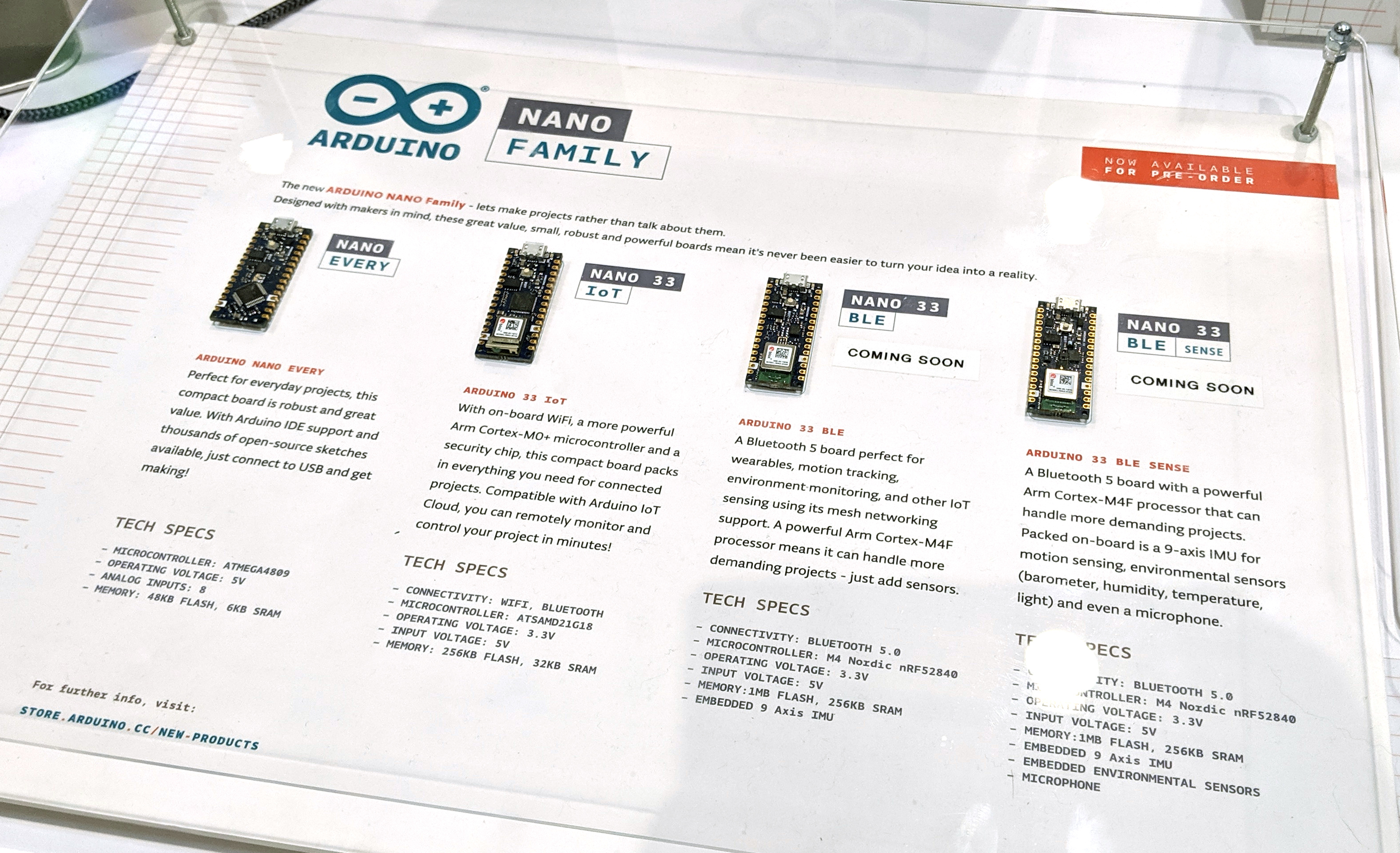
The rest of the Nano family center around more powerful chips. As mentioned above, the “Nano Every” board runs an 8-bit chip at 5 V, but the three different “Nano 33” boards have 32-bit chips running at 3.3 V. There’s an “IoT” version with an Arm Cortex-M0+ SAMD21 processor, 6-axis IMU, plus a uBlox NINA-W10 modules which is an ESP32-based board for WiFi, Bluetooth, and cryptography features. MSRP on this board is $18.

The “Nano 33 BLE” and “Nano 33 BLE Sense” boards both do away with the SAMD21 chip and utilize the Nordic nRF52480 which is part of the uBlox NINA-B306 modules and provide Bluetooth connectivity. At $19, the BLE flavor gets you a 9-axis accelerometer. For an additional ten bucks, the “BLE Sense” adds a slew of sensors: pressure, humidity, digital proximity, ambient light, gesture sensor, and a microphone. Pre-orders for these two are slated to begin shipping this July.

The new Arduino Nano designs bring a lot of power to a small footprint. I have to wonder if Arduino is looking to compete with ESP32 modules. The castellated edges on ESP32 modules have allowed them to pop up in all kinds of development boards and other products. The new Nano design continues the legacy of Arduino boards being prototype friendly, but adds the ability to include the boards in a product design based on surface mount assembly.
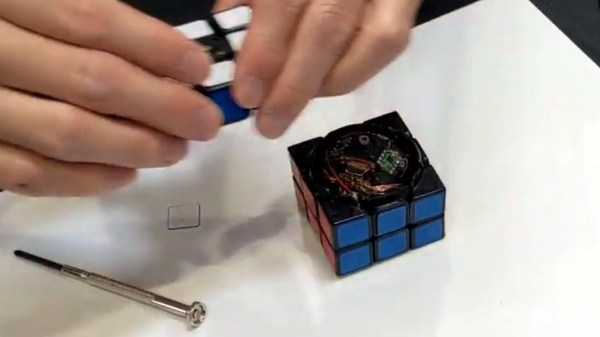
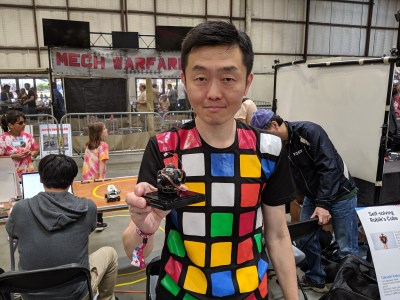
Teardown Video: What’s Inside The Self-Solving Rubik’s Cube Robot

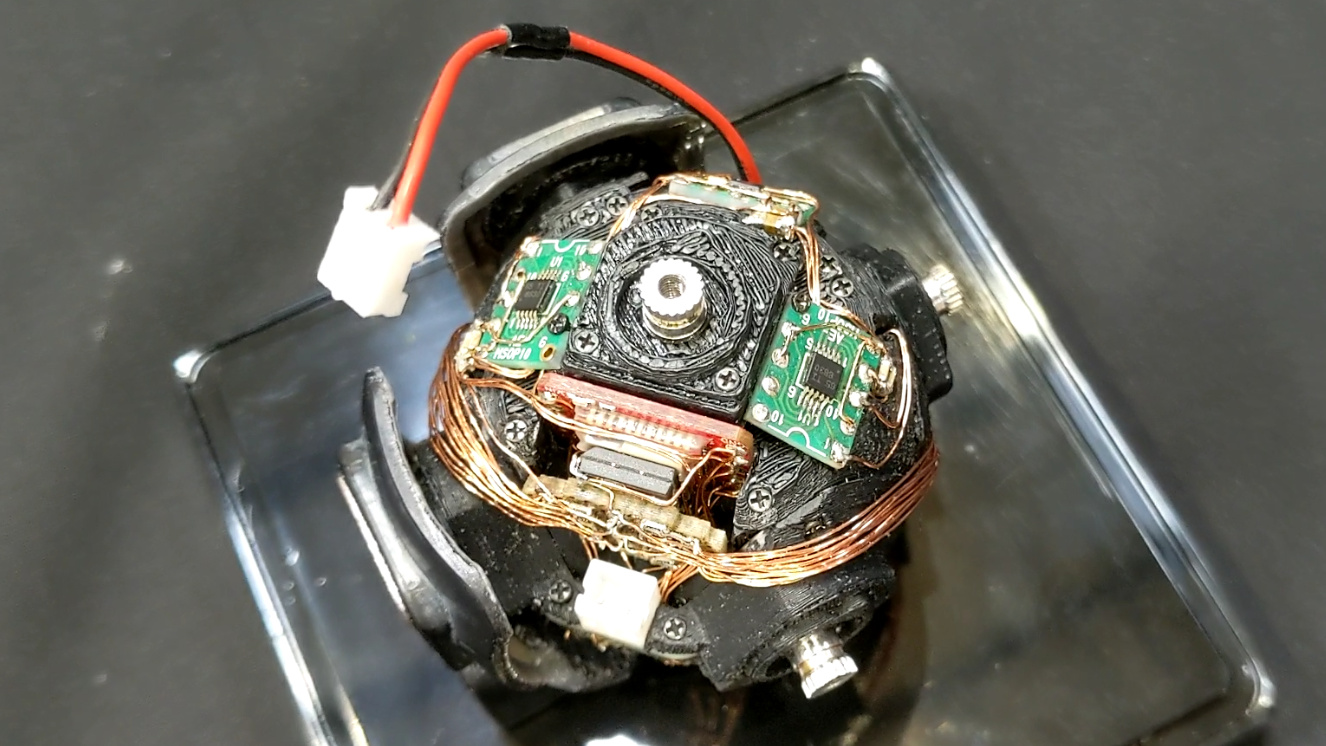
You can find all kinds of robots at Bay Area Maker Faire, but far and away the most interesting bot this year is the Self-Solving Rubik’s Cube built by [Takashi Kaburagi]. Gently mix up the colored sides of the cube, set it down for just a moment, and it will spring to life, sorting itself out again.

I arrived at [Takashi’s] booth at just the right moment: as the battery died. You can see the video I recorded of the battery swap process embedded below. The center tile on the white face of the cube is held on magnetically. Once removed, a single captive screw (nice touch!) is loosened to lift off the top side. From there a couple of lower corners are lifted out to expose the tiny lithium cell and the wire connector that links it to the robot.

Regular readers will remember seeing this robot when we featured it in September. We had trouble learning details about the project at the time, but since then Takashi has shared much more about what went into it. Going back to 2017, the build started with a much larger 3D-printed version of a cube. With proof of concept in hand, the design was modeled in CAD to ensure everything had a carefully planned place. The result is a hand-wired robotic core that feels like science fiction but is very, very real.

I love seeing all of the amazing robots on the grounds of the San Mateo County Event Center this weekend. There is a giant mech wandering the parking lot at the Faire. There’s a whole booth of heavy-metal quadruped bots the size of dogs. And if you’re not careful where you walk you’ll step on a scaled-down Mars rover. These are all incredible, out of this world builds and I love them. But the mental leap of moving traditional cube-solvers inside the cube itself, and the craftsmanship necessary to succeed, make this the most under-appreciated engineering at this year’s Maker Faire Bay Area. I feel lucky to have caught it during a teardown phase! Let’s take a look.

Continue reading “Teardown Video: What’s Inside The Self-Solving Rubik’s Cube Robot” →

Here’s How Hard It Is To Produce A Conference Badge

Making an event badge is hard work. Making a single prototype badge is hard enough, but the whole process of sourcing components and coordinating manufacture for hundreds of badges on a shoestring budget with the looming deadline of the event and its expectant attendees is a Herculean task.

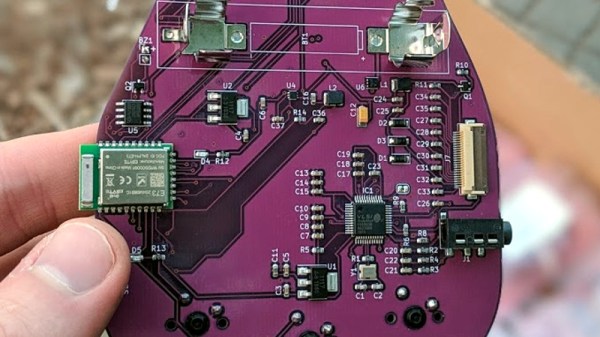
[Uri Shaked] is one who bears the scars of producing an event badge, and he’s written a fascinating account of his experience. The conference in question was Aramcon 2019, a private tech event in Israel, and the badge has an nRF52840 driving an e-ink display, multi-colour LED, and an audio codec, with a set of full-size keyboard keys as user input. Since the nRF chip supports mesh networking, the idea was to produce a badge capable of streaming audio across the entire event.

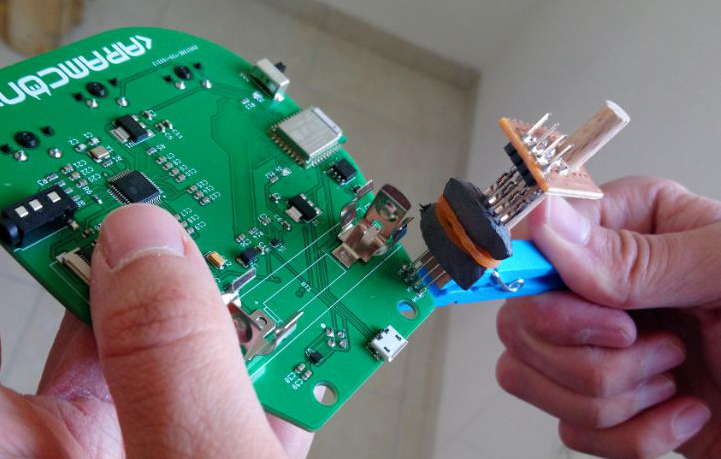
A clothes-pin as a programming jig, we like it!

We follow the team through nail-biting months of prototype boards, reversed connectors with last-minute cable bodges, compatible parts that didn’t turn out to be quite so compatible, and wrong footprints, and see them arriving at a badge which worked, but without the audio they’d hoped for. Along the way they came up with a clothes-pin-based programming jig which would surely have merited its own Hackaday write-up had they covered it on its own. Demonstrating the mesh networking by turning a whole auditorium’s worth of badges LEDs yellow was their reward, and we can see they’ve produced a very creditable badge. We particularly like the use of keyboard key switches, and we commend them for planning a life for the badge after the event.

Our Hackaday colleague [Brian Benchoff] is a veteran of badge production, read his write-ups of the genesis of our Superconference 2017 badge and the Tindie dog badge. Meanwhile the keen-eyed among you may recognise the nRF52840 as the guts of the latest generation of Particle boards.

It Is ‘Quite Possible’ This Could Be The Last Bay Area Maker Faire

The Bay Area Maker Faire is this weekend, and this might be the last one. This report comes from the San Francisco Chronicle, and covers the continuing problems of funding and organizing what has been called The Greatest Show and Tell on Earth. According to Maker Media CEO Dale Dougherty, “it is ‘quite possible’ that the event could be the Bay Area’s last Maker Faire.”

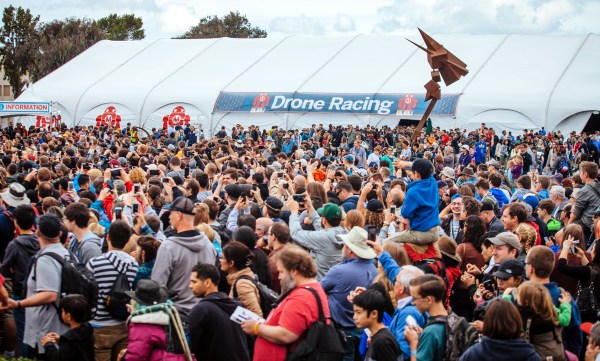
Maker Faire has been drawing artists, craftspeople, inventors, and engineers for more than a decade. In one weekend you can see risque needlepoint, art cars meant for the playa, custom racing drones, science experiments, homebrew computers, gigantic 3D printers, interactive LED art, and so much more. This is a festival built around a subculture defined by an act of creation; if you do something with your hands, if you build something, or if you make something, Maker Faire has something for you. However you define it, this is the Maker Movement and since 2006, there has been a Maker Faire, a festival to celebrate these creators.

It’s sad to learn the future of this event is in peril. Let’s take a look at how we got here and what the future might hold.

Continue reading “It Is ‘Quite Possible’ This Could Be The Last Bay Area Maker Faire” →

This Saturday: Meetup With Hackaday, Tindie, And Kickstarter

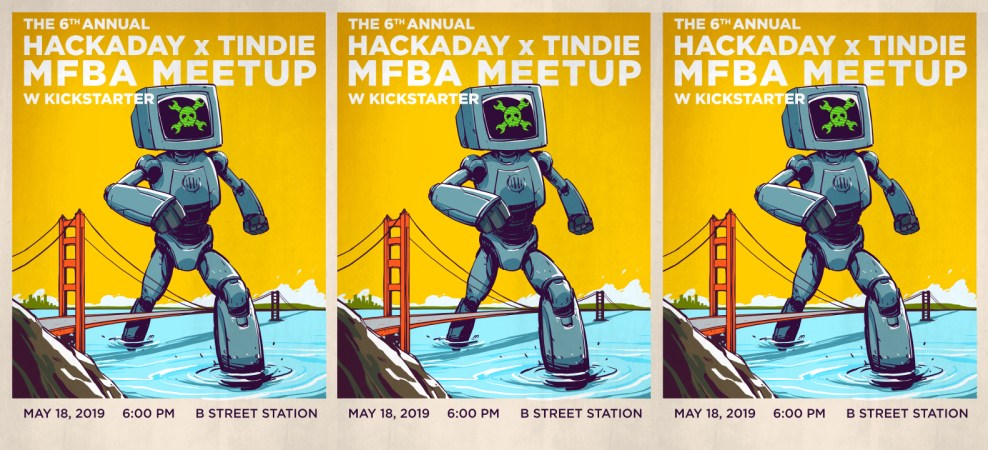
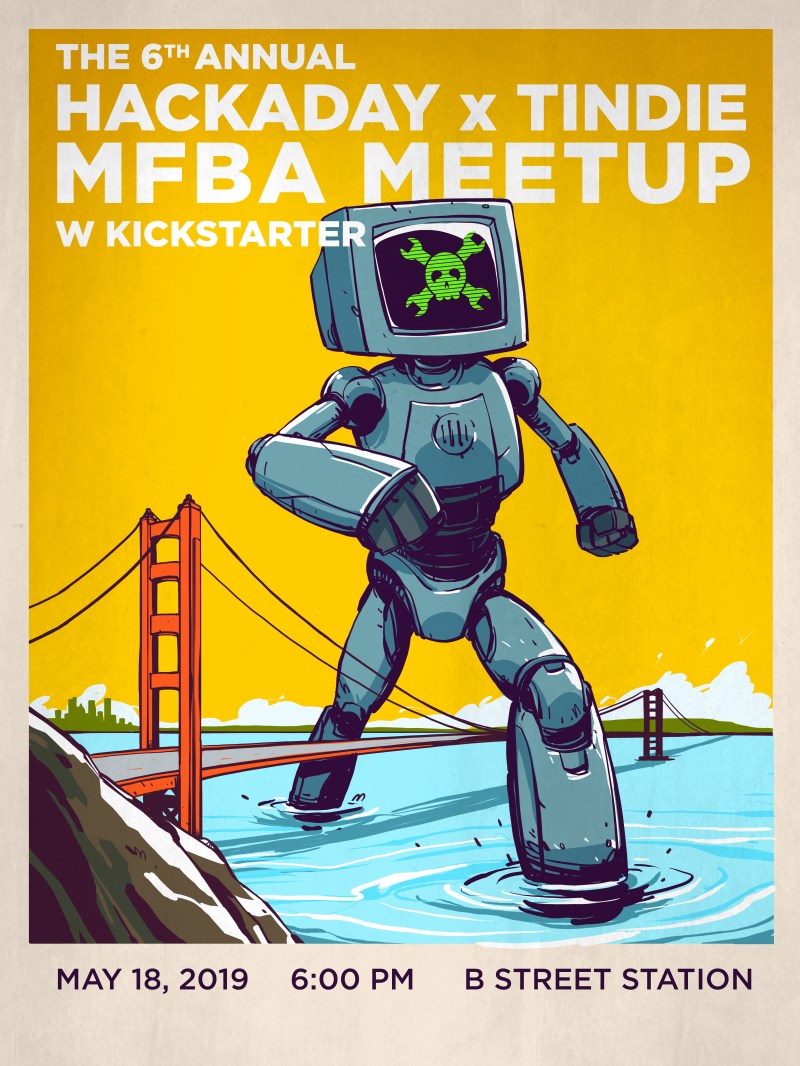
If you’re near San Francisco this weekend, this is what you should be doing. It’s The 6th Annual Hackaday x Tindie MFBA Meetup w/ Kickstarter.

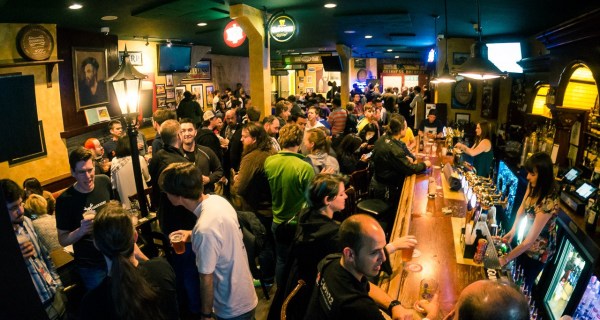
Come hang out with the hardware hackers and bring along a project of your own to get the conversation going. We’re excited to move to a new, larger venue this year. All the good of the past five years will come along with us, plus many benefits of exclusively booking out an entire venue. You can catch up with people who have been on their feet all day running booths — and usually see the stuff they can’t show you at the Faire. The crew from Hackaday, Tindie, and Kickstarter will be on hand. And you’ll get a glimpse of a lot of the cool people and projects you’ve admired on the pages of Hackaday over the years. It’s fun, you should go!

First beer is on us if you RSVP using the link at the top of this article. But we’re mainly publishing this today to show off the poster art. Deposit your adoration for this exquisite illustration in the comments below.

Amazing Art by Joe Kim

We love all of the original art that Joe Kim creates for Hackaday articles. It’s impossible to look at his poster for this event and be anything but overjoyed. Here’s a link to the full size image, but be warned that the file is 14.4 MB

6th Annual Hackaday X Tindie MFBA Meetup With A New, Larger Venue

We want to hang out with you at Maker Faire Bay Area! Put our after-hours meetup on your schedule with a Sharpie, because the 6th Annual Hackaday x Tindie MFBA Meetup w/ Kickstarter will be bigger and better than ever with a new venue that has plenty of room for everyone!

The hacker crowd descends upon San Mateo weekend after next to show off a year of creations at Maker Faire. On Saturday, May 18th, the Faire will close for the evening as our meetup heats up. Bring along some hardware to show off and get the conversation started. Whether you’re attending the Faire or staffing a booth all day, this is the perfect way to unwind.

New Place with More Space!

Every year we’ve been packed to the gills and it’s time to make room for more people. This year Hackaday and Tindie have teamed up with Kickstarter to rent out the entire B Street Station in San Mateo. It’s close by and has plenty of room to hang out with friends new and old. We’ll provide light food and the first drink is on us! Please RSVP so we know how many people to expect, and like we said, grab a project to bring along! This event is open to all who are 21 years of age or older.

Begin Your Weekend with HDDG on Thursday

Start the weekend off right with the HDDG meetup on Thursday night. In keeping with tradition, this special Maker Faire edition of the Hardware Developer’s Didactic Galactic is happen at the San Francisco Supplyframe office on May 16th. You’ll find a ton of people from out of town on hand to enjoy talks ranging from non-rectangular phone design and mitigating ESD in wearables, to getting your projects funded with PR stunts. Speakers include Christina Cyr, Mary West, and Mic Black.

Newsletter from the Editors

Stay caught up on the finest Hackaday articles and get info about event announcements like this one. Every week the Hackaday Editors put together a newsletter delivered directly to your inbox.

The Vintage Computer Festival East Is Happening This Weekend

This weekend is the premier vintage computer meetup on the East Coast. It’s VCF East, and it’s all going down this weekend, Friday to Sunday afternoon, in Wall, New Jersey.

2019 is a fantastic year for computer history, being the 50th anniversary of Unix, and the 40th anniversary of Atari. For that, there will be exhibits of dozens of systems running some sort of *nix, including systems from Apple, AT&T, DEC, IBM, NeXT, SGI, and Sun. For the Atari extravaganza, you’re getting the full line of Atari 8-bitters, some STs, and a Falcon 030. There will be other exhibits about POTS, so bring a landline phone, a progress update on a 1/10th scale, pulse-level simulator of the ENIAC, and someone will assuredly have Super Mario Brothers for the C64 running.

Keynotes reflect this great year of computer history with a keynote by the one and only Ken Thompson, co-inventor of Unix. On Sunday, there’s a talk with Joe Decuir, engineer who helped develop the Atari VCS and Atari 800. There’s also a Homebrew Computing Discussion Panel.

As always, there will be a flea market, an understated highlight of any Vintage Computer Festival. It’s like a museum you can buy. One time there was an LCD for an Apple IIc. Too rich for my blood, but technically the first Apple laptop.

As with all VCF East events, it’s held at the InfoAge Science & History Center the site of the Camp Evans Signal Corps R&D lab during World War II. It’s basically the site of what would become DARPA. You’ve also got the Silverball pinball museum just up the road in Asbury Park. There’s plenty to do and see on the Jersey Shore this weekend, and it’s not even Labor Day.