How To Deal With A Cheap Spectrum Analyzer

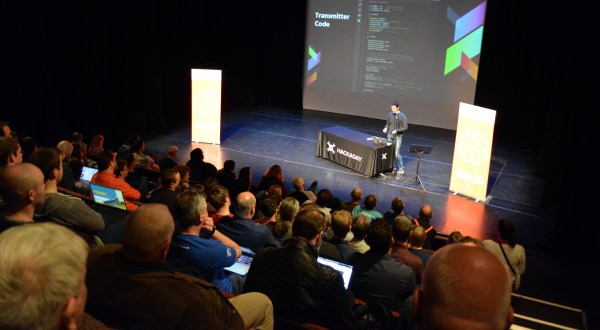
The Hackaday Superconference is all about showcasing the hardware heroics of the Hackaday community. We also have a peer-reviewed journal with the same goal, and for the 2018 Hackaday Superconference we got a taste of the first paper to make it into our fully Open Access Journal. It comes from Ted Yapo, it is indeed a tale of hardware heroics: what happens when you don’t want to spend sixty thousand dollars on a vector network analyzer?

Ted’s talk begins with a need for a network analyzer. These allow for RF measurements, but if you ever need one, be prepared: you can spend twenty thousand dollars on a used VNA. Around the time Ted’s project began, Rigol released their cheap spectrum analyzer, the DSA815. This thing only cost a thousand dollars. It was their first revision of the hardware, and it was only a scalar network analyzer. Being the first revision of the hardware, there were a few problems; there was leakage that would affect the measurement. The noise floor was higher than it should have been. These problems can be corrected, though, with a little bit of cunning from Ted:

Continue reading “How To Deal With A Cheap Spectrum Analyzer”

Hackaday Superconference: 3D Printing For Electronics

For her day job, Amie D Dansby works as a software simulation developer, creating simulations for video games. In her free time, she’s implanting the key to her Tesla in her arm, building cordwood jewelry and cosplay swords, and seeking out other adventures in electronics and 3D printing. Amie has made a name for herself in the 3D printing community, and she is surrounded by fans when she attends the RepRap meetups and Maker Faires.

She was also popular at this year’s Hackaday Superconference, where she gave a talk on the integration of 3D printing and electronics. Amie’s work concentrates on props and cosplay, which is a skill unto itself, and you only need to look at some of the old Mythbusters, the documentary footage from ILM, or even model makers to realize this is an arcane art that takes a lot of skill. Lucky for us, Amie was there to show us the tricks she’s picked up over the years to make building a one-off piece easier than you could imagine.

Continue reading “Hackaday Superconference: 3D Printing For Electronics”

Inventors Chasing Their Dreams; What It’s Like To Quit Your Job And Hack

The phrase “Hindsight is 20/20” is one of those things that we all say from time to time, but rarely have a chance to truly appreciate to the fullest. Taken in the most literal context, it means that once you know the end result of a particular scenario, you can look back and clearly see the progression towards that now inescapable endgame. For example, if you’re stuck on the couch with a bad case of food poisoning, you might employ the phrase “Hindsight is 20/20” to describe the decision a few days prior to eat that food truck sushi.

Then again, it’s usually not that hard to identify a questionable decision, with or without the benefit of foreknowledge. But what about the good ones? How can one tell if a seemingly unimportant choice can end up putting you on track for a lifetime of success and opportunity? If there’s one thing Michael Rigsby hopes you’ll take away from the fascinating retrospective of his life that he presented at the 2018 Hackaday Superconference, it’s that you should grab hold of every opportunity and run with it. Some of your ideas and projects will be little more than dim memory when you look back on them 50 years later, but others might just end up changing your life.

Michael Rigsby’s electric car in 1971

Of course, it also helps if you’re the sort of person who was able to build an electric car at the age of nineteen, using technology which to modern eyes seems not very far ahead of stone knives and bear skins. The life story Michael tells the audience, complete with newspaper cuttings and images from local news broadcasts, is one that we could all be so lucky to look back on in the Autumn of our years. It’s a story of a person who, through either incredible good luck or extraordinary intuition, was able to be on the forefront of some of the technology we take for granted today before most people even knew what to call it.

From controlling his TRS-80 with his voice to building a robotic vacuum cleaner years before the Roomba was a twinkle in the eye of even the most forward thinking technofetishist, Michael was there. But he doesn’t hold a grudge towards the companies who ended up building billion dollar industries around these ideas. That was never what it was about for him. He simply loves technology, and wanted to show his experiments to others. Decades before “open source” was even a term, he was sharing his designs and ideas with anyone who’d care to take a look.

Continue reading “Inventors Chasing Their Dreams; What It’s Like To Quit Your Job And Hack”

Hackaday Superconference: Estefannie’s Daft Punk Helmet

There’s no single formula for success, but if we’ve learned anything over the years of covering cons, contests, and hackathons, it’s that, just like in geology, pressure can create diamonds. Give yourself an impossible deadline with high stakes, and chances are good that something interesting will result. That’s what Estefannie from the YouTube channel “Estefannie Explains It All” did when Bay Area Maker Faire was rolling around last year, and she stopped by the 2018 Hackaday Superconference to talk about the interactive Daft Punk helmet that came out of it.

It’s a rapid-fire tour of Estefannie’s remarkably polished replica of the helmet worn by Guy-Manuel de Homem-Christo, one half of the French electronic music duo Daft Punk. Her quick talk, video of which is below, gives an overview of its features, but we miss the interesting backstory. For that, the second video serves as a kickoff to a whirlwind month of hacking that literally started from nothing.

You’ll Learn it Along the Way

Before deciding to make the helmet, Estefannie had zero experience in the usual tools of the trade. With only 28 days to complete everything, she had to: convert her living room into a workshop; learn how to 3D print; print 58 separate helmet parts, including a mold for thermoforming the visor; teach herself how to thermoform after building the tools to do so; assemble and finish all the parts; and finally, install the electronics that are the hallmark of Daft Punk’s headgear.

The three videos in her series are worth watching to see what she put herself through. Estefannie’s learning curve was considerable, and there were times when nothing seemed to work. The thermoforming was particularly troublesome — first too much heat, then not enough, then not enough vacuum (pretty common hurdles from other thermoforming projects we’ve seen). But the finished visor was nearly perfect, even if it took two attempts to tint.

We have to say that at first, some of her wounds seemed self-inflicted, especially seeing the amount of work she put into the helmet’s finish. But she wanted it to be perfect, and the extra care in filling, sanding, priming, and painting the printed parts really paid off in the end. It was down to the wire when BAMF rolled around, with last minute assembly left to the morning of the Faire in the hotel room, but that always seems to be the way with these kinds of projects.

In the end, the helmet came out great, and we’re glad the run-up to the Superconference wasn’t nearly as stressful for Estefannie — or so we assume. And now that she has all these great new skills and tools, we’re looking forward to her next build.

Continue reading “Hackaday Superconference: Estefannie’s Daft Punk Helmet”

3D Printing An Entire Rocket

If you’re ever flying into LAX and have the left side window seat, just a few minutes before landing, look out the window. You’ll see a small airport just below you and what appears at first glance to be a smokestack. That’s not a smokestack, though: that’s a rocket, and that’s where SpaceX is building all their rockets. Already SpaceX has revolutionized the aerospace industry, but just down the street there’s another company that’s pushing the manufacturing of rocket engines a bit further. Relativity Space is building rockets. They’re 3D printing rocket engines, and they’re designing what could be the first rocket engine made on Mars.

Bryce Salmi is an avionics hardware engineer at Relatively Space, and he made it out to the 2018 Hackaday Superconference to tell us all about manufacturing rockets. It’s an entirely new approach to manufacturing rockets and rocket engines with a clean-slate design that could eventually be manufactured on Mars.

Continue reading “3D Printing An Entire Rocket”

Adventures In Automating A Candle Factory

Have you ever considered the manufacture of candles? Not necessarily manufacturing them yourself, but how they are manufactured in a small-scale industrial setting? It’s something that has been of great concern to Michael Schuldt as he grappled with the task of automating a simple manual candle production process.

It’s not just an interesting subject, but the topic of manufacturing automation is something we can all learn from. This was the subject of his Adventures in Manufacturing Automation talk at the recent Hackaday Superconference which you’ll find below the break. Let’s dive in and see what this is all about!

Continue reading “Adventures In Automating A Candle Factory”

35C3: Biggest Communication Congress, Yet Little Chaos

Every year for the past 35 years, the German Chaos Computer Club has met just after Christmas for a few days of “Spaß am Gerät” — having fun with the machines. And that’s everything from trying to bring an old PDP-8 back into running condition to forging new software to replace the old and busted social media platforms that permeate our lives. The sum total of around 17,000 people doing the nerdy stuff that they love, and sharing it together, is both amazing and inspiring. Four days of little sleep and much socializing later, I bet there was still another four days’ worth of stuff to see.

The official theme this year was “Refreshing Memories” which honestly sounds a bit too much like a cola slogan, but was a great opportunity to think back on the hacks of the past that got us where we are. Assemblies put up shrines to their hacker heroes of the past. Retro computers were everywhere, in the talks and on the floor. This year’s Congress was a great time to look back and remember, but also to create new memories for the future. On that front, it was a total success.

But the unofficial theme this year was “Smooth Running”. Everything went very well, which is no small feat considering that the infrastructure, decoration, security, and even the medical response teams are from the Chaos community. It’s the depth of engagement that makes this work: of the 17,000 people who showed up, just over 4,000 of them volunteered for “angel” shifts — meaning they helped guard the doors, staff the info desks, or build up or tear down. It was the largest ever CCC, and you could feel it, but they pulled it off, and then some.

The angels are geeks just like you and me, and since everything went so smoothly, they had time to play. For instance, the phone operations people offer DECT phone service so that attendees can bring in their home phones and use them at Congress. In years past, the lines to register and enroll phones were painfully long. This year, it all happened online, and the result is that the phone ops crew got bored. That explains how they had time to establish roaming home-phone wireless service in some of the normal Leipzig city trams. Wait, what?

Continue reading “35C3: Biggest Communication Congress, Yet Little Chaos”