Remembering Chuck Yeager: The Supersonic Legend Whose Wings Were Clipped By A High School Diploma

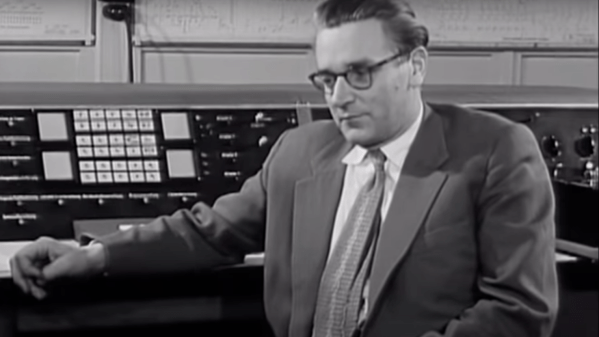
In history there are people whose legacy becomes larger than life. Ask anyone who built and flew the first airplane, and you’d be hard-pressed to find someone who isn’t at least aware of the accomplishments of the Wright brothers. In a similar vein, Chuck Yeager’s pioneering trip into supersonic territory with the Bell X-1 airplane made his name essentially synonymous with the whole concept of flying faster than the speed of sound. This wasn’t the sole thing he did, of course: he also fought in WWII and Vietnam and worked as an instructor and test pilot, flying hundreds of different airplanes during his career.

Yeager’s insistence on making that first supersonic flight, despite having broken two ribs days earlier, became emblematic of the man himself: someone who never let challenges keep him from exploring the limits of the countless aircraft he flew, while inspiring others to give it their best shot. Perhaps ironically, it could be said that the only thing that ever held Yeager back was only having a high school diploma.

On December 7, 2020, Chuck Yeager died at the age of 97, leaving behind a legacy that will continue to inspire many for decades to come.

Continue reading “Remembering Chuck Yeager: The Supersonic Legend Whose Wings Were Clipped By A High School Diploma”

The Wow! Signal And The Search For Extraterrestrial Intelligence

On a balmy August evening in 1977, an enormous radio telescope in a field in the middle of Ohio sat silently listening to the radio universe. Shortly after 10:00 PM, the Earth’s rotation slewed the telescope through a powerful radio signal whose passage was noted only by the slight change in tone in the song sung every twelve seconds by the line printer recording that evening’s data.

When the data was analyzed later, an astronomer’s marginal exclamation of the extraordinarily powerful but vanishingly brief blip would give the signal its forever name: the Wow! Signal. How we came to hear this signal, what it could possibly mean, and where it might have come from are all interesting details of an event that left a mystery in its wake, one that citizen scientists are now looking into with a fresh perspective. If it was sent from a region of space with habitable planets, it’s at least worth a listen.

Continue reading “The Wow! Signal And The Search For Extraterrestrial Intelligence”

Garrett Augustus Morgan Made The World Safer

Some people invent with the intent of seeking fame and prestige. Few inventors seem to truly care about other people the way that Garrett Augustus Morgan did. His inventions saved many lives, including those of a few people who were rescued by Garrett himself after an explosion tore through a tunnel beneath Lake Erie.

Though he had little formal education, Garrett’s curiosity took him into many fields from sewing machine repair to gas masks to transportation problems. He achieved great success and improved many lives along the way.

Of Seams and Straighteners

Image via Wikipedia

Garrett Augustus Morgan was born March 4th, 1877 in Claysville, Kentucky. He was the seventh of eleven children born to Sydney and Elizabeth Morgan, who had both been slaves. His mother was part Native American.

Armed with a sixth grade education and ten cents in his pocket, Garrett left home at fourteen look for work, which was common for kids his age at the time. He first landed in Cincinnati and spent a few years working as a handyman.

In 1895 he moved to Cleveland and started repairing sewing machines. This is where he developed his taste for the way things work. After a decade or so, he opened his own sewing machine shop. He had gotten married in the meantime, and a few years later, he and his wife Mary Anne, a seamstress, opened a discount ladies clothing store and hired thirty-two employees to make all the suits, coats, and dresses in-house.

One day Garrett was sewing a woolen fabric that kept getting scorched by the extremely high speed of the sewing machine needle. He experimented with a few chemicals to coat the needle and keep it cool. As the story goes, he wiped his hands off on a piece of cloth and went to lunch. When he came back, the wavy fibers in the fabric had been completely straightened by the chemical.

Curious, he tried the solution on his neighbor’s dog’s fur, and it straightened that, too. Then he worked up the nerve to try it on his own hair, and discovered the hair relaxer. He turned the solution into a cream and established the G.A. Morgan Hair Refining Company to sell his hair relaxer to African Americans. The company was terrifically successful and Garrett earned enough money from sales to keep inventing.

Continue reading “Garrett Augustus Morgan Made The World Safer”

Clara Rockmore. Photo by Renato Toppo, © The Nadia Reisenberg / Clara Rockmore Foundation

The Theremin Is 100 Years Old; Celebrating The Spookiest Of Instruments

It wouldn’t be October without Halloween, and it wouldn’t be Halloween without some spooky music. There’s no instrument spookier than a Theremin, which also happens to be one of the world’s first electronic instruments.

Leon Theremin plays his namesake instrument. Image via Linda Hall Library

You’ve no doubt heard the eerie, otherworldly tones of the Theremin in various 1950s sci-fi films, or heard the instrument’s one-of-a-kind cousin, the Electro-Theremin in “Good Vibrations” by the Beach Boys. The Theremin turns 100 years old this month, so we thought we’d take a look at this strange instrument.

One hundred years ago, a young Russian physicist named Lev Sergeyevich Termen, better known as Leon Theremin, was trying to invent a device to measure the density of various gases. In addition to the standard analog needle readout, he wanted another way to indicate the density, so he devised an oscillator whistle that would change pitch based on the density.

He discovered by accident that having his hand in the field of the antenna changed the pitch of the whistle, too. Then he did what any of us would do — played around until he made a melody, then called everyone else in the lab over to check it out.

Theremin soon showed his device to Lenin, who loved it so much that he sent Lev on a world tour to show it off. While in New York, he played it for Rachmaninoff and Toscanini. In fact you can see a video recording of Leon playing the instrument, a performance that’s more hauntingly beautiful than spooky. In 1928, he patented the Theremin in the United States and worked with RCA to produce them.

Continue reading “The Theremin Is 100 Years Old; Celebrating The Spookiest Of Instruments”

Tracking Satellites With A Commodore PET

A recent writeup by Tom Nardi about using the 6502-based NES to track satellites brought back memories of my senior project at Georgia Tech back in the early 80s.  At our club station W4AQL, I had become interested in Amateur Radio satellites.  It was quite a thrill to hear your signal returning from space, adjusting for Doppler as it speeds overhead, keeping the antennas pointed, all while carrying on a brief conversation with other Earth stations or copying spacecraft telemetry, usually in Morse code.

Continue reading “Tracking Satellites With A Commodore PET”

Taking A Crack At The Traveling Salesman Problem

The human mind is a path-planning wizard. Think back to pre-lockdown days when we all ran multiple errands back to back across town. There was always a mental dance in the back of your head to make sense of how you planned the day. It might go something like “first to the bank, then to drop off the dry-cleaning. Since the post office is on the way to the grocery store, I’ll pop by and send that box that’s been sitting in the trunk for a week.”

This sort of mental gymnastics doesn’t come naturally to machines — it’s actually a famous problem in computer science known as the traveling salesman problem. While it is classified in the industry as an NP-hard problem in combinatorial optimization, a more succinct and understandable definition would be: given a list of destinations, what’s the best round-trip route that visits every location?

This summer brought news that the 44-year old record for solving the problem has been broken. Let’s take a look at why this is a hard problem, and how the research team from the University of Washington took a different approach to achieve the speed up.

Continue reading “Taking A Crack At The Traveling Salesman Problem”

Lewis Latimer Drafted The Future Of Electric Light

These days, we have LED light bulbs that will last a decade. But it wasn’t so long ago that incandescent lamps were all we had, and they burned out after several months. Thomas Edison’s early light bulbs used bamboo filaments that burned out very quickly. An inventor and draftsman named Lewis Latimer improved Edison’s filament by encasing it in cardboard, earning himself a patent the process.

Lewis had a hard early life, but he succeeded in spite of the odds and his lack of formal education. He was a respected draftsman who earned several patents and worked directly with Alexander Graham Bell and Thomas Edison. Although Lewis didn’t invent the light bulb, he definitely made it better and longer-lasting. Continue reading “Lewis Latimer Drafted The Future Of Electric Light”