The true measure of engineering success — or, at least, one of them — is how long something remains in use. A TV set someone designed in 1980 is probably, at best, relegated to a dusty guest room today if not the landfill. But the B-52 — America’s iconic bomber — has been around for more than 70 years and will likely keep flying for another 30 years or more. Think about that. A plane that first flew in 1952 is still in active use. What’s more, according to a love letter to the plane by [Alex Hollings], it was designed over a weekend in a hotel room by a small group of people.
A Successful Design
One of the keys to the plane’s longevity is its flexibility. Just as musicians have to reinvent themselves if they want to have a career spanning decades, what you wanted a bomber to do in the 1960s is different than what you want it to do today. Oddly enough, other newer bombers like the B-1B and B-2 have already been retired while the B-52 keeps on flying.
After decades of delays and false starts, NASA is finally returning to the Moon. The world is eagerly awaiting the launch of Artemis I, the first demonstration flight of both the Space Launch System and Orion Multi-Purpose Crew Vehicle, which combined will send humans out of low Earth orbit for the first time since 1972. But it’s delayed.
While the first official Artemis mission is naturally getting all the attention, the space agency plans to do more than put a new set of boots on the surface — their long-term goals include the “Lunar Gateway” space station that will be the rallying point for the sustained exploration of our nearest celestial neighbor.
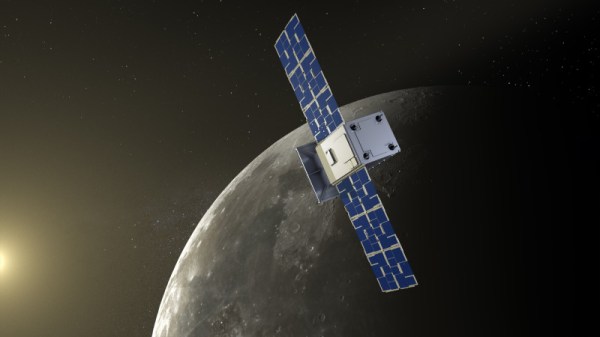
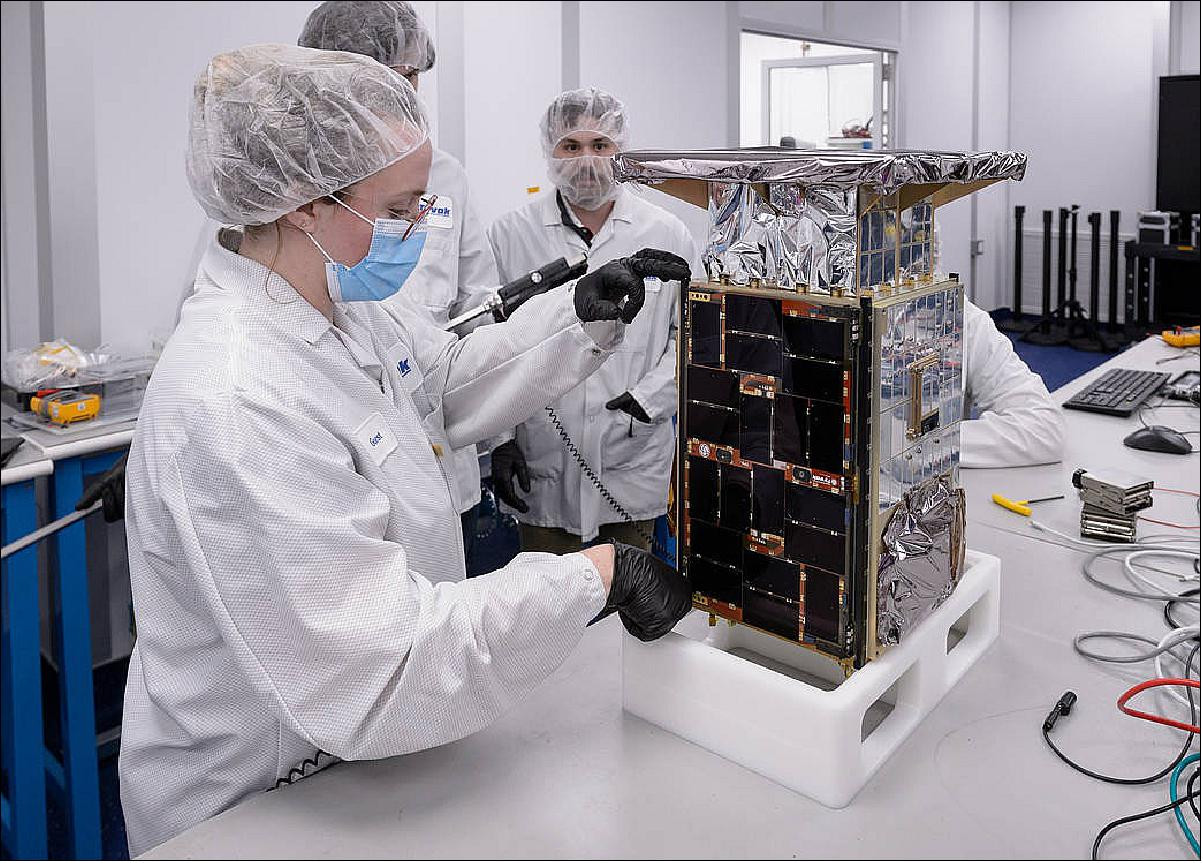
Launched aboard an Electron rocket in June, the large CubeSat will hopefully become the first spacecraft to ever enter into a NRHO. By positioning itself in such a way that the gravity from Earth and the Moon influence it equally, maintaining its orbit should require only periodic position corrections. This would not only lower the maintenance burden of adjusting the Lunar Gateway’s orbit, but reduce the station’s propellant requirement.
CAPSTONE is also set to test out an experimental navigation system that uses the Lunar Reconnaissance Orbiter (LRO) as a reference point instead of ground-based stations. In a future where spacecraft are regularly buzzing around the Moon, it will be important to establish a navigation system that doesn’t rely on Earthly input to operate.
So despite costing a relatively meager $30 million and only being about as large as a microwave oven, CAPSTONE is a very important mission for NASA’s grand lunar aspirations. Unfortunately, things haven’t gone quite to plan so far. Trouble started just days after liftoff, and as of this writing, the outcome of the mission is still very much in jeopardy.
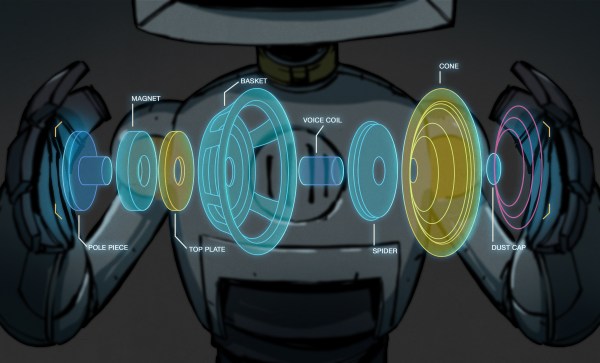
In our occasional series charting audio and Hi-Fi technology we have passed at a technical level the main components of a home audio set-up. In our last outing when we looked at cabling we left you with a promise of covering instrumentation, but now it’s time instead for a short digression into another topic: stereo. It’s a word so tied-in with Hi-Fi that “a stereo” is an alternative word for almost any music system, but what does it really mean? What makes a stereo recording, and how does it arrive at your ears?
As most of you will know, a mono recording uses a single microphone and a single channel while a stereo one uses two microphones recording simultaneously a left and right channel. These are then played back through a pair of speakers, and the result is a sense of spatial field for the listener. Instruments appear to come from their relative positions when recorded, and the sense of being in the performance is enhanced.
Stereo recording as we know it was first perfected as one of the many inventions credited to Alan Blumlein, then working for EMI in London. We have one of his stereo demonstration films in “Trains at Hayes“, filmed from the EMI laboratories overlooking the Great Western Railway, and featuring a series of steam-hauled trains crossing the field of view with a corresponding stereo sound field. His work laid down the fundamentals of stereo recording, including microphone configurations and what would become the standard for stereo audio recording on disk with the channels on the opposite sides of a 45 degree groove. Continue reading “Know Audio: Stereo”→
Floppies may be big in Japan, but nostalgic and/or needful Stateside floppy enthusiasts needn’t fret — just use AOL keyword point that browser toward floppydisk.com. There, you can buy new floppies of all sizes, both new and old, recycle your disks, or send them in to get all that precious vintage stuff transferred off of them.
That delightfully Web 1.0 site is owned by Tom Persky, who fancies himself the ‘last man standing in the floppy disk business’. Who are we to argue? By the way, Tom has owned that address since approximately 1990 — evidently that’s when a cyber-squatter offered up the domain for $1,000, and although Tom scoffed at paying so much as $1 for any URL, his wife got the checkbook out, and he has had her to thank for it ever since.
My business, which used to be 90% CD and DVD duplication, is now 90% selling blank floppy disks. It’s shocking to me. — Tom Persky
Tom also owns diskduper.com, which is where he got his start with floppies — by duplicating them. In the 80s and 90s, being in this business was a bit like cranking out legal tender in the basement. As time wore on and more companies stopped selling floppies or simply went under, the focus of Tom’s company shifted away from duplication and toward sales. Whereas the business was once 90% duplication and 10% floppy sales, in 2022, those percentages have flopped places, if you will.
If you are a Steely Dan fan, you might know the Donald Fagen song, “IGY.” In it, Fagen sings about a rosy future with high-speed undersea rail, solar power, giant computers making life better, and spandex jackets. Since that song was on the 1982 album Nightfly, it is already too old for some people to remember, but the title goes back even further: the International Geophysical Year which was actually a little longer than a year in 1957 and 1958. The year was a concerted effort by 67 countries to further mankind’s knowledge of the Earth. It was successful, and was big news in its day, although not much remembered now.
The real origin dates back to even earlier. In 1882 and 1932 there were International Polar Years dedicated to researching the polar regions of the Earth. In a way, it makes sense to do this. Why should 60 or more countries each mount difficult, dangerous, and expensive expeditions to such a hostile environment? However, instead of a third polar year, James Van Allen (who has a famous belt) and some other scientists felt that advances in many fields made it the right time to study geophysics. From the scientific point of view, the IGY coincided with the solar activity cycle maximum. But there were other forces at play, too.
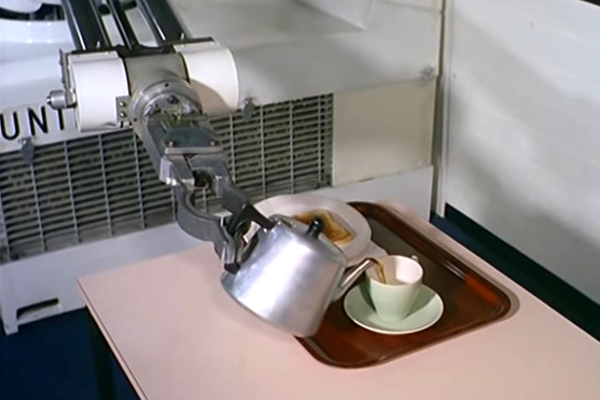
Do you know the name [George Devol]? Probably not. In 1961 he received a patent for “Programmed Article Transfer.” We’d call his invention the first robot arm, and its name was the Unimate. Unlike some inventors, this wasn’t some unrealized dream. [Devol’s] arm went to work in New Jersey at a GM plant. The 4,000 pound arm cost $25,000 and stacked hot metal parts. With tubes and hydraulics, we imagine it was a lot of work to keep it working. On the other hand, about 450 of the arms eventually went to work somewhere.
The Unimate became a celebrity with an appearance in at least one newsreel — see below — and the Johnny Carson show. Predictably, the robot in the newsreel was pouring drinks.
Long after the enemy forces have laid down their arms, peace accords have been signed and victories celebrated, there is still a heavy toll to be paid. Most of this comes in the form of unexploded ordnance, including landmines and the severe pollution from heavy metals and other contaminants that can make large areas risky to lethal to enter. Perhaps the most extreme example of this lasting effect is the Zone Rouge (Red Zone) in France, which immediately after the First World War came to a close comprised 1,200 square kilometers.
Within this zone, contamination with heavy metals is so heavy that some areas do not support life, while unexploded shells – some containing lethal gases – and other unexploded ordnance is found throughout the soil. To this day much of the original area remains off-limits, though injuries from old, but still very potent ordnance are common around its borders. Clean-up of the Zone Rouge is expected to take hundreds of years. Sadly, this a pattern that is repeated throughout much of the world. While European nations stumble over ordnance from its two world wars, nations in Africa, Asia and elsewhere struggle with the legacy from much more recent conflicts.
Currently, in Europe’s most recent battlefield, more mines are being laid, booby traps set and unexploded shells and other ordnance scattered where people used to live. Clearing these areas, to make them safe for a return of their inhabitants has already begun in Ukraine, but just like elsewhere in the world, it is an arduous and highly dangerous process with all too often lethal outcomes.