Building A Swiss Army Lab With Software Defined Instrumentation

It’s a fair bet that anyone regularly reading Hackaday has a voltmeter within arm’s reach, and there’s a good chance an oscilloscope isn’t far behind. But beyond that, things get a little murky. We’re sure some of you have access to a proper lab full of high-end test gear, even if only during business hours, but most of us have to make do with the essentials due to cost and space constraints.

The ideal solution is a magical little box that could be whatever piece of instrumentation you needed at the time: some days it’s an oscilloscope, while others it’s a spectrum analyzer, or perhaps even a generic data logger. To simplify things the device wouldn’t have a physical display or controls of its own, instead, you could plug it into your computer and control it through software. This would not only make the unit smaller and cheaper, but allow for custom user interfaces to be created that precisely match what the user is trying to accomplish.

Wishful thinking? Not quite. As guest host Ben Nizette explained during the Software Defined Instrumentation Hack Chat, the dream of replacing a rack of test equipment with a cheap pocket-sized unit is much closer to reality than you may realize. While software defined instruments might not be suitable for all applications, the argument could be made that any capability the average student or hobbyist is likely to need or desire could be met by hardware that’s already on the market.

Ben is the Product Manager at Liquid Instruments, the company that produces the Moku line of multi-instruments. Specifically, he’s responsible for the Moku:Go, an entry-level device that’s specifically geared for the education and maker markets. The slim device doesn’t cost much more than a basic digital oscilloscope, but thanks to the magic of software defined instrumentation (SDi), it can stand in for eleven instruments — all more than performant enough for their target users.

So what’s the catch? As you might expect, that’s the first thing folks in the Chat wanted to know. According to Ben, the biggest drawback is that all of your instrumentation has to share the same analog front-end. To remain affordable, that means everything the unit can do is bound by the same fundamental “Speed Limit” — which on the Moku:Go is 30 MHz. Even on the company’s higher-end professional models, the maximum bandwidth is measured in hundreds of megahertz.

Additionally, SDI has traditionally been limited to the speed of the computer it was attached to. But the Moku hardware manages to sidestep this particular gotcha by running the software side of things on an internal FPGA. The downside is that some of the device’s functions, such as the data logger, can’t actually live stream the data to the connected computer. Users will have to wait until the measurements are complete before they  pull the results off, though Ben says there’s enough internal memory to store months worth of high-resolution data.
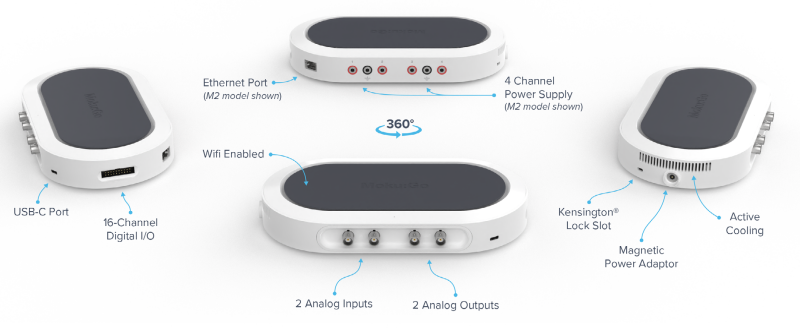
Of course, as soon as this community hears there’s an FPGA on board, they want to know if they can get their hands on it. To that end, Ben says the Moku:Go will be supported by their “Cloud Compile” service in June. Already available for the Moku:Pro, the browser-based application allows you to upload your HDL to the Liquid Instruments servers so it can be built and optimized. This gives power users complete access to the Moku hardware so they can build and deploy their own custom features and tools that precisely match their needs without a separate development kit. Understanding that obsolescence is always a problem with a cloud solution, Ben says they’re also working with Xilinx to allow users to do builds on their own computers while still implementing the proprietary “secret sauce” that makes it a Moku.

It’s hard not to get excited about the promise of software defined instrumentation, especially with companies like Liquid Instruments and Red Pitaya bringing the cost of the hardware down to the point where students and hackers can afford it. We’d like to thank Ben Nizette for taking the time to talk with the community about what he’s been working on, especially given the considerable time difference between the Hackaday Command Center and Liquid’s Australian headquarters. Anyone who’s willing to jump online and chat about FPGAs and phasemeters before the sun comes up is AOK in our book.


The Hack Chat is a weekly online chat session hosted by leading experts from all corners of the hardware hacking universe. It’s a great way for hackers connect in a fun and informal way, but if you can’t make it live, these overview posts as well as the transcripts posted to Hackaday.io make sure you don’t miss out.

2022 Sci-Fi Contest: The Winners Are In

The Sci-Fi Contest closed out on Monday, and we put our heads together and picked our favorites. And it was no easy task, because in addition to many of the projects simply looking stellar, many went all-out on the documentation as well, making these stellar examples that we can all learn from, whether you’re into sci-fi or not. But who are we kidding? From the responses we got, you are.

The Winners

[RubenFixit]’s Star Trek Shuttle Console is a Trek themed escape room in a box. The project’s extraordinary attention to detail and exhaustive project logs absolutely won our judges heart. From the LCARS graphics to the 3D printed isolinear chip bays and mimetic crystals, it’s all there. [Ruben] estimates about 300 hours of work went into this one, and it shows.

We had no shortage of robotic projects in the contest, but [RudyAramayo]’s R.O.B. won our judges over. This one is not a joke, weighing in at over 140 lbs of custom metalwork and righteous treads. It’s also made out of some expensive hardware all around, so maybe this isn’t your weekend-build robot. We love the comment on the Arduino test code suite: “For gods sake man, you must test your code when it becomes an autonomous vehicle.”

Finally, [zapwizard]’s Functional Razor Crest Control Lever is a prop and a video game controller in one. We can totally see Grogu playing with this, and we were wowed by the attention to detail in the physical build — with custom gears and a speed limiter — as well as the attention to prop-making detail. Some parts are custom-cut stainless steel plates. 3D printed parts are covered in aluminum tape and chemically aged. Awesome. Oh yeah, it’s also a working USB joystick.

These three winners will be receiving a $150 shopping spree at Digi-Key.

Continue reading “2022 Sci-Fi Contest: The Winners Are In” →

EV Charging Connectors Come In Many Shapes And Sizes

Electric vehicles are now commonplace on our roads, and charging infrastructure is being built out across the world to serve them. It’s the electric equivalent of the gas station, and soon enough, they’re going to be everywhere.

However, it raises an interesting problem. Gas pumps simply pour a liquid into a hole, and have been largely standardized for quite some time. That’s not quite the case in the world of EV chargers, so let’s dive in and check out the current state of play.

AC, DC, Fast, or Slow?

Since becoming more mainstream over the past decade or so, EV technology has undergone rapid development. With most EVs still somewhat limited in range, automakers have developed ever-faster charging vehicles over the years to improve practicality. This has come through improvements to batteries, controller hardware, and software. Charging tech has evolved to the point where the latest EVs can now add hundreds of miles of range in under 20 minutes.

However, charging EVs at this pace requires huge amounts of power. Thus, automakers and industry groups have worked to develop new charging standards that can deliver high current to top vehicle batteries off as quickly as possible.

As a guide, a typical home outlet in the US can deliver 1.8 kW of power. It would take an excruciating 48 hours or more to charge a modern EV from a home socket like this.

In contrast, modern EV charge ports can carry anywhere from 2 kW up to 350 kW in some cases, and require highly specialized connectors to do so. Various standards have come about over the years as automakers look to pump more electricity into a vehicle at greater speed. Let’s take a look at the most common options out in the wild today. Continue reading “EV Charging Connectors Come In Many Shapes And Sizes” →

2022 Hackaday Prize: Get Your Planet-Friendly Power On!

Time flies! This weekend marks the end of the first stage of the 2022 Hackaday Prize, and your chance to enter your alternative-energy projects. There are ten $500 prizes up for grabs, and there’s still time to whip up a project page over on Hackaday.io to showcase it.

In this round, we’re looking for projects that harvest their own energy — solar, wind, heat, vibration, you name it — or projects that make it easier to collect, store, or use renewable energy. Whether this is microwatts or megawatts, the scale of the project is up to you! As long as it’s using or making it easier to use clean energy, we want to see it.

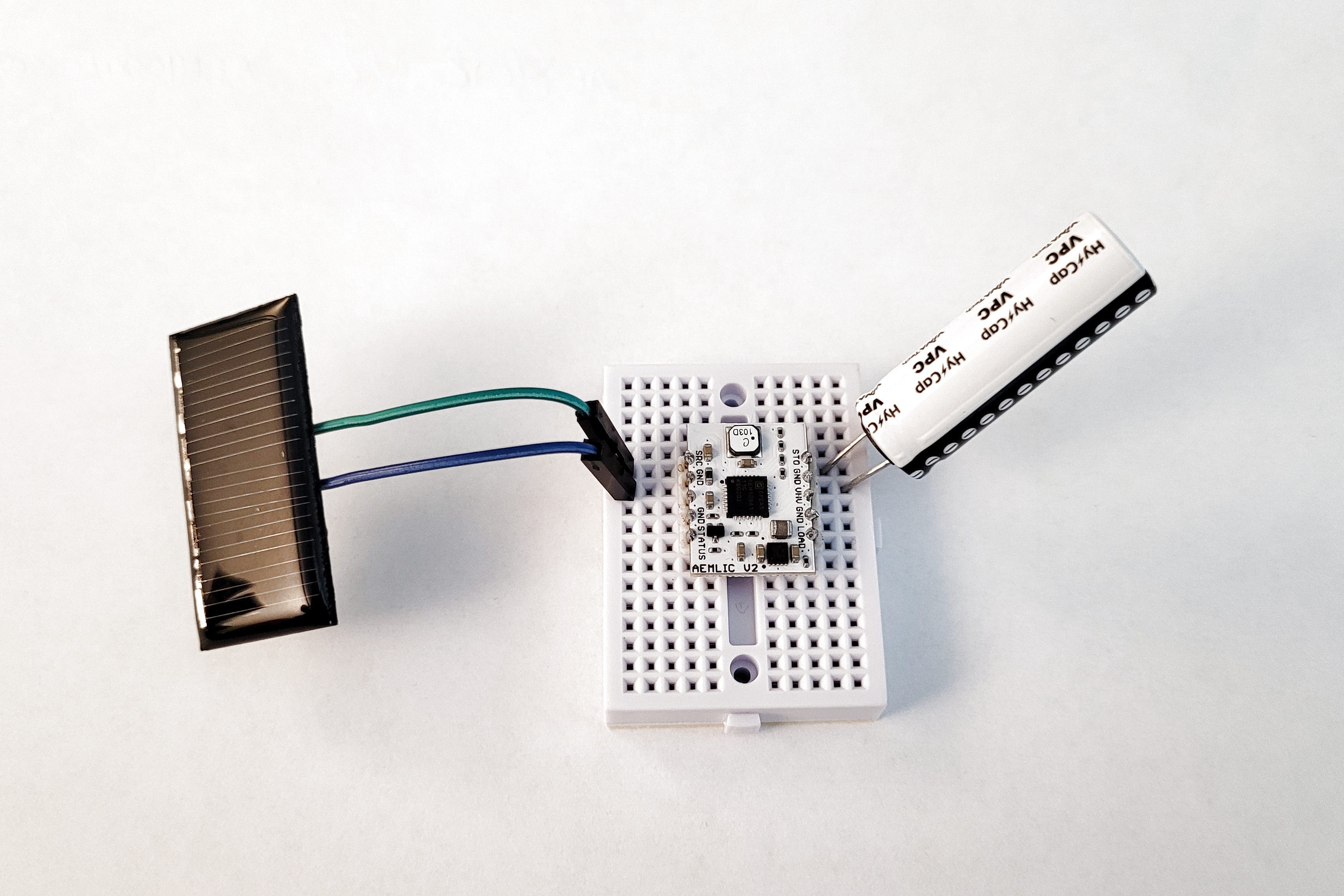
So far, we’ve seen some great projects, ranging from a optimizes the tilt angle of a home solar installation to a demonstration of using a new type of lithium-ion capacitor to add solar power to smaller projects. We really love [MartMet]’s simple Bluetooth thermometer hack, which adds a supercapacitor and solar cell to an outdoor thermometer, and then uses hacked firmware to log the charge status over a year of use! We’re suckers for good data.

The sun is not the only game in town, though. There are a surprising number of projects based on human energy production in emergency situations, from cranking to shaking. Thermionic converters were new to us, but we love explorations of fringe tech. Other traditional favorites like wind and water may make more sense for larger applications. And don’t forget how you’re going to store all this juice you’ve collected.

In short, we’ve got a bunch of great entries, but we’re still missing yours! There’s no minute like the last minute: if you’ve done some work in clean or renewable energy, set yourself up a Hackaday.io project page now. You’ll help make all our projects cleaner, and stand a good chance of taking home some real money to boot!

Once we’ve handled power, the next round is “Reuse, Recycle, Revamp” where any tech that uses recycled parts or facilitates reuse, repair, or recycling is fair game!

The State Of Play In Solid State Batteries

Electric vehicles are slowly but surely snatching market share from their combustion-engined forbearers. However, range and charging speed remain major sticking points for customers, and are a prime selling point for any modern EV. Battery technology is front and center when it comes to improving these numbers.

Solid-state batteries could mark a step-change in performance in these areas, and the race to get them to market is starting to heat up. Let’s take a look at the current state of play.

Continue reading “The State Of Play In Solid State Batteries” →

Modern Wildfires And Their Effect On The Ozone Layer

The ozone layer is a precious thing, helping protect the Earth from the harshest of the sun’s radiative output. If anything were to damage this layer, we’d all feel the results in a very short order indeed.

In the past, humanity has worked to limit damage to the ozone layer from our own intentional actions. However, it’s not just aerosol cans and damaged air conditioning systems that are putting it at risk these days. The fierce wildfires we’ve seen so much of in recent years are also having a negative effect. Let’s take a look at why the ozone layer matters, and how it’s being affected by these wildfires.

Continue reading “Modern Wildfires And Their Effect On The Ozone Layer” →

Explosion Welding Goes Off With A Bang

Welding is often a hot and noisy process. It generally involves some fancy chemistry and proper knowledge to achieve good results. Whether you’re talking about arc, TIG, or MIG, these statements all apply.

The same is true for explosion welding, though it’s entirely unlike any traditional hand welding methods you’ve ever seen before. Today, we’ll explore how this technique works and the applications it’s useful for. Fire in the hole!

Don’t Blow Them Apart, Blow Them Together!

Explosion welding occurs near-instantaneously, but is done in a progressive fashion. The angle of collision, as well as the speed of the explosive front, is key to getting a quality weld. Image credit: NASA, public domain

The technique of explosion welding is relatively new compared to other metal-joining techniques. In the two World Wars of the 20th century, pieces of shrapnel were often found stuck to armor plating. Close observation showed that shrapnel was in fact welding on to metal armor, rather than simply being embedded in such. Given that collisions between shrapnel and armor often occur without the extreme heat of typical welding operations, it indicated that it was instead great velocity of the impact between shrapnel and armor that was melding the metals together.

The same results were later recreated in the lab, and explosoin welding was developed into a refined technique after World War II. 1962 saw DuPont patent a process for explosion welding later to be known under the “Detaclad” trademark.

Continue reading “Explosion Welding Goes Off With A Bang” →