Books You Should Read: The Bridge

A few weeks ago, Amazon’s crack marketing AI decided to recommend a few books for me. That AI must be getting better because instead of the latest special-edition Twilight books, I was greeted with this:

“The asteroid was called the Hand of God when it hit.”

That’s the first sentence of The Bridge, a new Sci-Fi book by Leonard Petracci. If you think that line sucks you in, wait until you read the whole first chapter.

The Bridge is solidly in the generation ship trope. A voyage hundreds or even thousands of years long, with no sleep or stasis pods. The original crew knows they have no hope of seeing their destination, nor will their children and grandchildren. Heinlein delved into it with Orphans of the Sky. Even Robert Goddard himself discussed generation ships in The Last Migration.

I wouldn’t call The Bridge hard Sci-Fi — and that’s perfectly fine. Leonard isn’t going for scientific accuracy. It’s a great character driven story. If you enjoyed a book like Ready Player One, you’ll probably enjoy this.

The Bridge Is the story of Dandelion 14, a ship carrying people of Earth to a new planet. At some point during the journey, Dandelion 14 was struck by an asteroid, which split the ship in two. Only a few wires and cables keep the halves of the ship together. The crew on both sides of the ship survived, but they had no way to communicate. They do catch glimpses of each other in the windows though.

Much of the story is told in the first person by Horatius, a young man born hundreds of years after the asteroid strike. Horatius’ side of the ship has a population of one thousand, carefully measured at each census. They’ve lost knowledge of how to operate the ship’s systems, but they are surviving. Most of the population are gardeners, but there are doctors, cooks, porters, and a few historians. At four years old, Horatius is selected to become a gardener, like his father was before him. But Horatius has higher aspirations. He longs to become a historian to learn the secrets of the generations that came before him and to write his own story down for those who will come after.

Horatius sees the faces of the people on the other side of the ship as well. Gaunt, hungry, often fighting with knives or other weapons. A stark contrast to the well-fed people on his side of the vessel. The exception is one red-haired girl about his age. He often finds her staring back at him, watching him.

Horatius might have been chosen as a gardener, but he’s clever — a fact that sometimes gets him in trouble. His life takes an abrupt turn when the sleeping ship awakens with an announcement blaring “Systems Rebooting, Ship damage assessed. Reuniting the two halves of the ship and restoring airlock, approximately twenty-four hours until complete.”

The hardest part of writing a book review is not giving too much away. While I won’t tell you much more about the plot for The Bridge, I can tell a bit about how the book came about. You might call this book a hack of the publishing system. Leonard Petracci is also known as leoduhvinci on Reddit. The Bridge started life as Leonard’s response to a post on /r/writingprompts. The prompt went like this:

After almost 1,000 years the population of a generation ship has lost the ability to understand most technology and now lives at a pre-industrial level. Today the ship reaches its destination and the automated systems come back online.

Leonard ’s response to the prompt shot straight to the top, and became the first chapter of The Bridge. Chapter 2 followed soon after. In only a few months, the book was complete. Available on Reddit, and on Leonard’s website. The Bridge is also available on Amazon for Kindle, and on paper from Amazon’s CreateSpace.

The only real criticism I have about The Bridge is the ending. The book’s resolution felt a bit rushed. It would have been nice to have a few more pages telling us what happened to the characters after the major events of the book. Leonard is planning a sequel though, and he teases this in the final pages.

You can start reading The Bridge right now on Leonard’s website. He has the entire book online for free for a few more weeks. If you’ve missed the free period, the Kindle edition is currently $2.99.

Retrotechtacular: London Bus Overhaul

If you have ever visited London as a tourist, what memories did you take away as iconic of the British capital city? The sound of Big Ben sounding the hour in the Elizabeth Tower of the Palace of Westminster perhaps, the Yeoman Warders at the Tower of London, or maybe the guardsmen at Buckingham Palace. Or how about the red double-decker buses? They’re something that, while not unique to the city, have certainly become part of its public image in a way that perhaps the public transport of other capitals hasn’t.

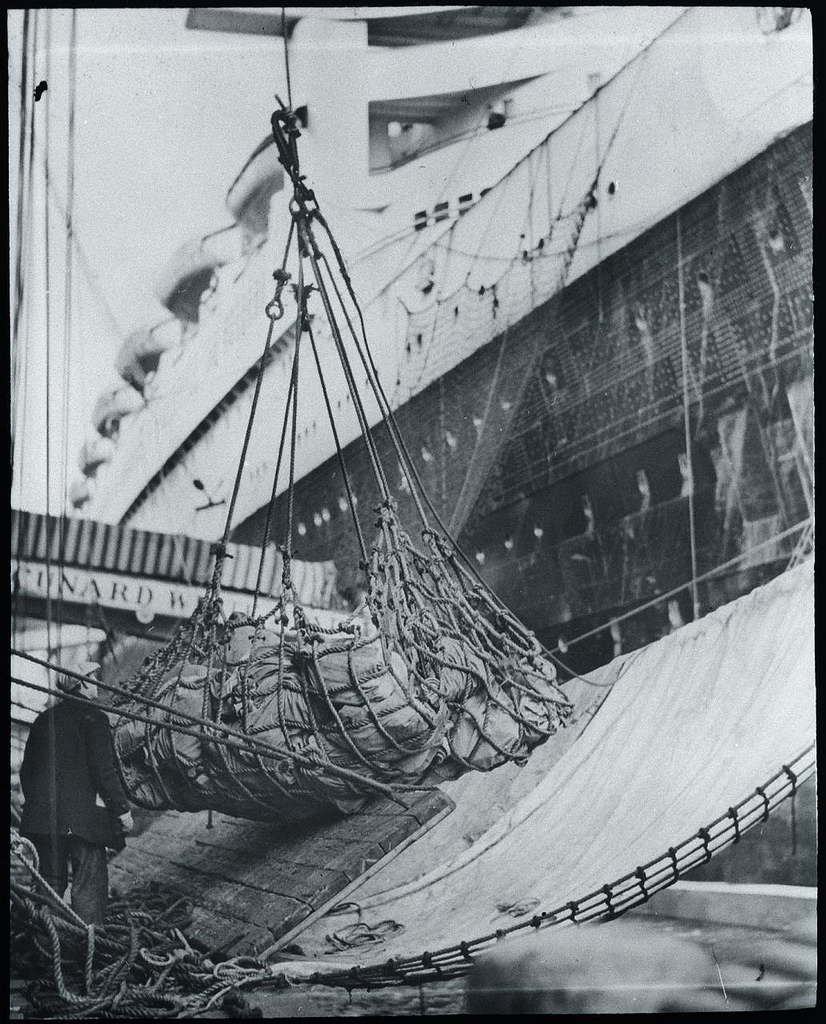
A city the size of London has many thousands of buses in the fleet required to provide transport to its sprawling suburbs. Until a few years ago the majority of these machines were built to a series of standard designs under the London Transport banner, so a Londoner with an eye for buses could have seen near-identical vehicles in any corner of the city. Each of these buses would have carried millions of passengers over hundreds of thousands of miles in a typical year, so many in fact that every few years they would have required a complete overhaul. For that task, London Transport maintained a dedicated factory capable of overhauling hundreds of buses simultaneously, and this factory is our subject today.

The overhaul works at Aldenham was the subject of a 1957 British Transport Films picture, Overhaul, in which we follow a bus in its journey through the system from tired-out to brand-new. We see the bus given a thorough inspection before being stripped of its upholstery and then having its body separated from its chassis and cleaned, then we see each part being refurbished. Along the way we gain a fascinating insight into the construction of a mid-century passenger transport vehicle, with its wooden frame and aluminium exterior panels being refurbished and rebuilt where necessary, before the camera. Meanwhile we see the chassis, with its separate gearbox in the centre of the vehicle, before it is painted to resist more years of road grime and reunited with a bus body. The completed vehicle is then taken for a test run before being sent to the paint shop for a coat of that iconic London Transport red. Enjoy the film in its entirety below the break.

The buses in the film are the AEC/London Transport “RT” vehicles, which entered service in the late 1930s and last ran in the 1970s. Their replacement, the visually similar “Routemaster” had only started to appear the previous year, and continued in regular service until 2005. Meanwhile the Aldenham bus overhaul works survived until its closure in 1986 due to the appearance of a range of new buses in the capital that did not conform to the standard design that it had been designed to serve.

Continue reading “Retrotechtacular: London Bus Overhaul”

Automate The Freight: The Robotic Garbage Man

When I started the Automate the Freight series, my argument was that long before the vaunted day when we’ll be able to kick back and read the news or play a video game while our fully autonomous car whisks us to work, economic forces will dictate that automation will have already penetrated the supply chain. There’s much more money to be saved by carriers like FedEx and UPS cutting humans out of the loop while delivering parcels to homes and businesses than there is for car companies to make by peddling the comfort and convenience of driverless commuting.

But the other end of the supply chain is ripe for automation, too. For every smile-adorned Amazon package delivered, a whole bunch of waste needs to be toted away. Bag after bag of garbage needs to go somewhere else, and at least in the USA, municipalities are usually on the hook for the often nasty job, sometimes maintaining fleets of purpose-built trucks and employing squads of workers to make weekly pickups, or perhaps farming the work out to local contractors.

Either way you slice it, the costs for trash removal fall on the taxpayers, and as cities and towns look for ways to stretch those levies even further, there’s little doubt that automation of the waste stream will start to become more and more attractive. But what will it take to fully automate the waste removal process? And how long before the “garbage man” becomes the “garbage ‘bot”?

Continue reading “Automate The Freight: The Robotic Garbage Man”

Game Like It Is 1983

The first computer I ever physically saw — I think — was an IBM System/3. You might not remember them. They were business computers for businesses that couldn’t justify a big mainframe. They were “midrange.” Nevermind that the thing probably had the memory and processing speed of the CPU inside my mouse. Time progressed and IBM moved on to the System/3x (for example, the System/32). Next up was the AS/400 and finally the IBM i, which is still in production. Here’s a secret, though, most of the code I’ve seen running on an IBM i dates back to at least the System/3 days and maybe even before that.

If you are interested in history, or midrange computers (which are mainframe-like in their operation), you might want to actually play with a real machine. A quick glance at eBay tells me that you might be able to get something workable for about $1000. Maybe. That’s a bit much. What if you could get time on one for free? Turns out, you can.

The Cloud Option

Head over to PUB400.com and register for an account. This won’t be instant — mine took a day or two. The system is for educational purposes, so be nice and don’t use it for commercial purposes. You get 150MB of storage (actually, some of the documentation says 250MB, and I have not tested it). While you are waiting for your account, you’ll need to grab a 5250 terminal emulator and adjust your thinking, unless you are a dyed-in-the-wool IBM guy.

Even though the IBM i looks like an old 1970’s midrange, the hardware is quite modern with a 64-bit CPU (and the architecture can handle 128 bits) and well-known stability. However, the interface is, well, nostalgic.

Ready…

Depending on your host computer, there are several IBM 5250 terminal programs available. They recommend tn5250 or tn5250j which use Java. However, I installed Mochasoft’s emulator into my Chrome browser. It is a 30-day free trial, but I figure in 30 days I’ll be over it, anyway.

Continue reading “Game Like It Is 1983”

Friday Hack Chat: BadgeLife

For the last few years at DEF CON, we’ve seen the emergence of an entire community of badge creators. These aren’t official badges — good news, since the official DEF CON badge will probably be an unpuzzling piece of laser cut acrylic this year. Lucky for us this is the biggest year yet for independent electronic badges. This is BadgeLife, the fine art of designing and building hundreds of badges for eager conference goers.

This Friday, we’ll be hosting a Hack Chat with a few of the folks tapped into BadgeLife. [Whitney Merrill], lawyer, hacker, and overseer of the Crypto & Privacy village will be joining us talking about this year’s badge, the puzzle she designed, and what BadgeLife really means. Also joining us will be [Karl Koscher], research scientist and co-organizer of the Crypto and Privacy village.

Also on deck will be the creators of this year’s Bender Badge. Last year, AND!XOR created one of the most popular electronic conference badges in recent memory. This year, the Bender Badge is getting an upgrade with Blast Processing, a quart of tequila, and two dozen amyls.

We’re proud to note that Hackaday.io has become an unofficial repository for all the best badges from the BadgeLife community. The Hunter S. Rodriguez badge is on there, as is the Ides of DEF CON. As the creator of the most innovative and desirable badge this year, I will also be attending this Hack Chat discussing the trials and tribulations of developing and shipping hardware on a very condensed schedule.

While the focus of this BadgeLife Hack Chat is developing electronic conference badges for DEF CON, it could have easily been called ‘Electronic Design’. There’s a massive amount of work that goes into each of these badges from design to production, and all of it is highly relevant to any hardware developer.

Here’s How To Take Part:

join-hack-chatOur Hack Chats are live community events on the Hackaday.io Hack Chat group messaging. This Hack Chat will take place at noon Pacific time on Friday, July 14th. Confused about where and when ‘noon’ is? Here’s a time and date converter!

Log into Hackaday.io, visit that page, and look for the ‘Join this Project’ Button. Once you’re part of the project, the button will change to ‘Team Messaging’, which takes you directly to the Hack Chat.

You don’t have to wait until Friday; join whenever you want and you can see what the community is talking about.

Horns Across America: The AT&T Long Lines Network

A bewildering amount of engineering was thrown at the various challenges presented to the United States by the end of World War II and the beginning of the Cold War. From the Interstate Highway System to the population shift from cities to suburbs, infrastructure of all types was being constructed at a rapid pace, fueled by reasonable assessments of extant and future threats seasoned with a dash of paranoia, and funded by bulging federal coffers due to post-war prosperity and booming populations. No project seemed too big, and each pushed the bleeding edge of technology at the time.

Some of these critical infrastructure projects have gone the way of the dodo, supplanted by newer technologies that rendered them obsolete. Relics of these projects still dot the American landscape today, and are easy to find if you know where to look. One that always fascinated me was the network of microwave radio relay stations that once stitched the country together. From mountaintop to mountaintop, they stand silent and largely unattended, but they once buzzed with the business of a nation. Here’s how they came to be, and how they eventually made themselves relics.

Continue reading “Horns Across America: The AT&T Long Lines Network”

Hackaday Links: July 9, 2017

Doom is now running on the ESP32. This is some work from [Sprite_tm], and the last we heard about Doom on the ESP32 is that there was a silicon bug or something. Now we’re knee deep in the dead on a tiny WiFi and Bluetooth-enabled microcontroller.

Loading animations have a long and storied history. What originally began as an hourglass quickly turned into a hand counting to five and progress bars. There were clocks, the Great Beach Ball of Death, and now loading animations are everywhere. However, the loading animation has still not been perfected — until now, that is. This is a fidget spinner loading animation. It’s beautiful.

Just a quick reminder that a Minecraft scholarship exists. Yeah, I know what you’re thinking, but there is a scholarship from the Klingon Language Institute for studying any language, and last year’s winner built a redstone computer from scratch,

[8bit generation] recently released a documentary, about the rise of Atari. Easy to Learn, Hard to Master is about the rise of Atari under [Nolan Bushnell]. Now [8bit generation] is working on a new documentary: Firing Steve Jobs. The [Steve Jobs] story is fascinating, and no matter what you think of him, he probably knew what he was doing.

Want to build and sell some hardware? Over on Tindie, we’re taking a look at some of the most successful designers of custom crafted hardware. This time it’s [Albertas Mickėnas] of Catnip Electronics who has sold five thousand soil moisture sensors.

You can just go out and buy a CNC machine, but that doesn’t quite underscore the difficulty in getting a CNC machine running. Our ‘ol pal [Jeremy] recently picked up a Romaxx CNC machine and put together a video of its commissioning. There’s a lot of work here, from building a shelf/stand for a rather beefy machine to cutting into the bed for t-tracks, and figuring out how dust collection is going to happen.

Before there was KiCad and Eagle and a ton of web-based PCB design tools, there was Autotrax. Want to know what PCB design and GUIs look like in DOS? I did a walkthrough for designing a small PCB in the DOS version of Autotrax late last year. There are thousands of designs locked up in discontinued EDA suites, and [Erich] has a way to revive them. He’s developed an Autotrax/Easytrax layout import/export plugin for pcb-nd. Now legacy Protel designs can be imported into software released in this century. This is really cool, and you can check out some screenshots here.