Battery-Electric Ships: Coming Soon To A Harbor Near You?

When ships moved from muscle- and wind power to burning coal and other fossil fuels for their propulsion, they also became significantly faster and larger. Today’s cargo ships and ferries have become the backbone of modern civilization, along with a range of boat types. Even though tugs and smaller pleasure vessels are a far cry from a multi-thousand ton cargo or cruise ship, one would be hard-pressed to convert these boats back to a pure muscle or wind-based version. In short, we won’t be going back to the Age of Sail, but at the same time the fossil fuel-burning engines in these boats and ship come with their own range of issues.

Even if factors like pollution and carbon emissions are not something which keep you up at night, fuel costs just might, with these and efficiency regulations increasing year over year. Taking a page from alternative propulsion systems in cars and trucks, the maritime industry has been considering a range of replacements for diesel and steam engines. Here battery-electric propulsion is somewhat of an odd duck, as it does not carry its own fuel and instead requires on-shore recharging stations. Yet if battery-electric vehicles (BEVs) can be made to work on land with accompanying low ‘refueling’ costs, why not ships and boats?

A recent study by Lawrence Berkeley National Laboratory (LBNL) researchers Hee Seung Moon et al. as published in Nature Energy claims that a significant part of US maritime traffic can be electrified this way. Yet as a theoretical model, how close does it hit to the harsh realities imposed by this physical world which we live in?

Continue reading “Battery-Electric Ships: Coming Soon To A Harbor Near You?” →
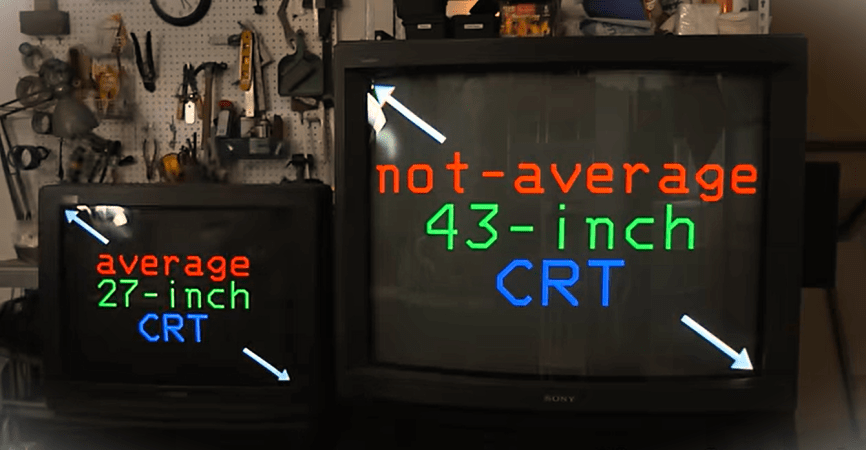
Size comparison of a 27 in CRT TV next to a 43 in CRT TV.

Retrotechtacular: Quest For The “Big Boy” CRT Finds New Home In Mini Doc

To celebrate the twentieth anniversary of their Trinitron line of televisions, Sony launched the KX-45ED1. At forty three inches the screen on this particular model made it the largest tube television in the world, and it came with the kind of price tag that if you need to ask…you can’t afford it (likely around $100,000 USD today). Three decades later, only two of these mythical displays were thought to exist and [shank] chronicled his quest to acquire one of the last remaining “Big Boys” in the mini documentary below.

As it turns out, one of these gigantic tube televisions was located on the second floor of a restaurant in Japan still sitting in the same place it was installed in 1989. It hadn’t moved in the intervening decades, because the television and its specialized support stand weighed over 500 pounds. Having an object that heavy physically moved down a flight of stairs would seem to be the most formidable challenge for most, but compounding the issue for [shank] was that the building housing this colossal CRT was set to be permanently closed in less than a week.

With next to no time to arrange an international flight, [shank] utilized the power of internet to ask for help from anyone currently living near the “Big Boy” CRT’s soon-to-be final resting place. It just so happened that a fellow retro tech enthusiast based in Japan saw the post, and traveled over an hour by train at a moment’s notice to aid [shank]. The heartwarming story of total strangers united by a common interest of preserving a rare piece of tech history is certainly worth a watch. Let alone the goofy size comparison footage of the smallest CRT display sitting on top of the biggest one.

Continue reading “Retrotechtacular: Quest For The “Big Boy” CRT Finds New Home In Mini Doc” →

Illustrated Kristina with an IBM Model M keyboard floating between her hands.

Keebin’ With Kristina: The One With The Keyboard-Mouse

One of the most annoying things about keyboard and mouse input has got to be the need to constantly switch between the two. Ever wish there was a single solution that combined them with elegance? Then you should definitely check out [lemosbor]’s Lapa keyboard, where the right half includes a mouse sensor.

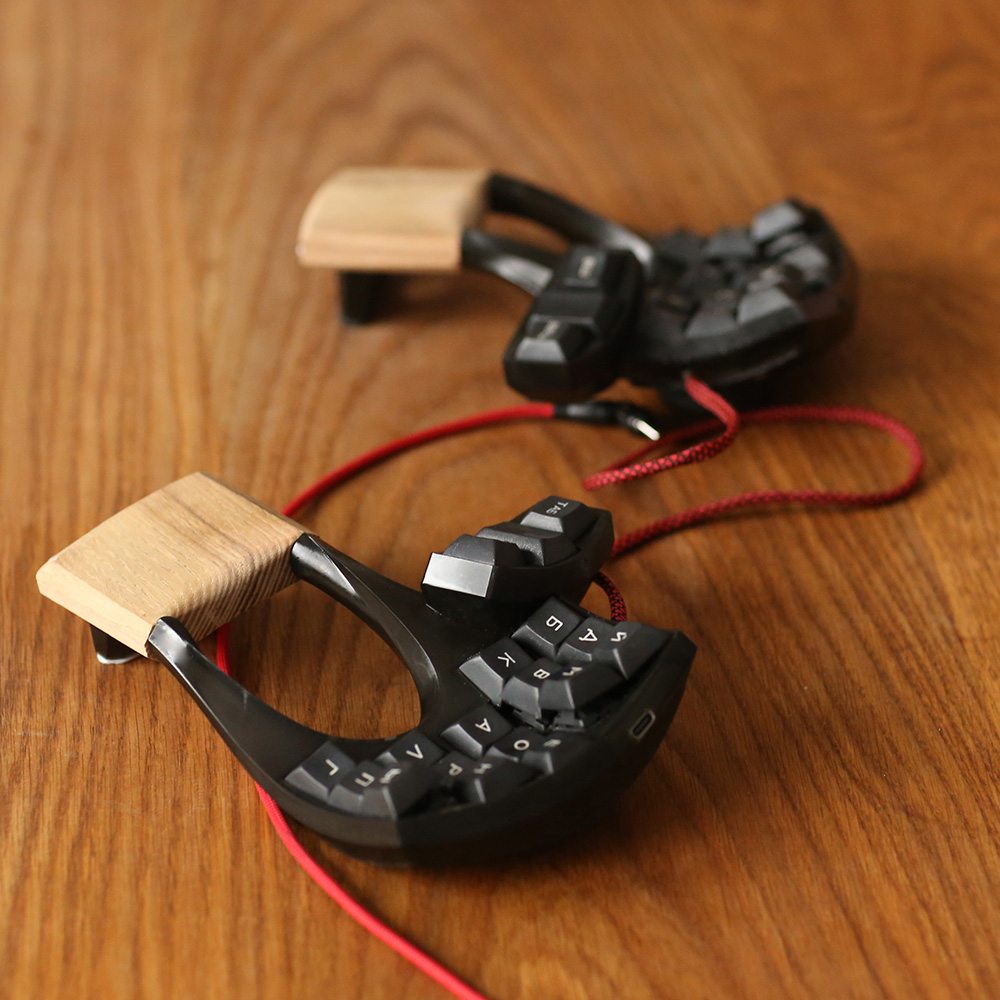
A 36-key split board where the right half also operates as a mouse.
Image by [lemosbor] via reddit
Lapa, which is Russian for ‘paw’, certainly has that type of look. This hand-wired keyboard uses a pair of Pro Micros and an ADNS9800 optical sensor for mousing around. Under those ‘caps are MX blues, the OG clackers.

Let me just say that I love the look of this keyboard, and I don’t normally like black and brown together. But that oak — that oak is classy, and it looks good with the resin-and-varnish case. If you can handle a 36-key board — I myself cannot — then this would probably be a game changer. There are even slots for your palms to breathe.

Unfortunately it’s not open source, but a girl can dream, right? In the reddit post, [lemosbor] says that they would be interested in selling the next version, provided it’s the final one.

Continue reading “Keebin’ With Kristina: The One With The Keyboard-Mouse” →

Hackaday Links Column Banner

Hackaday Links: December 22, 2024

Early Monday morning, while many of us will be putting the finishing touches — or just beginning, ahem — on our Christmas preparations, solar scientists will hold their collective breath as they wait for word from the Parker Solar Probe’s record-setting passage through the sun’s atmosphere. The probe, which has been in a highly elliptical solar orbit since its 2018 launch, has been getting occasional gravitational nudges by close encounters with Venus. This has moved the perihelion ever closer to the sun’s surface, and on Monday morning it will make its closest approach yet, a mere 6.1 million kilometers from the roiling photosphere. That will put it inside the corona, the sun’s extremely energetic atmosphere, which we normally only see during total eclipses. Traveling at almost 700,000 kilometers per hour, it won’t be there very long, and it’ll be doing everything it needs to do autonomously since the high-energy plasma of the corona and the eight-light-minute distance makes remote control impossible. It’ll be a few days before communications are re-established and the data downloaded, which will make a nice present for the solar science community to unwrap.

Continue reading “Hackaday Links: December 22, 2024” →

Hackaday Podcast Episode 301: Hacking NVMe Into Raspberry Pi, Lighting LEDs With Microwaves, And How To Keep Your Fingers

Twas the week before Christmas when Elliot and Dan sat down to unwrap a pre-holiday bundle of hacks. We kicked things off in a seasonally appropriate way with a PCB Christmas card that harvests power from your microwave or WiFi router, plus has the potential to be a spy tool. We learned how to grow big, beautiful crystals quickly, just in case you need some baubles for the tree or a nice pair of earrings. Speaking of last-minute gifts, perhaps you could build a packable dipole antenna, a very durable PCB motor, or a ridiculously bright Fibonacci simple add-on for your latest conference badge. We also looked into taking a shortcut to homebrew semiconductors via scanning electron microscopes, solved the mystery of early CD caddies, and discussed the sad state of table saw safety and the lamentable loss of fingers, or fractions thereof.


Download the zero-calorie MP3.

Continue reading “Hackaday Podcast Episode 301: Hacking NVMe Into Raspberry Pi, Lighting LEDs With Microwaves, And How To Keep Your Fingers” →

Upper Room UV-C Keeps Air Cleaner

2020 saw the world rocked by widespread turmoil, as a virulent new pathogen started claiming lives around the globe. The COVID-19 pandemic saw a rush on masks, air filtration systems, and hand sanitizer, as terrified populations sought to stave off the deadly virus by any means possible.

Despite the fresh attention given to indoor air quality and airborne disease transmission, there remains one technology that was largely overlooked. It’s the concept of upper-room UV sterilization—a remarkably simple way of tackling biological nastiness in the air.

Continue reading “Upper Room UV-C Keeps Air Cleaner” →