Beat707 LE: A Button Pad-based Standalone MIDI Sequencer

sparkfun_button_pad_midi_controller

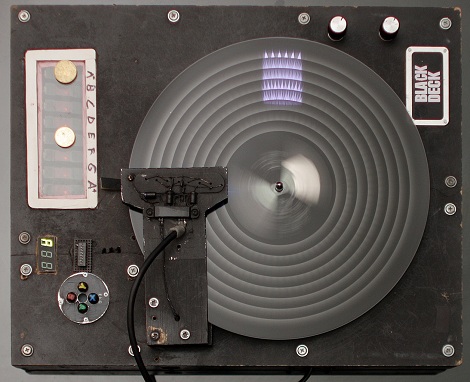
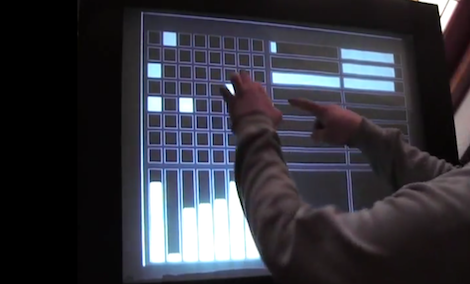
[Guilherme] picked up a SparkFun Button Pad and was taking a closer look at the device when he noticed that it was based off the ATMega328 microcontroller. Since he loves working with MIDI, he thought that the Button Pad would make a slick yet compact standalone MIDI controller.

Since his ultimate goal was to create a completely standalone controller aside from the power plug and MIDI interface, it forced him to work quite closely with the ATMega chip. He and his partners spent a good deal of time working through some serial communications issues so as not to block the LEDs or MIDI block timer during operation. Ensuring that the Arduino doesn’t block any other functions is obviously important when you are building a MIDI timer, and it seems [Guilherme] was successful in his quest.

The MIDI controller works quite nicely as you can see in the videos below, great job!

Continue reading “Beat707 LE: A Button Pad-based Standalone MIDI Sequencer”

Robot Band Covers [Marilyn Manson]

[James] built himself a robotic band from obsolete computer parts. The band needed something to play, and [Marilyn Manson]’s Beautiful People fit the bill. While it’s not the Rock-fire Explosion, having the [James]’ band cover [Marilyn Manson] is nearly as terrifying.

[James]’ original plan was to cover Mad World, but the stepper motors were drowning out the music for that song. While trying fix the cello problem the servos started acting up and reminded him of a certain song. While it’s not faithful to the original, we really like the arrangement on this version.

Continue reading “Robot Band Covers [Marilyn Manson]”

Improved FPGA Synth

A week or so ago we featured an FPGA MIDI interface. Since then the builder has gone crazy with his FPGA and revised his code to include polyphony and PWM output, and posted a polyphony demo.

In our previous coverage of the build, the synth was monophonic, and the MIDI implementation was pretty shaky. After realizing the hard work was done, [Mich] re-wrote the MIDI interpretation module to keep 8 voices in memory. Now the synth can play 16th note arpeggios at 999bpm.

The original build used 8 pins to output the audio with an R/2R ladder for a digital to analog converter. This didn’t work well with a polyphonic synth (everything was clipped or noisy), so [Mich] moved to PWM output.

Continue reading “Improved FPGA Synth”

Turn Any Bluetooth Device Into A MIDI Controller

[Peter Brinkman] is working on a circuit that makes it easy to interface MIDI and Bluetooth devices. His target hardware has been a MIDI compatible keyboard and an Android phone. He was inspired to tip us off about the project after reading about yesterday’s Bluescripts project.

We’ve embedded two demo videos after the break. They show [Peter] first using this hardware to receive MIDI signals from a keyboard on his Android phone, and then he demonstrates using the phone and an on-screen musical keyboard to transmit data back to a MIDI device which generates the intended sounds.

It’s an interesting project and he’s headed down the kit-production path right now. You’ll want to browse all of his recent posts, but we especially liked reading his thoughts about simplifying the circuitry. He originally had two separate voltages running in the circuit with a level converter for data signals. After some re-conceptualization he ditched several components and improved the functionality a bit.

Continue reading “Turn Any Bluetooth Device Into A MIDI Controller”

DIY Guitar Fuzz Pedal

diy_fuzz_pedal

Instructables user and Community Manager [Randy Sarafan] recently put together a tutorial on how to build an ages-old musical standard, the “Fuzz Pedal”. He says that the secret to rocking out is fuzz, so if you can handle both a soldering iron and a guitar, this project is for you.

When you take a close look, the pedal’s components are actually quite simple. The distortion is created by a pair of transistors, which in his case are vanilla NPNs from RadioShack. We have covered other distortion pedal builds before, and they have used germanium transistors to obtain a ‘creamier’ sound – you should be able to swap these cheap ones for uprated models with little trouble.

The handful of components were soldered neatly to a piece of perf board, and placed into a sturdy metal case that looks like it can withstand even the harshest abuse. He’s got schematics and a BOM in his writeup, so all that’s keeping you from a rocking weekend is a little bit of time and a soldering iron – what are you waiting for?

Stick around to see a quick video of [Randy’s] fuzz pedal being built.

Continue reading “DIY Guitar Fuzz Pedal”

Mini IR Theremin

[Chris] at PyroElectro sent in a great 8-part write-up of a miniature infrared theremin.

The theremin is based on a PIC microcontroller and an infrared distance sensor.  The build log goes through the theory of operations for the IR sensor and tone generation. [Chris] definitely does a great job showing the math that went into the design.

Although this project isn’t a true theremin because it operates on light like a few other projects we’ve covered in the past, it’s easier to play because of the hard-coded notes. The build does show some promise though – he could likely expand it to use more accurate ultrasonic sensors or use, “two proximity sensors, one for treble and one for bass like an accordion.”

The theremin is usually played with both hands providing a continuous pitch and volume. This project features hard-coded, discrete notes, so we’re wondering about the possibility of implementing MIDI on this IR theremin. The original MIDIbox was based on the same microcontroller as this project, so it’s definitely a possibility.

Check out the video of the theremin in action below.

Continue reading “Mini IR Theremin”

UPDATE: Playing Piano With Optical Sensors

[Sebastian Steppeler] has been hard at work on his optical sensors for an electric piano. When we looked in on the project back in October he was testing reflective sensors to increase responsiveness and MIDI data resolution for his electric keyboard. Since then he’s finalized the sensor circuits and produced enough boards to monitor all 88 keys on this full keyboard. You can see the string of PCBs just above the ivories, waiting to be installed. Not only are then in, but he also added sensors for the pedals.

Because the boards were installed by hand, there are some variances in the physical placement. This can have a rather dramatic effect on the readings from the reflective sensors so he has been working out a method of balancing the calibration. Part of this is already being taken care of by the C# interface that he wrote for a PC. Take a few minutes to check out all of his blog posts, then jump down after the break and hear how great it sounds.

Continue reading “UPDATE: Playing Piano With Optical Sensors”