What On Earth Is A Pickle Fork And Why Is It Adding To Boeing’s 737 Woes?

It’s fair to say that 2019 has not been a good year for the aircraft manufacturer Boeing, as its new 737 MAX aircraft has been revealed to contain a software fault that could cause the aircraft to enter a dive and crash. Now stories are circulating of another issue with the 737, some of the so-called “Pickle forks” in the earlier 737NG aircraft have been found to develop cracks.

It’s a concerning story and there are myriad theories surrounding its origin but it should also have a reassuring angle: the painstaking system of maintenance checks that underpins the aviation industry has worked as intended. This problem has been identified before any catastrophic failures have occurred. It’s not the story Boeing needs at the moment, but they and the regulators will no doubt be working hard to produce a new design and ensure that it is fitted to aircraft.

The Role of the Pickle Fork

For those of us who do not work in aviation though it presents a question: what on earth is a pickle fork? The coverage of the story tells us it’s something to do with attaching the wing to the fuselage, but without a handy 737 to open up and take a look at we’re none the wiser.

Fortunately there’s a comprehensive description of one along with a review of wing attachment technologies from Boeing themselves, and it can be found in one of their patents. US9399508B2 is concerned with an active suspension system for wing-fuselage mounts and is a fascinating read in itself, but the part we are concerned with is a description of existing wing fixtures on page 12 of the patent PDF.
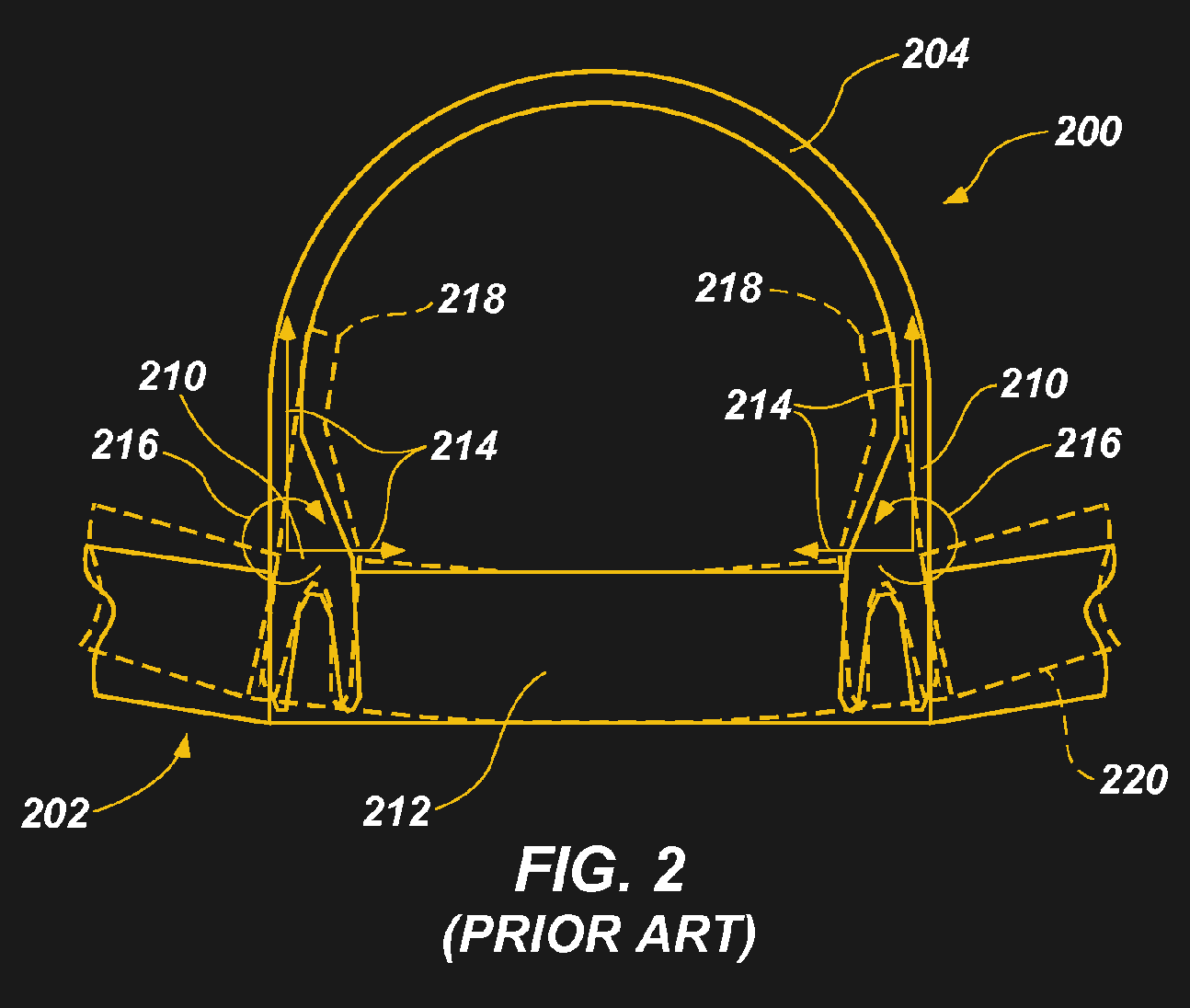
A cross-section of the aircraft wing fixing, in which we've highlighted the role of the pickle forks. (Boeing)
A cross-section of the aircraft wing fixing, in which we’ve highlighted the role of the pickle forks. (Boeing)

The pickle fork is an assembly so named because of its resemblance to the kitchen utensil, which attaches firmly to each side of the fuselage and has two prongs that extend below it where they are attached to the wing spar.

For the curious engineer with no aviation experience the question is further answered by the patent’s figure 2, which provides a handy cross-section. The other wing attachment they discuss involves the use of pins, leading to the point of the patented invention. Conventional wing fixings transmit the forces from the wing to the fuselage as a rigid unit, requiring the fuselage to be substantial enough to handle those forces and presenting a problem for designers of larger aircraft. The active suspension system is designed to mitigate this, and we’d be fascinated to hear from any readers in the comments who might be able to tell us more.

We think it’s empowering that a science-minded general public can look more deeply at a component singled out in a news report by digging into the explanation in the Boeing patent. We don’t envy the Boeing engineers in their task as they work to produce a replacement, and we hope to hear of their solution as it appears.

[via Hacker News]

[Header image: AMX Boeing 737 XA-PAM by Jean-Philippe Boulet CC-BY 3.0]

Chinese Radio Telescope Hopes To Find Exoplanets FAST

People who enjoy radio are constantly struggling to find a place to erect a bigger and better antenna. Of course it’s a different story and the most hardcore end of the spectrum: radio astronomers. The Chinese are ready to open up a new radio telescope called FAST (Five-hundred-meter Aperture Spherical Radio Telescope). As the name implies, it is 500 meters in diameter which is about 1,600 feet — that five and a half American football fields or about four and half of the other kind of football field.

The new telescope will be the largest single-dish observatory in the world and will offer about twice the area of the next-largest single-dish instrument at Arecibo. The project is in a very remote location, presumably to reduce the level of local radio interference — it’s hard to find radio quiet zones in heavily populated areas.

Scientists hope the huge antenna will help solve the mystery of fast radio bursts and may even study exoplanets. In fact, earlier this year, the instrument detected hundreds of fast radio bursts from a source, many of which were too faint to be heard by lesser antennas. There are also plans to examine pulsars in an attempt to discover ripples in space-time. The location in the Dawodang depression of the Guizhou province uses about 4,400 panels and 2,000 mechanical winches to focus radio energy.

Other telescopes that use multiple dishes have more resolution and, in fact, FAST adds 3 dozen 5 meter commercial dishes to get an increase in resolution of 100 times. Of course, you could build your own, although to get up to 500 meters might be a stretch. If your backyard isn’t that big, you can build a tiny radio telescope too.

Gatwick Drone Incident: Police Still Clueless

Quietly released and speedily buried by Parliamentary wrangles over Brexit is the news that Sussex Police have exhausted all lines of inquiry  into the widely publicised drone sighting reports that caused London’s Gatwick Airport to be closed for several days last December. The county’s rozzers have ruled out 96 ‘people of interest’ and combed through 129 separate reports of drone activity, but admit that they are no closer to feeling any miscreant collars. There is no mention of either their claims at the time to have found drone wreckage, their earlier admissions that sightings might have been of police drones, or even that there might have been no drone involved at all.

Regular readers will know that we have reported extensively the sorry saga of official reactions to drone incidents, because we believe that major failings in reporting and investigation will accumulate to have an adverse effect on those many people in our community who fly multi-rotors. In today’s BBC report for example there is the assertion that 109 of the drone sightings came from “‘credible witnesses’ including a pilot and airport police” which while it sounds reassuring is we believe a dangerous route to follow because it implies that the quality of evidence is less important than its source. It is crucial to understand that multi-rotors are still a technology with which the vast majority of the population are still unfamiliar, and simply because a witness is a police officer or a pilot does not make them a drone expert whose evidence is above scrutiny.

Whichever stand you take on the drone sightings at Gatwick and in other places it is clear that Sussex Police do not emerge from this smelling of roses and that their investigation has been chaotic and inept from the start. We believe that there should be a public inquiry into the whole mess, so that those embarrassing parts of it which they and other agencies are so anxious to quietly forget can be subjected to scrutiny. We do not however expect this to happen any time soon.

Keystone Kops header image: Mack Sennett Studios [Public domain].

Return Of The MITERS Journal

After a long hiatus, the MIT Electronic Research Society, better known as MITERS, has released their summer 2019 edition of the MITERS Journal, officially known as Volume 43 Issue 1.

The latest edition features a throwback to the first journal published in 1976, showing that some things just never change:

“What is MITERS? MITERS is the MIT Electronic Research Society, a non-profit, student-run laboratory for MIT’s EE hackers. The Society provides work space, tools, low-cost parts and information to any number of the MIT community. We have a few good ‘scopes, various and sundry pieces of test equipment, a b’zillion power supplies, and Bertha, our beloved PDP-7 computer. (No snickers from the peanut gallery, please. Bertha is very sensitive.) We also have the most incredible plunder-trove on campus.”

– 1976 Journal 1 Number 1

The space remains a member-run project space and maker shop, providing the MIT community with access to tools, knowledge, and room to build projects. Continue reading “Return Of The MITERS Journal”

Tilt Five: A Fresh Take On Augmented Reality Tabletop Gaming

Tilt Five is an Augmented Reality (AR) system developed by Jeri Ellsworth and a group of other engineers that is aimed at tabletop gaming which is now up on Kickstarter. Though it appears to be a quite capable (and affordable at $299) system based on the Kickstarter campaign, the most remarkable thing about it is probably that it has its roots at Valve. Yes, the ones behind the Half Life games and the Steam games store.

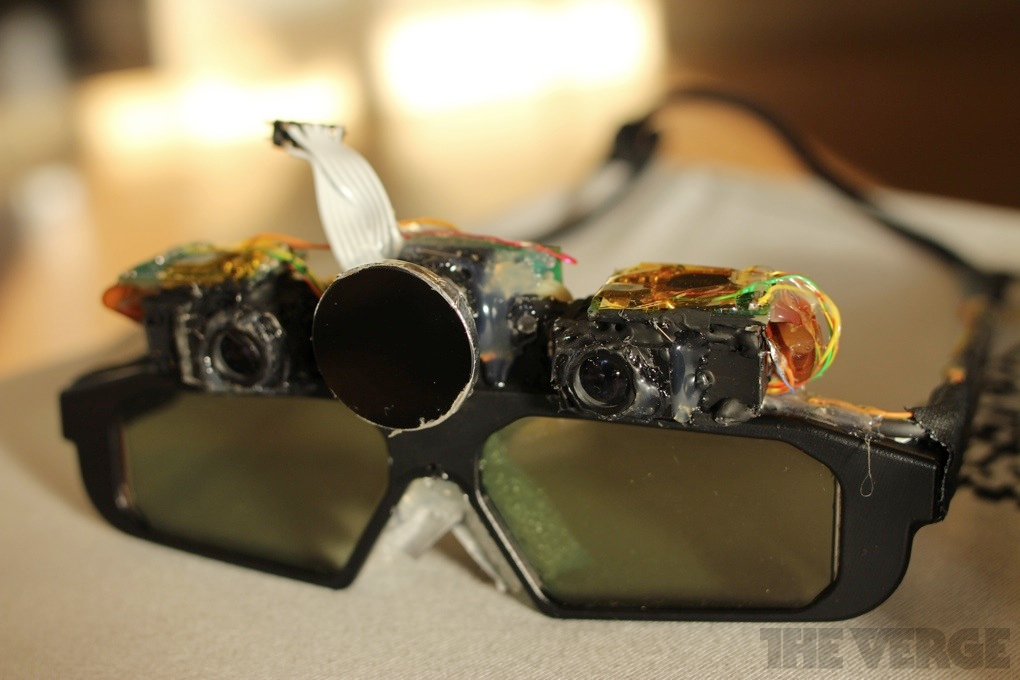
Much of the history of the project has been covered by sites, such as this Verge article from 2013. Back then [Jeri Ellsworth] and [Rick Johnson] were working on project CastAR, which back then looked like a contraption glued onto the top of a pair of shades. When Valve chose to go with Virtual Reality instead of AR, project CastAR began its life outside of Valve, with Valve’s [Gabe] giving [Jeri] and [Rick] his blessing to do whatever they wanted with the project.

What the Tilt Five AR system looked like in its CastAR days. (credit: The Verge)

Six years later Tilt Five is the result of the work put in over those years. Looking more like a pair of protective glasses along with a wand controller that has an uncanny resemblance to a gas lighter for candles and BBQs, it promises a virtual world like one has never seen before. Courtesy of integrated HD projectors that are aimed at the retroreflective surface of the game board.

A big limitation of the system is also its primary marketing feature: by marketing it as for tabletop gaming, the fact that the system requires this game board as the projection surface means that the virtual world cannot exist outside the board, but for a tabetop game (like Dungeons and Dragons), that should hardly be an issue. As for the games themselves, they would run on an external system, with the signal piped into the AR system. Game support for the Tilt Five is still fairly limited, but more titles have been announced.

(Thanks, RandyKC)

LoRa-Based Plant Monitoring

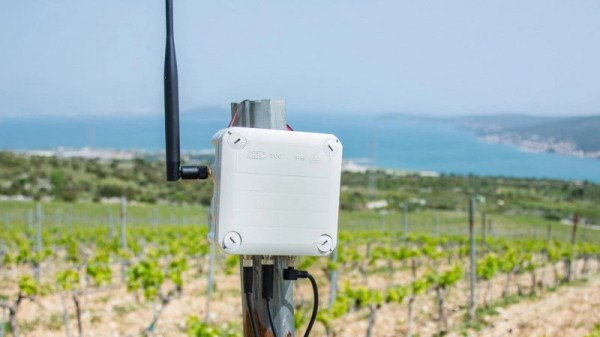
Croatian engineers [Slaven Damjanovic] and [Marko Čalić] have developed a wireless system for farmers to monitor plant conditions and weather along their agricultural fields. The system uses an RFM95W module for LoRa communication, and devices are designed to be plug-and-play, battery-powered, and have long-range communication (up to 10km from the gateway).

It uses an ATMega328 microprocessor, and includes sensors for measuring soil moisture (FC28 sensor), leaf moisture (FC37 sensor), pressure (BME280 sensor), and air temperature and humidity (DHT22 or SHT71 sensor). The data is sent to a multichannel The Things Network  gateway that forwards the information to an external database, which then displays the data through a series of graphs and tables.

The software for sending messages to the gateway is based on the LoRa MAC in C (LMIC) and LowPower libraries and was developed by [ph2lb].

Continue reading “LoRa-Based Plant Monitoring”

Punch Through Switches Gears, Shucks Beans

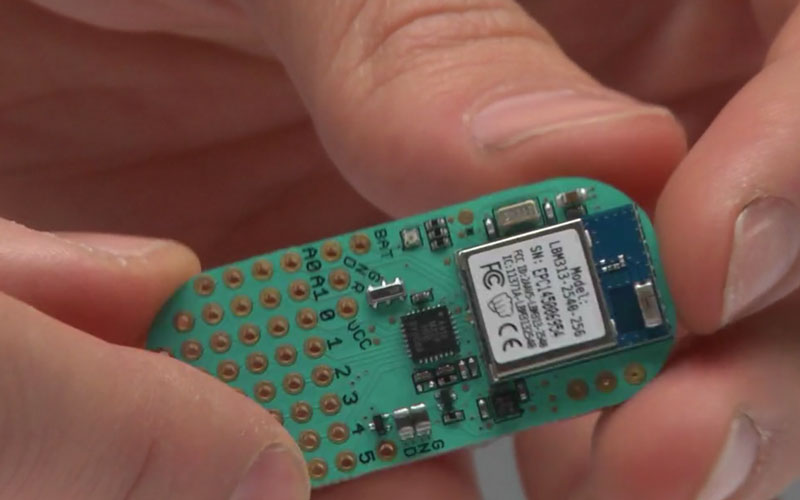
Do you own a LightBlue Bean or Bean+ from Punch Through? If you don’t have one now, you probably never will, as the company has recently announced they’re no longer selling or supporting the Bluetooth Low Energy microcontrollers. The company says that after selling more than 100,000 Bean devices, the challenge of keeping up with a constantly evolving software ecosystem became too difficult, and they are instead going to focus their efforts on advising other companies on how to best develop Bluetooth products.

Frankly, that sounds a bit like getting advice on how to build a fully armed and operational battle station from the Empire, but who are we to judge. While the Bean family of devices clearly wasn’t able to go the distance, Punch Through at least got them out the door and supported them for longer than many might have expected given the increased competition in the BLE market. It’s not hard to do the math: the LightBlue Bean retailed for around $35 USD, and today you can get a BLE-capable ESP32 for five bucks.

So what happens to all those Beans out in the wild? Normally, the parent company dropping support for a microcontroller wouldn’t be that big of a deal, but this time around we have the “Bean Loader” to contend with. This piece of software is used to push code to the device over Bluetooth, and it’s possible that the constant march of operating system upgrades (especially on mobile devices) will eventually break it. Long story short, there’s nothing to worry about in the short term. But down the road, these Beans might be baked.

Luckily, Punch Through did provide some pretty extensive documentation for the Beans. If there’s significant demand, we imagine the community will do their best to take over development of whatever ancillary software is required to keep the hardware usable for the foreseeable future. Speaking of which, the schematics and PCB layouts for both the Bean and Bean+ have been released under the Creative Commons Attribution 4.0 International license, so it’s not outside the realm of possibility that somebody else might put them back into production.

[Thanks to Chris for the tip.]