Laser Cut Your Own Vinyl Records

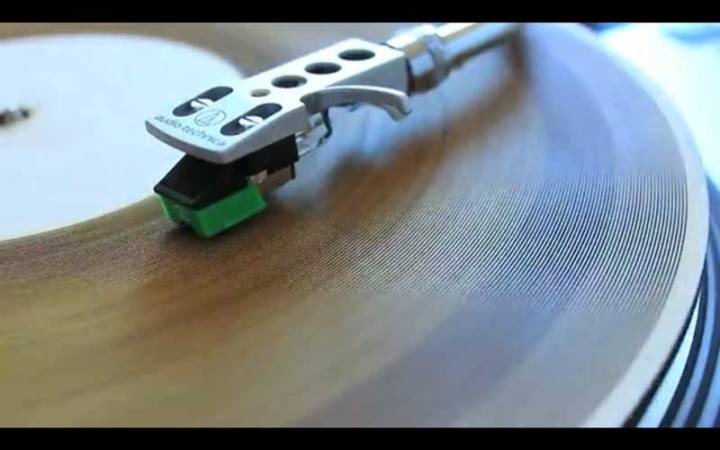
[Amanda Ghassaei] has created an awesome hack for making your own vinyl records using a laser cutter from an MP3 file. Her excellent hack uses a Processing sketch that converts a digital audio file into a vector graphics file, which is then burned onto vinyl using a laser cutter. We saw a demo of this at the FabLab11 conference, and it’s an impressive hack.

One of the best parts of her write up are the details of how she arrived at the appropriate processing settings to get the record sounding as good as possible, but still be cuttable. It’s an object lesson in how you iterate on a project, trying different approaches and settings until you find the one that works. She also decided to take it a few steps further, cutting records on paper and wood for the ultimate eco-friendly record collection.

Audiophiles should avoid this technique though. Due to limitations in the resolution of the laser cutter, [Amanda] ended up having to reduce the bandwidth of the audio signal to 4.5Khz and use a 5-bit sampling depth. That translates to a rather tinny-sounding record. Vinyl record snobs can breathe easy: this isn’t going to replace their beloved white-hot stampers. For the rest of us, there are always records etched into tortillas.

Continue reading “Laser Cut Your Own Vinyl Records”

Tindie Becomes A Part Of The Hackaday Family

A little over two years ago, we announced that Hackaday became a part of Supplyframe. This was a natural fit: both sides are comprised of hardware engineers, computer scientists and hackers alike. We immediately pooled forces and set out to make Hackaday bigger, with a broader mission. So far, it has been an amazing journey: Hackaday.io is approaching 100,000 registered users, The Hackaday Prize is in its second year, and the Hackaday Store is about to fulfill its 5,000th order.

The main theme behind all of this is fostering collaboration, learning, and providing incentives for everyone in the community to stop procrastinating and try to build something amazing. Hackaday.com is here to inspire, Hackaday.io to help develop projects in the open, and the Hackaday Store is to provide a way to turn passion projects into a self-sustainable lifestyle. While the road to community-powered innovation might not be easy, it’s something we’re all incredibly passionate about, and will continue investing in to further this goal.

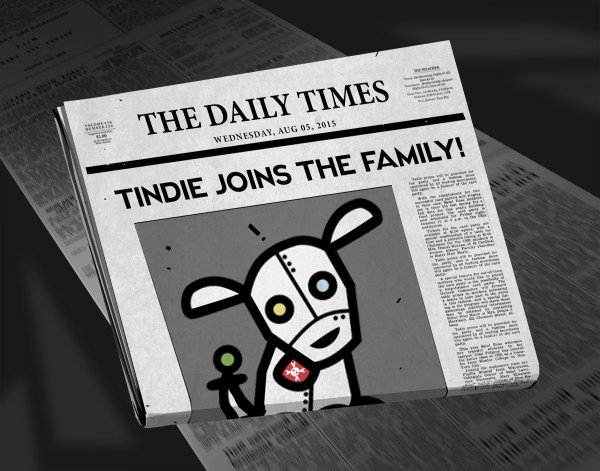
With that in mind, we’re very excited to announce that everyone’s favorite hardware marketplace – Tindie, has been acquired by Supplyframe and will be joining the Hackaday family! Apart from the fact that most of us are personal fans of the website, we believe that Tindie fills an important gap in helping projects cross the chasm between prototype and initial production. Crowdfunding provides access to capital for some (and access to laughs for others), but it’s not always the way to go. You might not be ready to quit your day job or take on a project full-time. You might be working on rev1 of the project and want to try the “lean manufacturing” thing. Or maybe you’re building something for your own purposes and have some extras lying around. Tindie is a platform that has helped launch many such projects, and we’re incredibly lucky to have it be a part of Hackaday.

Now what?

Naturally, the question that’s on everyone’s mind is, what happens next? Are we going to mess things up? Paint Tindie in black? Change the fee structure? While we have ideas on things that we could help with, our main goal will be making sure that the Tindie community continues to thrive. The only changes we’re interested in are the ones that make the community stronger. We are fascinated with the challenges surrounding the supply chain and will be looking into tools to help sellers improve margins and ship better products. Hackaday.io and Tindie combined represent the world’s largest repository of (working) Open Hardware products, so we will be looking into more closely integrating the two. We will also make efforts to grow the overall Tindie audience, as every new buyer helps move the community forward.

All of these are some of the ideas, but we’re ultimately looking at you for guidance: things we should do, problems we should attack, dreams of future capabilities.

Wish us luck in this new adventure.

Aleksandar Bradic
CTO
Supplyframe

New Part Day: The ESP8266 Killer

Around this time last year we first heard of the ESP8266 WiFi module. It’s still a great little module, providing WiFi connectivity for all those Internet of Things things at a price point of just $5. It’s an attractive price for a great module with a huge community pumping out a lot of projects for the platform.

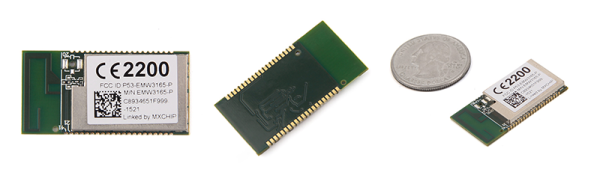
Now there’s a new kid on the block. It’s called the EMW3165, and like the ESP it provides WiFi connectivity for a bunch of wireless projects. It’s much, much more capable with an STM32F4 ARM Coretex M4 microcontroller, a ‘self hosted’ networking library, more RAM, more Flash, and more GPIOs. How much, you’re probably asking yourself. It’s a dollar more than the ESP8266.

The datasheet for the module goes over all the gritty details. While this chip has 3.6V I/Os, there are some 5V tolerant pins – a boon for the Arduino crowd. It’s also surprisingly low power for something that connects to an 802.11n network. The real bonus here is the STM32F4 core – that’s a very, very powerful microcontroller, and if you want a 2-component WiFi webcam build, this is the part you should use. There will be a lot of interesting builds using this part. It’s also passed FCC certification. Very cool.

3D Printering: The Makerbot Class Action Suit

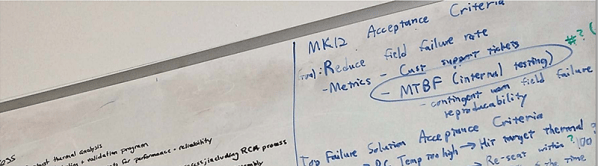
Since the 5th generation of Makerbot 3D printers were released at CES in 2014, there has been an avalanche of complaints about the smart extruder in these printers. Clogs were common, and the recommended fix was to simply replace the extruder. The smart extruder is a $175 part, and the mean time before failure is somewhere between 200 and 500 hours. With these smart extruders, you’re looking at a new extruder every dozen prints or so. Combine this with Makerbot’s abdication of open source values, and it’s easy to see why no one in the know would buy a Makerbot.

The performance of the 5th gen Makerbots is also reflected in the Stratasys stock price. The stock has tanked, from a high of $130.83 in early 2014 to a low of $31.88 a few days ago. This has investors calling for blood, and now there’s a class action suit claiming Stratasys violated securities laws. The court docs found by the folks at Adafruit allege Stratasys rushed the 5th gen Makerbots into production resulting in an avalanche of negative feedback, warranty claims, returns, and misled investors until the stock collapsed when the market was made aware of these issues.

The court documents allege Stratasys and Makerbot touted the incredible ease of use and ‘unmatched’ quality of the 5th generation of Makerbots, while former Makerbot employees confirmed known issues with the smart extruder. The 5th gen Makerbots were rushed into production without proper testing for performance and reliability and no standardized testing and validation program. In short, Makerbot itself didn’t know how bad the smart extruder was, but shipped the product anyway. This in turn hurt sales, with one sales executive leaving the company as he “did not want to sell the 5th generation printers after learning about the defect issues because he has a ‘conscience’.”

Despite this, those in charge at Makerbot and Stratasys continued to make misleading  positive claims about the reliability of their printers and how the printers were received by the market. This is the crux of the lawsuit, and something that points to an artificially inflated stock value.

The plaintiffs for this lawsuit are limited to Stratasys stock holders, and anyone out there who only owns a 5th gen Makerbot will sadly be ignored in this lawsuit. Still, if the claims of this lawsuit are true, Stratasys and Makerbot are in for a world of hurt; this is an alleged violation of federal securities laws. demanding a jury trial. Popcorn abounds, and as always, [Zach] and [Adam] came out ahead.

Hackaday Prize Entry: OpenBionics

For the last few years now, the 3D printing community has been searching for a groundbreaking application for out little boxes of plastic squirting goodness. On of the most interesting applications the community has stumbled upon is prosthetics.

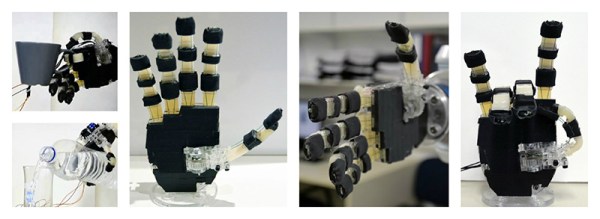
There have been a lot of people warming up their 3D printers and laser cutters to make prosthetic limbs in recent years. For [OpenBionics]’ entry for The Hackaday Prize, they’re building a prosthetic hand that costs less than $200, weighs less than 300 grams, and can be easily fabricated with 3D printers and laser cutters.

The human hand is the most complex end-effector on the planet, and emulating its range of motion is a difficult task. Still, the [OpenBionics] team is working hard to properly emulate a thumb with three degrees of freedom, putting 144 different grasps on the hand, and making their hand useful with soft fingertips.

Even with all this capability, [OpenBionic]’s robotic hand – motors and all – is about the same size as a normal human hand. That’s incredible, especially when you consider the motors for your hand – muscles – are all in your arm.

The team has put together a video demoing the capabilities of their hand. It’s somewhat remarkable, and able to do everything from lift a coffee cup to holding a pen. You can check that video out below.


The 2015 Hackaday Prize is sponsored by:

Continue reading “Hackaday Prize Entry: OpenBionics”

Prof Gershenfeld Speaks On Fab Labs And All-things Digital

Fab Labs have developed hand-in-hand with the all-too-familiar hackerspaces that we see today. If you’re curious to discover more about their past and future, [Prof Gershenfeld], founder of the Fab Lab, and director of MIT’s Center for Bits and Atoms brings us a fresh perspective on both these fab labs and the digital world we live in.

In a casual one-hour chat on Edge, [Prof Gershenfeld] dives deeply into the concept of digital in our world. We might consider digital to be a binarized signal, an analog waveform discretized into a 0 and 1 from which all of computer architecture is built upon today. Digital doesn’t just exist in the computing sense, however; it’s a concept that has been applied to communication, computation, and, these days: personal fabrication.

[Prof Gershenfeld’s] talk may highlight coming changes in the future, but changes are already happening today. These days, fab labs and hackerspaces serve their communities in a very special way. They take “experts-of-the-field” away from universities and isolated labs, and they scatter them all over the world. With this shift, anyone can walk through their doors and build a solid foundation in fields like embedded programming and computer aided manufacturing by striking a conversation with these local experts. In a nutshell, both spaces found a culture for development of expertise far more accessible to the world community than their university counterparts.

If you can spare the hour, put on some headphones, tune in, and resume your CAD work, PCB layout, or that Arduino library. You may discover that your work is built on a number of digital principles, and that your contributions push the rest farther along the development chain towards building something awesome.

Finally, if you’re interested in taking notes on building your own fab lab, have a look at the inventorylayout, and guidelines at the CBA website.

Intel Buys Altera For $16.7 Billion

Intel, CPU manufacturer we all know and love, will buy Altera, makers of fine FPGAs, for $16.7 Billion.

While most of the news about this deal focuses on the future of FPGAs in the datacenter, getting Altera IP into Intel fab houses is equally interesting. Intel is the current king of putting transistors on a piece of silicon, and Intel’s ability to put a massive amount of transistors on a chip means FPGAs will become even more capable – more gates, more blocks, and more memory. The most capable Altera FPGAs are being made with a 28nm process; Intel could theoretically double the number of gates with the 14nm process used on the new Broadwell CPUs. There is most likely someone at Xilinx tearing their hair out right now, chain-smoking next to a pot of coffee.

News of this buy out comes about a week after Avago bought Broadcom in the biggest semiconductor deal ever, and a few months after NXP and Freescale merged. Cash Rules Everything Around Semiconductors, it seems.