BAMF2011: Google’s SKPR Bot, Not For Arachnophobes

Google’s Maker Faire exhibit space is swarmed with robots…er, androids. Amidst some cool bipeds and Segway-balancers, our inner sci-fi nerd was most smitten with this hexapod design, which they’ve dubbed SKPR Bot. The “Skipper” is on hand to showcase the ease of various Google technologies: SketchUp, Android OS and the Android Open Accessory Development Kit. The whole project came together in less than six weeks.

18 servos are mounted to a framework designed in SketchUp and laser-cut by Ponoko. The low-level servo PWM control is handled by the Dev Kit (essentially a rebadged Arduino Mega, as we’ve seen), while an Android OS phone provides a slick GUI and handles all the inverse kinematics calculations required as the robot takes each step. The coolest bit is that it’s all up for grabs. At this moment you’ll have to scrounge around the ’net a bit to find the plans and code, but some time post-Faire they plan to bring everything together at the SKPR Bot site.

BAMF2011: Bloxes, A Building Kit With A Nifty Pedigree

Not every cool hack needs to involve microcontrollers, LEDs or other bling. We were initially drawn to the Bloxes display simply because we love a good multipurpose construction set, whether it be Lego, 80/20 aluminum, or in this case, a system of interlocking cubes formed from six identical pieces of corrugated cardboard, cut and scored in such a manner as to form a surprisingly sturdy little building block. They can become simple furniture, groovy Logan’s Run-style room decor, or the all-important kids’ forts…then later dismantled and made into something else.

Continue reading “BAMF2011: Bloxes, A Building Kit With A Nifty Pedigree”

Bay Area Maker Faire: Hackaday Has Arrived!

It’s a madhouse already at the 2011 Bay Area Maker Faire. Though the show doesn’t officially start until tomorrow, Friday is “Education Day”, a special preview for local schools. As makers scramble to set up their displays, a thousand impressionable young minds seek the most cacophonous mixture of taiko drumming, ArcAttack’s musical Tesla coils, and the beeping and booping of the R2-D2 Builder’s Club.

Maker Faire is returning for its sixth year at the San Mateo Event Center, and is shaping up to be bigger and zanier than ever. We’ll do our best to provide some live updates through the weekend. As always, check out the official site for pointers on hours, admission, parking and especially public transit options.

(Photo: Colossus, the death-defying centerpiece of the Midway area of the Faire.)

Using Google’s ADK On Standard Arduino Hardware

adk_on_arduino

When we heard that Google’s open accessory development standard was forthcoming, we were pretty excited. However once we heard that the reference hardware kit was going to cost nearly $400, our thoughts changed to, “Surely you can’t be serious.”

Well, Google is dead serious (and we hear they don’t take kindly to being called Shirley either.)

With such a ridiculous asking price, it was only a matter of time before someone tried getting the ADK software running on vanilla Arduino hardware. [Inopia] wrote in letting us know that he did just that.

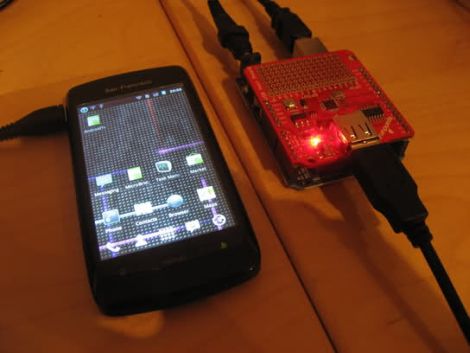
Using an Arduino Uno and a Sparkfun USB shield, he was able to get the ADK working without a lot of fuss. He tweaked the ADK firmware image in order to bypass a couple of hardcoded pin assignments Google made, and he was good to go. The image boots just fine, though he can’t necessarily guarantee that his setup works with an Android handset, as he doesn’t currently own one that supports accessory mode.

Now that just about anyone can get their hands on the ADK at a reasonable price, we look forward to seeing what you can put together!

Google? In My Lightbulbs? It’s More Likely Than You Think

led_lighting_by_google

With the recent announcement and release of their ADK, it was only a matter of time before Google started invading your home in a big way. From the looks of it, Google will be jumping into the home lighting market very shortly, which could prove to be quite interesting.

Partnering with Florida-based Lighting Sciences, Google is planning on developing consumer-grade 60W equivalent smart LED light bulbs. The bulbs will be able to wirelessly communicate using Google’s new open-source home networking protocol. The lights will be controllable using any Android device allowing users to dim, brighten and toggle the lights on and off without ever touching a wall switch.

We think it’s an interesting idea, and we’re all for getting quality LED lighting in the home. That said, some of Google’s other utility-centric endeavors such as PowerMeter have met only mediocre success, so it remains to be seen if this concept takes off. If it does however, we can’t wait to see the flood of ADK-based hacks the community puts together. Since their new wireless protocol will likely be extended to all sorts of other household systems, the possibilities are endless.

Official Android Open Accessory Development Kit – It’s An Arduino

A new development kit for android was unveiled at the Google I/O 2011 developer conference that officially supports the Arduino.

It looks like Google took a cue from Circuits@Home, because the interesting part of this dev kit is the fact that the shield can be put into USB Host mode. That’s great for phones and tablets that can’t act as a USB host themselves. Google will also release the APIs for this Android/Arduino mashup for 3.1, but it will thankfully be backported to Gingerbread.

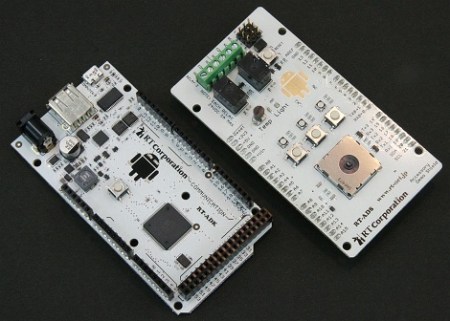
We covered the IOIO breakout board for Android last month, but the Google board will be based off of the Arduino Mega 2560, a far more capable device. Interestingly, it appears this board is available now for about $400 USD. We’re not so sure a hobbyist will be buying it at that price.

While this board doesn’t do anything you couldn’t do before with a bluetooth shield, it’s great to see a company supporting all the builders out there.

Open Source Linear Bearing System

makerslide

While we normally don’t make it a habit to feature Kickstarter projects, we couldn’t pass this one up. [Barton Dring] from BuildLog.net is putting together a project called MakerSlide that we’re sure will interest many of you out there.

Through his various CNC builds, he has found that one of the more expensive and frustrating components to obtain is a linear bearing system. He notes that commercial systems are expensive, and while an occasional eBay bargain can be found, it’s not the ideal way of going about things. He also points out that homebrew systems usually work after some tuning and adjustments, but can be time consuming to build.

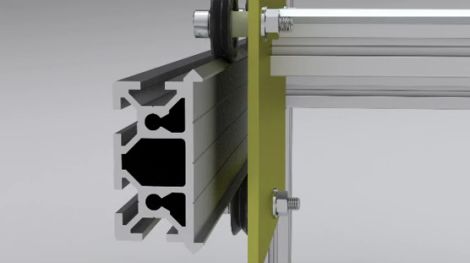
He is proposing a v-groove bearing system, complete with wheels made from Delrin, as a standardized replacement for all of the aforementioned solutions. He anticipates selling the rails for about 10 cents per centimeter, putting the average cost of a 4 foot system around $20.

As a bonus, he is offering up free MakerSlide materials to anyone that sends him a “new, innovative  or interesting open source design or basic idea that uses the material.” You would only have to pay shipping in order to get your new project off the ground.

Standardization is always good, and seeing this rail system go into production would definitely benefit the hacker community. Take a minute to check it out if you are so inclined.