Photovoltaic solar panels are wonderful things, capable of capturing mere light and turning it into useful electricity. They’re often installed on residential and commercial rooftops for offsetting energy use at the source.
However, for grid-scale generation, they’re usually deployed in huge farms on tracts of land in areas that receive plenty of direct sunlight. These requirements can often put solar farms in conflict with farm-farms — the sunlight that is good for solar panels is also good for growing plants, specifically those we grow for food.
One of the more interesting ideas, however, is to create solar arrays that float on water. Unlike some of the wackier ideas out there, this one comes with some genuinely interesting engineering benefits, too!
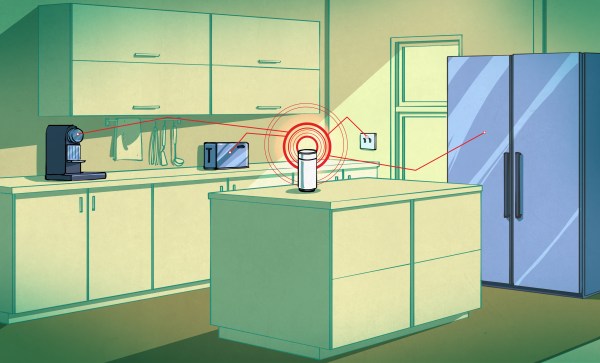
While wireless communications are unquestionably useful in projects, common wireless protocols such as WiFi and Bluetooth peter out after only a number of meters, which is annoying when your project is installed in the middle of nowhere. Moving to an LTE-based or similar mobile solution can help with the range, but this does not help when there’s poor cell coverage, and it tends to use more power. Fortunately, for low-bitrate, low-power wide-area networks (LPWAN) like e.g. sensor networks, there’s a common solution in the form of LoRaWAN, as in long-range wide area network (WAN).
The proprietary LoRa RF modulation technique that underlies LoRaWAN is based on Chirp Spread Spectrum (CSS). This modulation technique is highly resistant to channel noise and fading as well as Doppler shift, enabling it to transmit using relatively low power for long distances. LoRaWAN builds on top of the physical layer provided by LoRa to then create the protocol that devices can then use to communicate with other LoRa devices.
Courtesy of global LoRaWAN gateway and software providers such as The Things Industries and ThingSpeak, it’s possible even as a hobbyist to set up a LoRaWAN-powered sensor network with minimal cost. Let’s take take a look at exactly what is involved in setting up LoRaWAN devices, and what possible alternatives to LoRaWAN might be considered. Continue reading “Casually Chirping Into The World Of LoRaWAN”→
The buzzword of the moment in the frothier portions of the technology press is inescapable: “Web 3”. This is a collective word for a new generation of decentralised online applications using blockchain technologies, and it follows on from a similar excitement in the mid-2000s surrounding so-called “Web 2” websites that broke away from the static pages of the early Internet.
It’s very evident reading up on Web 3, that there is a huge quantity of hype involved in talking about this Next Big Thing. If this were April 1st it would be tempting to pen a lengthy piece sending up the coverage, but here in January that just won’t do. Instead it’s time to peer under the hype and attempt to discern what Web 3 really is from a technology standpoint. Sure, a Web 3 application uses blockchain technology, often reported breathlessly as “the Blockchain” as though there were only one, but how? What is the real technology beneath it all?
Where Did All This Web 3 Stuff Come From Anyway?
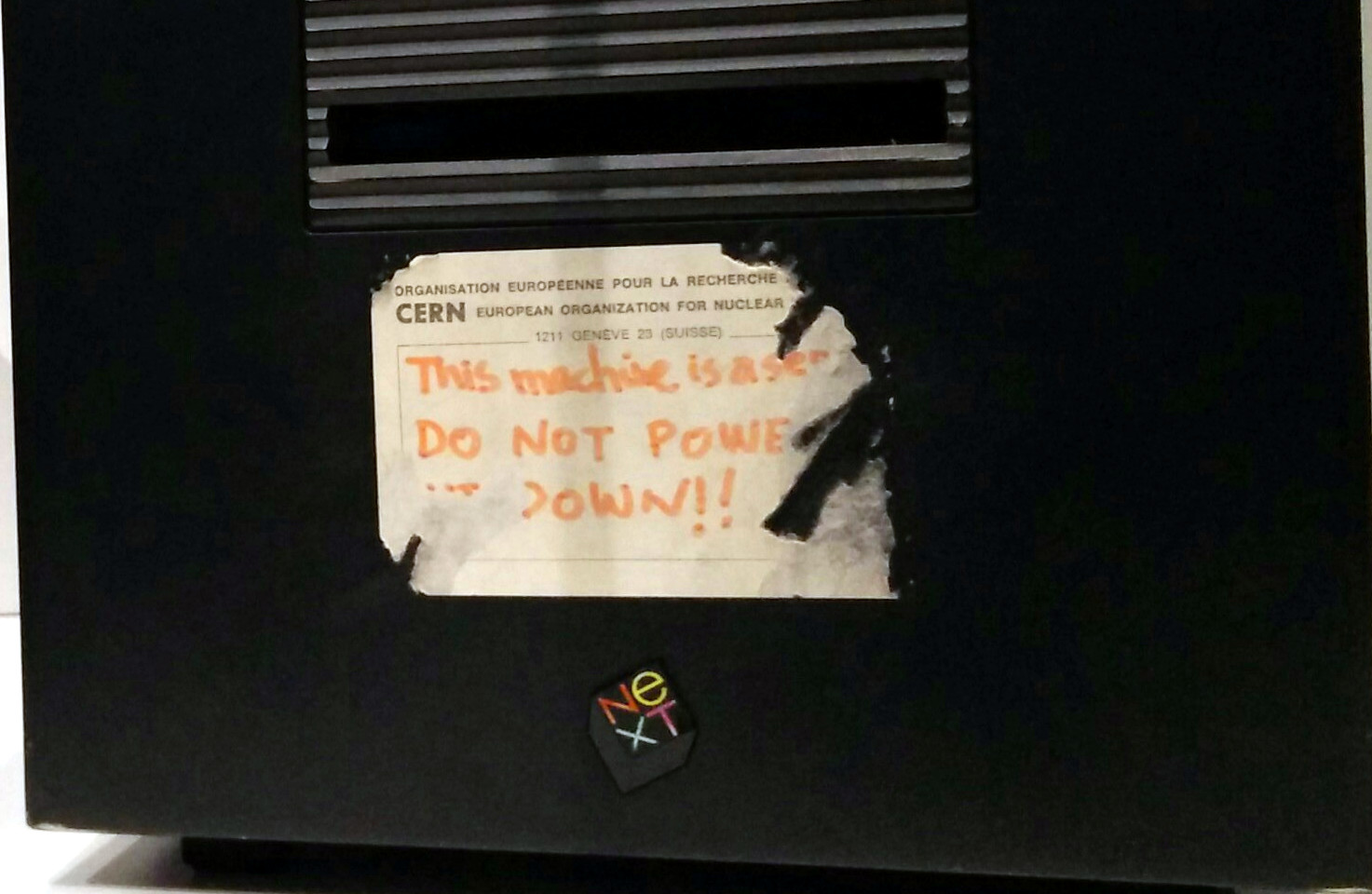
“This machine is a server. DO NOT POWER IT DOWN!!” Tim Berners-Lee’s famous sticker on the front of his NeXTcube, the first web server. Binary Koala CC BY-SA 2.0.
In its earliest days, the web could be found only in academia, from Tim Berners-Lee at CERN, and then from others such as the National Center For Supercomputing Applications at the University of Illinois. In the mid-1990s the vast majority of web sites were served by the NCSA’s HTTPD server software, which served as the basis for the later hugely popular Apache project. Sites from this era were later dubbed Web 1.0, and operated as static HTML pages which could be refreshed only by reloading a page.
The millennium brought us Web 2.0. This is generally taken to refer to a much slicker generation of sites that made use of user-generated content. Behind every such generational shift lies a fresh technology, and if it was the HTTP server for Web 1.0, it was the use of Javascript in the browser to refresh page content on the fly for Web 2.0. This was dubbed AJAX, for Asynchronous Javascript And XML, and though the data transfer is now much more likely to be JSON than XML it remains the way that today’s web sites blur the line between a web page and an app. Continue reading “Unpicking The Hype Around Web 3, What’s The Tech?”→
When electric cars first started hitting the mainstream just over a decade ago, most criticism focused on the limited range available and the long recharge times required. Since then, automakers have been chipping away, improving efficiency here and adding capacity there, slowly pushing the numbers up year after year.
Models are now on the market offering in excess of 400 miles between charges, but lurking on the horizon are cars with ever-greater range. The technology stands at a tipping point where a electric car will easily be able to go further on a charge than the average driver can reasonably drive in a day. Let’s explore what’s just around the corner.
In many ways, the human body is like any other machine in that it requires constant refueling and maintenance to keep functioning. Much of this happens without our intervention beyond us selecting what to eat that day. There are however times when due to an accident, physical illness or aging the automatic repair mechanisms of our body become overwhelmed, fail to do their task correctly, or outright fall short in repairing damage.
Most of us know that lizards can regrow tails, some starfish regenerate into as many new starfish as the pieces which they were chopped into, and axolotl can regenerate limbs and even parts of their brain. Yet humans too have an amazing regenerating ability, although for us it is mostly contained within the liver, which can regenerate even when three-quarters are removed.
In the field of regenerative medicine, the goal is to either induce regeneration in damaged tissues, or to replace damaged organs and tissues with externally grown ones, using the patient’s own genetic material. This could offer us a future in which replacement organs are always available at demand, and many types of injuries are no longer permanent, including paralysis. Continue reading “Regenerative Medicine: The Promise Of Undoing The Ravages Of Time”→
We here on Earth live at the bottom of an ocean of nitrogen. Nearly 80% of every breath we take is nitrogen, and the element is a vital component of the building blocks of life. Nitrogen is critical to the backbone of proteins that form the scaffold that life hangs on and that catalyze the myriad reactions in our cells, and the information needed to build these biopolymers is encoded in nucleic acids, themselves nitrogen-rich molecules.
And yet, in its abundant gaseous form, nitrogen remains directly unavailable to higher life forms, unusably inert and unreactive. We must steal our vital supply of nitrogen from the few species that have learned the biochemical trick of turning atmospheric nitrogen into more reactive compounds like ammonia. Or at least until relatively recently, when a couple of particularly clever members of our species found a way to pull nitrogen from the air using a combination of chemistry and engineering now known as the Haber-Bosch process.
Haber-Bosch has been wildly successful, and thanks to the crops fertilized with its nitrogenous output, is directly responsible for growing the population from a billion people in 1900 to almost eight billion people today. Fully 50% of the nitrogen in your body right now probably came from a Haber-Bosch reactor somewhere, so we all quite literally depend on it for our lives. As miraculous as Haber-Bosch is, though, it’s not without its problems, particularly in this age of dwindling supplies of the fossil fuels needed to run it. Here, we’ll take a deep dive into Haber-Bosch, and we’ll also take a look at ways to potentially decarbonize our nitrogen fixation industry in the future.
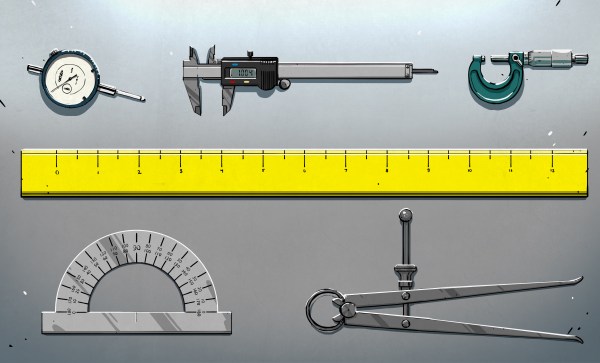
After pulling late hours in my school machine shop for a few years, I couldn’t help but wonder, who measures the measurement tools? How did they come to be? I’d heard anecdotes from other students and engineers while they inspected my freshly machined parts, but these stories were one-offs. What I wanted was a tale of industrial precision from start to finish. Years later, I found it.
The story of precision, as told by Simon Winchester, is captured in The Perfectionists: How Precision Engineers Created the Modern World. Published in 2018, Winchester’s overview stretches as far back to the Antikythera mechanism and brings us to present day silicon wafer manufacturing. Of course, this isn’t a chronology of all-things made precisely. Instead, it’s a romp through engineering highlights that hallmark either a certain level of precision manufacturing or a particular way of thinking with repercussions for the future. Continue reading “Books You Should Read: The Perfectionists”→