1-Wire LAN With An LCD

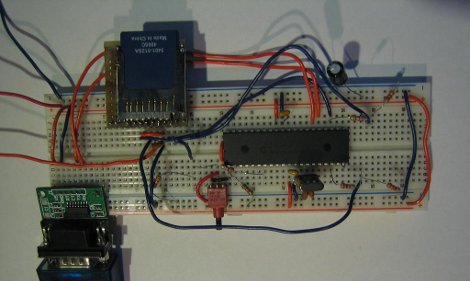
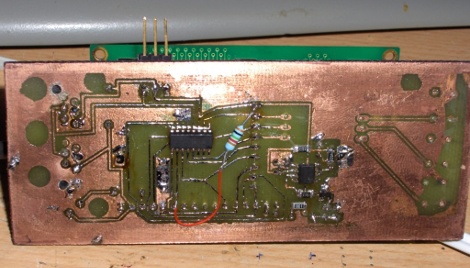
[Viktor], one of our favorite avid hackers, has been playing around with 1-wire systems all this month. What started out as a MicroLAN Fonera has turned into an iButton interface, to a 1-wire powered hub, and finally a 1-wire character driven LCD. Anyone looking at 1-wire systems or OWFS could surely benefit from his testing.

However, if you still haven’t gotten your fill of 1-wire goodness, let us remind you of the 1-wire HVAC and IPv6 to 1-wire protocol translator.

[Thanks Juan]
Intense Kit Turns Wacom Tablet Into Cintiq Clone

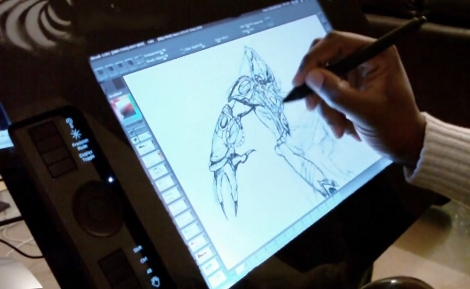
[Lesa Wright] just started selling enclosure kits used to convert a Wacom tabet into a Cintiq clone. You need to start with your own Wacom tablet, there are kits for four different models. You’ll also need to track down some other parts: a compatible laptop LCD screen, controller kit, and some cable extenders. From there, the kit takes over, with several pieces of laser-cut acrylic needing to be glued together properly, then a surprising number of spacers need to be cut from foam board in order to mount everything..

The kits come in at around $225. That might seem a bit steep since you need to bring your own electronics to the party, but have you checked out the price of the original Cintiq? You can expect to drop about twelve-hundred bones on a ready-to-use model. Before you take the dive, you should watch their collection of assembly videos, it’s quite a process.

Storage For Your Hacking Needs

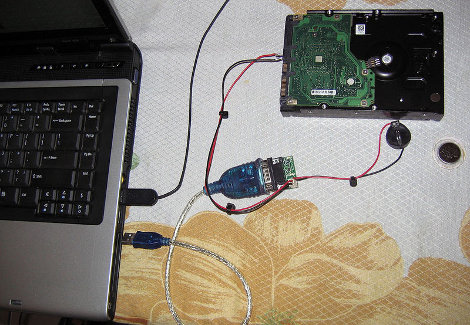
Sometimes your project needs a lot of non-volatile ROM, right on cue [Matthew] let us know how to not only connect, interface, read, and write to SD cards with a PIC over serial, but also how to do the above mentioned with an old PATA HDD. For those without a PIC/serial connection don’t fret, [nada] let us know about his Bus Pirate SD card hack, of which our personal favorite part is the creative use of an old 5.25″ floppy connector as the SD card socket.

DIY Scratch Controller

[youtube=http://www.youtube.com/watch?v=eHI2q-x0ke0]

There’s something viscerally pleasing about simple solutions. [Kip] came up with one in the form of a scratch controller. The spindle from an optical drive is used to hold a CD in place, which acts as the LP for scratching. The sensor from an optical mouse is mounted upside down below the CD and detects the rotation of the disc. From there it’s just a matter of setting up your software to get the reading from that mouse. He’s had some trouble finding disc surfaces that the mouse sensor will read reliably.  We’d recommend trying some of those stick-on inkjet CD labels.

This is similar to a scratch controller we saw in 2008. That one was actually repurposing the IR encoding from inside of a mouse. We’re not sure which method would work better, but either controller will make a nice addition to a Flexi Knob setup.

Will This Mouse Get Me Kicked Out Of The Coffee Shop?

This [Dwight Shrute]-esque project will let you try out your taxidermy skills. Apparently you can acquire a ‘wetware’ mouse fresh or frozen from pet stores. We just need to wait until fall when our pantry is visited by the less-domesticated variety.

A travel-sized optical mouse acts as the replacement guts. Some creative dremeling brings the plastic housing down to a more acceptable shape. The furry bits need to be processed using the mouse taxidermy guide before they are fit over the electronics. What you end up with is a creepy peripheral that nobody wants to use.

Fix 0LBA And BSY HDD Errors

One of the worst moments almost every hacker has experienced is a hard drive inexplicably dieing. And of course, its at the most inopportune time and you’ve had no chance to backup!

Recently there has been an influx of Seagate hard drives (specifically the 2700.11s) kicking the bucket with firmware errors 0LBA and BSY. The good news is [Gradius2] has made guides to unbrick your drive without having to match serials.

The procedure is lengthy, complicated, can easily become expensive, and there is the possibility of losing your data so it’s not recommended if you’re only getting those pictures of Mr.Fluffykins back. In such a case, Thermite might be a bit better solution.

[Thanks Calvin]

Lower Productivity By Using A Rotary Num Pad

[vimeo=http://vimeo.com/9618204]

[Maximilian Ernestus] sent us a quick little demo that shows him using a rotary phone dial as a num pad. We’re often frustrated when notebooks and netbooks prohibit us from using our mad 10-key skills (alternate key mapping doesn’t count). This makes coding and using GnuCash undesirable on small form factor portables.

Instead of fixing the problem, [Maximilian] made it worse by interfacing a rotary phone as a num pad. An Arduino counts the pulses and feeds them to the computer via a serial connection.  From there it’s just a bit of software handling to issue a keypress.  He mentions that a future version should register as a USB keyboard. This is a great opportunity to ditch the Arduino and use the V-USB library.

Want to dig a bit deeper into this old technology? Don’t miss out on the information available from the Magic Phone hack.