Creating Lithography-Free Photonic Reprogrammable Circuits

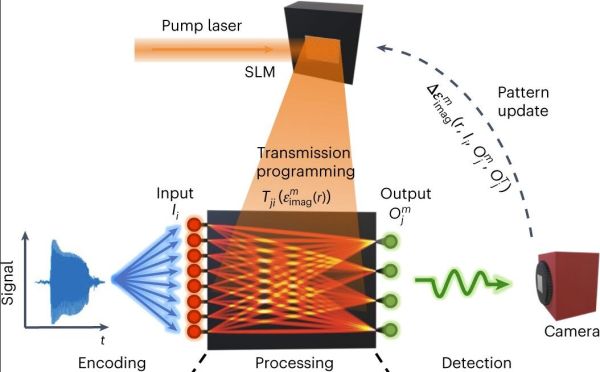
The field of photonics has seen significant advances during the past decades, to the point where it is now an integral part of high-speed, international communications. For general processing photonics is currently less common, but is the subject of significant research. Unlike most photonic circuits which are formed using patterns etched into semiconductor mask using lithography, purely light-based circuits are a tantalizing possibility. This is the focus of a recent paper (press release, ResearchGate) in Nature Photonics by [Tianwei Wu] and colleagues at the University of Pennsylvania.

What is somewhat puzzling is that despite the lofty claims of this being ‘the first time’ that such an FPGA-like device has been created for photonics, this is far from the case, as evidenced by e.g. a 2017 paper by [Kaichen Dong] and colleagues (full  article PDF) in Advanced Materials. Here the researchers used a slab of vanadium dioxide (VO2) with a laser to heat sections to above 68 °C where the material transitions from an insulating to a metallic phase and remains that way until the temperature is lowered again. The μm-sized features that can be created in this manner allow for a wide range of photonic devices to be created.
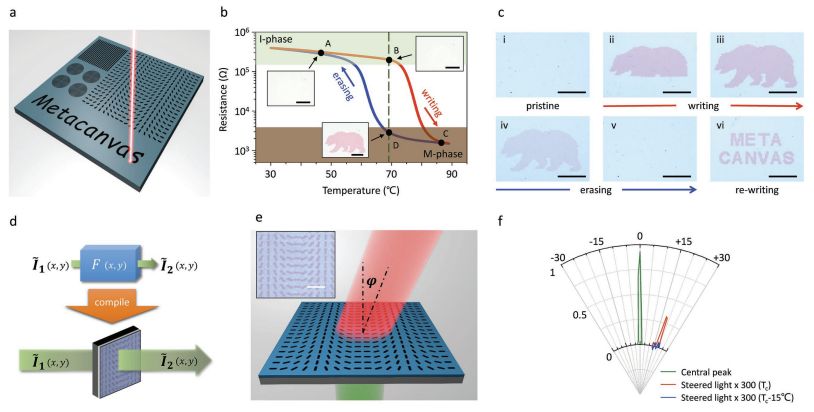
A rewritable metacanvas. a) Schematic of laser writing different photonic operator patterns on a metacanvas. b) Temperature-dependentresistance of a VO2 film. c) Optical images from writing and erasing process on the metacanvas. . d) Diagram showing the mathematical matrix (F) is compiled onto a metacanvas in the form of a photonic operator for manipulation of light waveform (I ). e) Schematic of a metacanvas programmed as a beam steerer with a steering angle ϕ. (Credit: Dong et al., 2018)
A rewritable metacanvas. a) Schematic of laser writing different photonic operator patterns on a metacanvas. b) Temperature-dependent resistance of a VO2 film. c) Optical images from writing and erasing process on the metacanvas. . d) Diagram showing the mathematical matrix (F) is compiled onto a metacanvas in the form of a photonic operator for manipulation of light waveform. e) Schematic of a metacanvas programmed as a beam steerer with a steering angle ϕ. (Credit: Dong et al., 2018)

What does appear to be different with the photonic system presented by [Wu] et al. is that it uses a more traditional 2D approach, with a slab of InGaAsP on which the laser pattern is projected. Whether it is more versatile than other approaches remains to be seen, with the use of fully photonic processors in our computers still a long while off, never mind photonics-accelerated machine learning applications.


An image of two dogs and a bison wearing harnesses with the energy harvesting system. Text next to the animals says Dog 1 (Exp. 1), Dog 2 (Exp. 2), Dog 2 (Exp. 3), and Wisent (Exp. 4)

Kinefox Tracks Wildlife For A Lifetime

Radio trackers have become an important part of studying the movements of wildlife, but keeping one running for the life of an animal has been challenging. Researchers have now developed a way to let wildlife recharge trackers via their movements.

With trackers limited to less than 5% of an animal’s total mass to prevent limitations to the their movement, it can be especially difficult to fit trackers with an appropriately-sized battery pack to last a lifetime. Some trackers have been fitted with solar cells, but besides issues with robustness, many animals are nocturnal or live in dimly-lit spaces making this solution less than ideal. Previous experiments with kinetically-charged trackers were quite bulky.

The Kinefox wildlife tracking system uses an 18 g, Kinetron MSG32 kinetic energy harvesting mechanism to power the GPS and accelerometer. Similar to the mechanical systems found in automatic winding watches, this energy harvester uses a pendulum glued to a ferromagnetic ring which generates power as it moves around a copper coil. Power is stored in a Li-ion capacitor rated for 20,000 charge/discharge cycles to ensure better longevity than would be afforded by a Li-ion battery. Data is transmitted via Sigfox to a cloud-based database for easy access.

If you want to build one to track your own pets, the files and BOM are available on GitHub. We’ve featured other animal trackers before for cats and dogs which are probably also applicable to bison.

New Wearable Detects Imminent Vocal Fatigue

“The show must go on,” so they say. These days, whether you’re an opera singer, a teacher, or just someone with a lot of video meetings, you rely on your voice to work. But what if your voice is under threat? Work it too hard, or for too long, and you might find that it suddenly lets you down.

Researchers from Northwestern University have developed a new technology to protect against this happenstance. It’s the first wearable device that monitors vocal usage and calls for time out before damage occurs. The research has been published in the Proceedings of the National Academy of Sciences.

Continue reading “New Wearable Detects Imminent Vocal Fatigue”

The FPGA board in question which was programmed to run the algorithm. (Source: iranintl)

Iran’s Military Quantum Claim: It’s Only 99.4% Ridiculous

When Iran recently announced a quantum processing algorithm (Google translation) that would help its military to detect water surface disturbances, the instant response from Western media was one of ridicule, based on the displayed hardware. The hardware in question was the Digilent ZedBoard Zynq-7000 hybrid SoC/FPGA development board, which can be yours for less than $600.

Seems absurd, and the claim about any realistic military use absolutely is. But buried deep, deep down, there may be a tiny kernel of truth: because quantum computers are inherently parallel, FPGAs can make a good fit for small-scale quantum simulations.

Does this mean that the Iranian Navy would be better off simulating quantum circuits on an FPGA board than on a GPU or even a used laptop? Probably not. Will this hardware serve the proposed military application in the forseeable future? Absolutely not! Was this a misleading and ridiculous photo op? Yup. 100%.

But is emulating qubits in FPGA fabric a real thing? Turns out it is! Let’s have a look.

Continue reading “Iran’s Military Quantum Claim: It’s Only 99.4% Ridiculous”

Clay Makes For DIY Power Source, Just Add Water

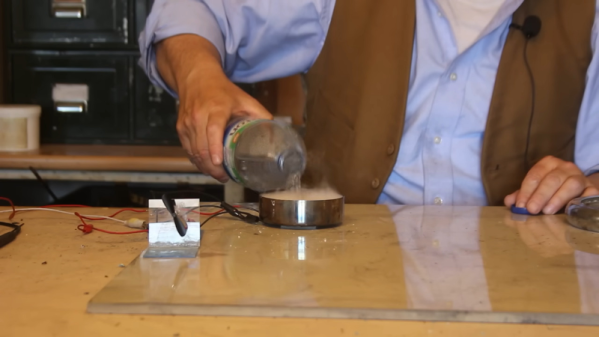
[Robert Murray-Smith] starts out showing us some clay formations that house bees. He couldn’t take any of that clay home, but that’s no problem — clay is plentiful, and apparently, you can make a battery with it. Well, perhaps not really a battery. Adding water to zeolite — a clay often used as a filter material — generates heat, and where there’s heat, there can be electricity.

[Robert] uses a salvaged Peltier device, as you find in small electric refrigerators. These solid-state heat pumps usually convert electricity into a temperature differential, but in this case, it is used as a thermocouple, generating electricity from a temperature difference.

The clay used is a very fine aluminosilicate crystal known as zeolite 13X. Once it comes into contact with plain ordinary water, it immediately starts to boil. It’s a neat experiment, and with the Peltier underneath the metal container holding the clay, enough power is produced to spin a small motor. Of course this won’t power anything large, but on the other hand, plenty of things these days don’t take much power. This technique would work with any exothermic reaction of course, but there’s something compelling about the shelf-stability of water and clay.

Beats a potato, we suppose. Batteries don’t have to be difficult to make. It is only hard to make really good ones.

Continue reading “Clay Makes For DIY Power Source, Just Add Water”

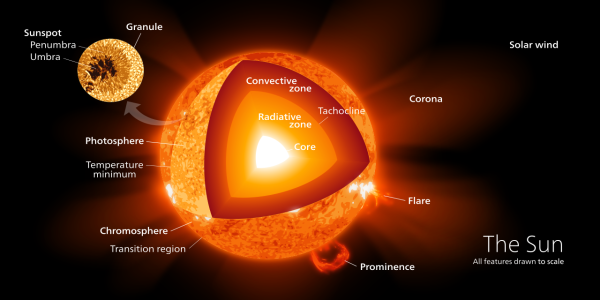
Diagram of the Sun. (Credit: Kelvinsong)

Parker Solar Probe’s Confirmation Of Interchange Reconnection Being The Source Of Fast Solar Wind

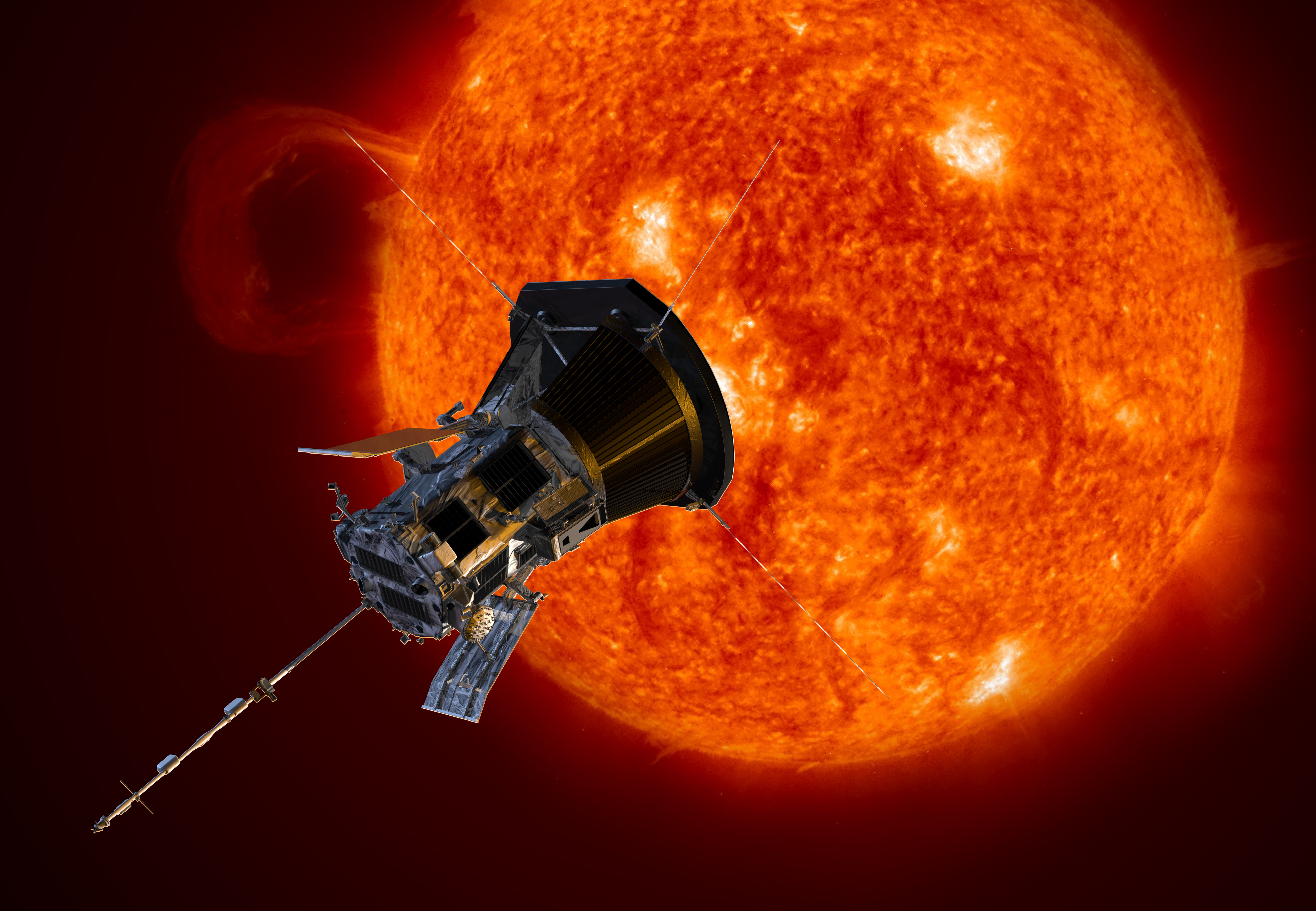
Although experimental verification is at the heart of the scientific method, there is quite a difficulty range when it comes to setting up such an experiment. Testing what underlies the formation of the fast solar winds that are ejected from coronal holes in the Sun’s corona is one of these tricky experimental setups. Yet it would seem that we now have our answer, with a newly published paper in Nature by S. D. Bale and colleagues detailing what we learned courtesy of the Parker Solar Probe (PSP), which has been on its way to the Sun since it was launched in August of 2018 from Earth.

Artist rendition of the Parker Solar Probe. (Credit: NASA)

The Sun’s solar wind is the name for a stream of charged particles which are ejected from the Sun’s corona, with generally two types being distinguished: slow and fast solar winds. The former type appears to originate from the Sun’s equatorial belt and gently saunters away from the Sun at a mere 300 – 500 km/s with a balmy temperature of 100 MK.

The fast solar wind originates from coronal holes, which are temporary regions of cooler, less dense plasma within the corona. These coronal holes are notable for being regions where the Sun’s magnetic field extends into interplanetary space as an open field, along which the charged particles of the corona can escape the Sun’s gravitational field.

These properties of coronal holes allow the resulting stream to travel at speeds around 750 km/s and a blistering 800 MK. What was unclear up till this point was exactly what powers the acceleration of the plasma. It was postulated that the source could be wave heating, as well as interchange reconnection, but with the PSP now close enough to perform the relevant measurements, the evidence points to the latter.

Essentially, interchange reconnection is the reestablishing of a coronal hole’s field lines after interaction with convection cells on the Sun’s photosphere. These convection cells draw the magnetic field into a kind of funnel after which the field lines reestablish themselves, which results in the ejection of hotter plasma than with the slow solar wind. Courtesy of the PSP’s measurements, measured fast solar winds could be matched with coronal holes, along with the magnetic fields. This gives us the clearest picture yet of how this phenomenon works, and how we might be able to predict it.

(Heading image: Diagram of the Sun. (Credit: Kelvinsong) )

Characterizing Singular Atoms Using X-Ray Spectroscopy And Scanning Tunneling Microscopy

Scanning Tunneling Microscopes (STMs) are amazing tools which can manipulate singular atoms, but they cannot characterize these atoms as they act only on the outer electron shell. Meanwhile X-ray spectroscopy is a great tool for characterizing materials, but has so far been unable to scale down to singular atoms. This is where a recent study (paywalled, see summary article) by Tolulope M. Ajayi and colleagues demonstrates how both STM and X-rays can be combined in order to characterize singular atoms.

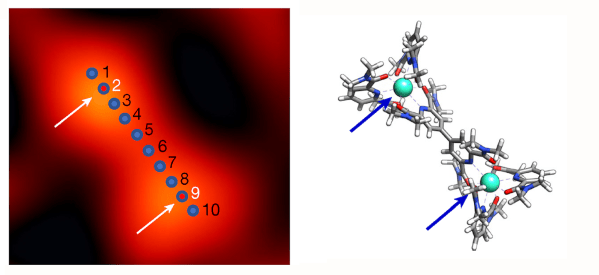
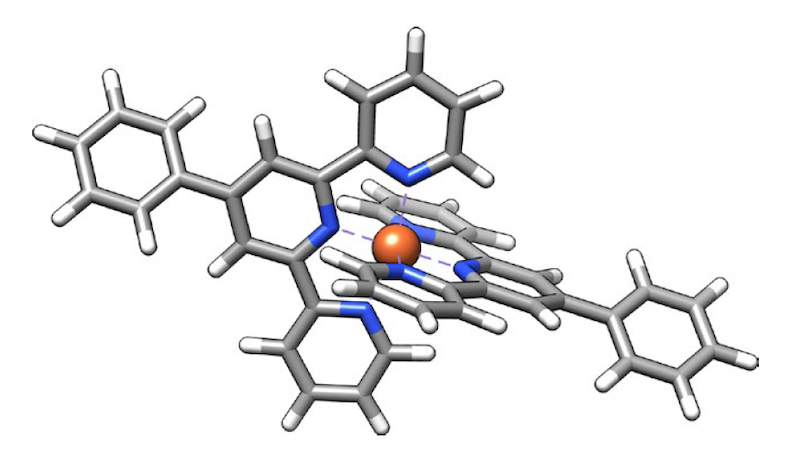
Structure of a part of the supramolecular complex used to measure the x-ray absorption spectrum of a single iron atom. The iron atom (red) is held within several ring-shaped structures. (Credit: Ajayi et al., 2023)

This research builds on previous research on synchrotron X-ray STM (SX-STM) which has been used for nanoscale imaging since 2009, but not down to the scale of a singular atom yet. Key to this achievement was to synthesize supramolecular complexes that could act as ‘tweezers’ to hold the atom under investigation in place and away from atoms of the same species. This not only allowed the atom to be identified using SX-STM, it also demonstrated that more subtle chemical properties of the atom can be analyzed in this manner, such as the way it interacts with other atoms.

The information gleaned this way matches up with what we know about the two atoms used in the study: iron and the rare earth terbium, with the latter’s lack of hybridization of its f orbitals (ℓ = 3) observable. For less well-studied atoms this method could provide a very efficient way to get a detailed overview of its properties. What is more, in future studies the researchers hope to use polarized X-rays to also obtain information about an atom’s spin state, opening interesting possibilities in areas such as spintronics and memory technologies.

Heading image: As the tip was scanned across ten positions in a sample containing two terbium atoms, it picked a signal only from the positions (2 and 9) where terbium was located (left: STM image; right: sketch of the corresponding molecular structure). (Credit: Ajayi et al, 2023)