Transistors That Grow On Trees

Modern technology is riddled with innovations that were initially inspired by the natural world. Velcro, bullet trains, airplanes, solar panels, and many other technologies took inspiration from nature to become what they are today. While some of these examples might seem like obvious places to look, scientists are peering into more unconventional locations for this transistor design which is both inspired by and made out of wood.

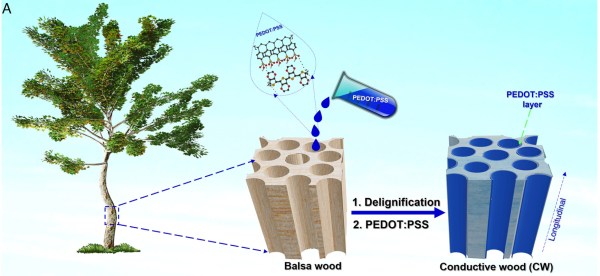
The first obvious hurdle to overcome with any electronics made out of wood is that wood isn’t particularly conductive, but then again a block of silicon needs some work before it reliably conducts electricity too. First, the lignin is removed from the wood by dissolving it in acetate, leaving behind mostly the cellulose structure. Then a conductive polymer is added to create a lattice structure of sorts using the wood cellulose as the structure. Within this structure, transistors can be constructed that function mostly the same as a conventional transistor might.

It might seem counterintuitive to use wood to build electronics like transistors, but this method might offer a number of advantages including sustainability, lower cost, recyclability, and physical flexibility. Wood can be worked in a number of ways once the lignin is removed, most notably when making paper, but removing the lignin can also make the wood relatively transparent as well which has a number of other potential uses.

Thanks to [Adrian] for the tip!

El Caracol observatory at Chichen Itza.

Solving The Mystery Of The Mayan Calendar’s 819-Count Cycle

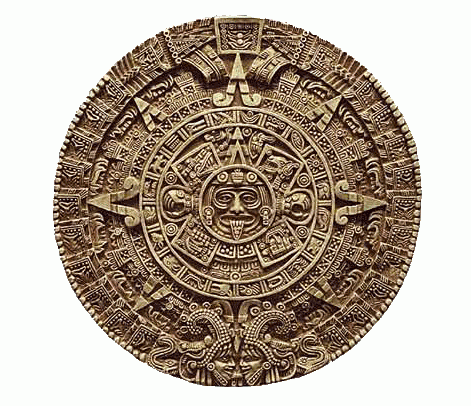
Mayan Calendar Round. (Source: Chichen Itza)

Despite the mysticism that often clouds the Mayan calendar in popular culture, fact remains that the calendar system in use by the Mayans was based on a system used throughout the pre-Columbian Mesoamerican societies, dating back to at least the 5th century BCE. Characteristic of this system is the cyclical nature, with the Mayan calendar featuring three common cycles: the Long Count, Tzolk’in (260-day) and the 365-day, solar-based Haab’. Combined, these three cycles formed what is known as the Calendar Round and which lasts for 52 haab’ (years).

What was less obvious here was the somewhat obscure 819-day count that was found in certain locations in Mayan constructions. Now researchers John H. Linden and Victoria R. Bricker figure that they have discovered how this new cycle matches up with the previously known Calendar Round. In previous reports by e.g. Barbara McLeod and Hutch Kinsman in 2012, they noted the ongoing debate on this 819-day count and its potential purpose. The new insight by Linden and Bricker is that by increasing the calendar length to 20 periods of 819 days, it matches up with all synodic periods of the visible planets, explaining it as a planetary astronomical cycle.

What is interesting here is that the Mayan counting system is base-20 (vigesimal). Whether coincidence or not when it comes to this part of the Mayan calendar, it is good to see that more secrets of the Classical Mayan society are being recovered. With modern day Maya still living where their ancestors once did, these discoveries help them to recover and reconnect to the parts of their history that were so brutally destroyed by the invading Europeans.

(Heading image: El Caracol observatory at Chichen Itza, Mexico)

Making Hydrogen With Solar Energy, With Oxygen And Heat A Bonus

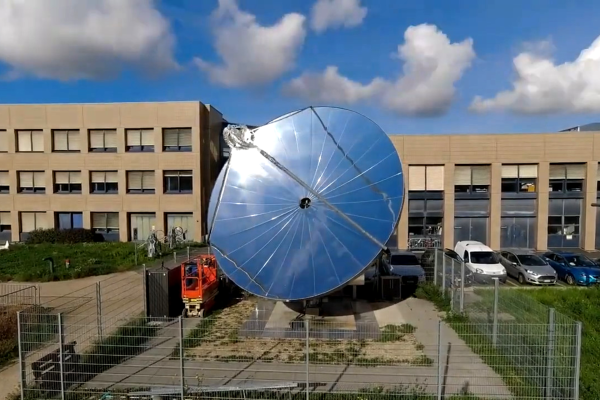
Hydrogen is a useful gas. Whether you want to float an airship, fuel a truck, or heat an industrial process, hydrogen can do the job. However, producing it is currently a fraught issue. While it can be produced cleanly using renewable energy, it’s often much cheaper to split it out of hydrocarbon fuels using processes that generate significant pollution.

There are methods to generate hydrogen more efficiently, though, in a clean and sustainable process. that also produces useful heat and oxygen as byproducts. The key to the process? Concentrated sunshine.
Continue reading “Making Hydrogen With Solar Energy, With Oxygen And Heat A Bonus”

Leonardo Da Vinci’s Visualization Of Gravity As A Form Of Acceleration

Although we take a lot of scientific knowledge for granted today, each of the basics – whether it be about light, gravity, mass or the shape of the Earth – had to be theorized and experimentally verified. In the case of gravity, as far back as around 500 BCE the Ionian Greek philosopher Heraclitus theorized on the balance created by what we came to call ‘gravity’. Later, the Greek philosopher Aristotle coined his own postulations and Greek physicist Archimedes did research that led him to discover the center of mass. Centuries later, the Roman engineer and architect Vitruvius argued for the concept of specific gravity rather than mass alone.

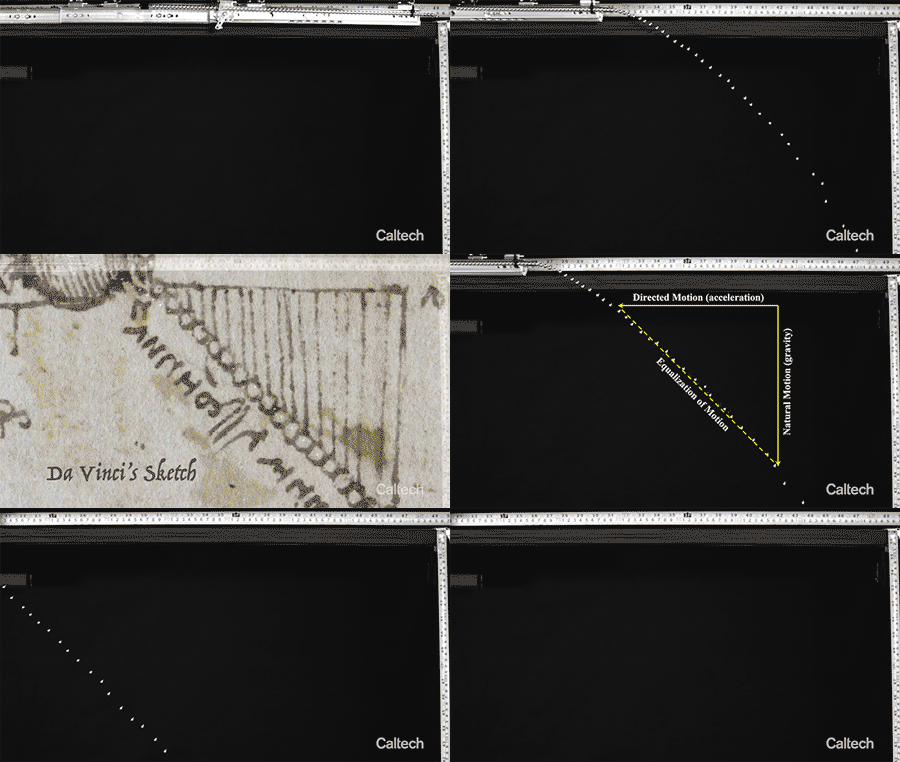
Da Vinci’s sketch and the Caltech experiment replicating it.

Although scientific pursuits in this area ground to a halt in Europe during medieval times, the Renaissance saw a renewed interest in the topic, with newly published research performed on Leonardo da Vinci‘s notes showing that he appears to – unsurprisingly – have also created a number of experiments aimed at determining the properties of gravity. One of the major limitations of the 15th century was that many of the basic scientific tools we have come to rely on since the 19th century such as accurate clocks, along with many other products of advanced alloys and metallurgy simply did not exist. Da Vinci’s experiment in this context is nothing if not ingenious in its simplicity.

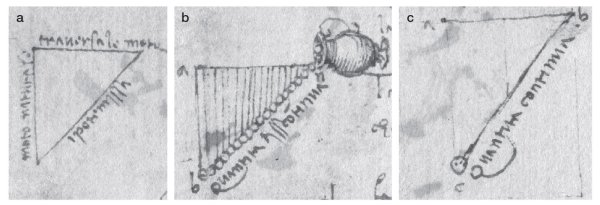
By the time of the European Renaissance, the Aristotelian concept of gravity as solely a factor of an object’s mass was dismissed by many in favor of a model that saw the motion of an object affected by its velocity and mass, also influenced by works published by Persian scholars. When Da Vinci set up his experiment, he focused specifically on the acceleration of the falling objects by pouring a large number of granules or possibly water droplets from a pitcher which was being pulled along a straight path. He theorized that if the pitcher was being accelerated at the same rate as the objects are accelerating due to gravity, it’d create a isosceles right triangle.

When the researchers ran his experiment and compared Da Vinci’s notes on the results, they realized that although he had made a mistake in his model, at the small scale this would not have affected the results, making it valid and an early precursor to what later be published by Isaac Newton in the 17th century.

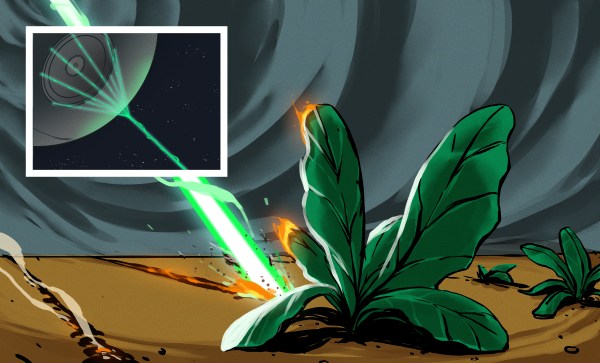
Smoke Some Weeds: Lasers Could Make Herbicide Obsolete

We’ve all tangled with unwelcome plant life at one point or another. Whether crabgrass infested your lawn, or you were put on weeding duty in your grandfather’s rose patch, you’ll know they’re a pain to remove, and a pain to prevent. For farmers, just imagine the same problem, but scaled up to cover thousands of acres.

Dealing with weeds typically involves harsh chemicals or excessive manual labor. Lasers could prove to be a new tool in the fight against this scourge, however, as covered by the BBC.

Continue reading “Smoke Some Weeds: Lasers Could Make Herbicide Obsolete”

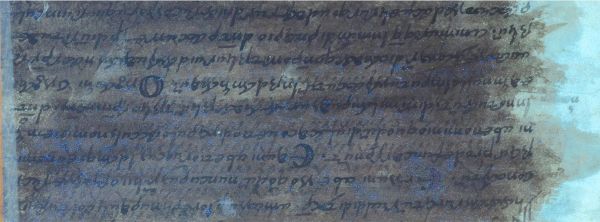
Ambrosianus L 99 sup., p. 190, ll. 14–23, UV fluorescence image by Lumière Technology. Upside-down Latin overtext in dark brown and Greek undertext in light brown.

Reading Ptolemy’s Treatise On The Meteoroscope On Palimpsests After Centuries Of Recovery Attempts

During the Middle Ages much of Ancient Greek and Roman scientific, legal and similarly significant texts written on parchment were commonly erased, mostly because of the high cost of new parchment and the little regard given to these secular texts. Although recovery attempts of the remaining faint outlines of the old text has been attempted since at least the 19th century, these often involved aggressive chemical means. Now researchers have managed to recover the text written by Ptolemy on a parchment that suffered such a previous recovery attempt.

The term for a parchment and similar on which the existing text was washed or scraped off is a palimpsest, via Latin from  Ancient Greek παλίμψηστος (palímpsēstos, from παλίν + ψαω = ‘again’ + ‘scrape’). In the case of this particular treatise, it is part of L 99 sup which is kept at the Biblioteca Ambrosiana in Milan, Italy. This collection contains fifteen palimpsest parchment leaves previously used for three Greek scientific texts: a text of unknown authorship on mathematical mechanics and catoptrics, known as the Fragmentum Mathematicum Bobiense (three leaves), Ptolemy’s Analemma (six leaves), and a so far unidentified astronomical text on six leaves.

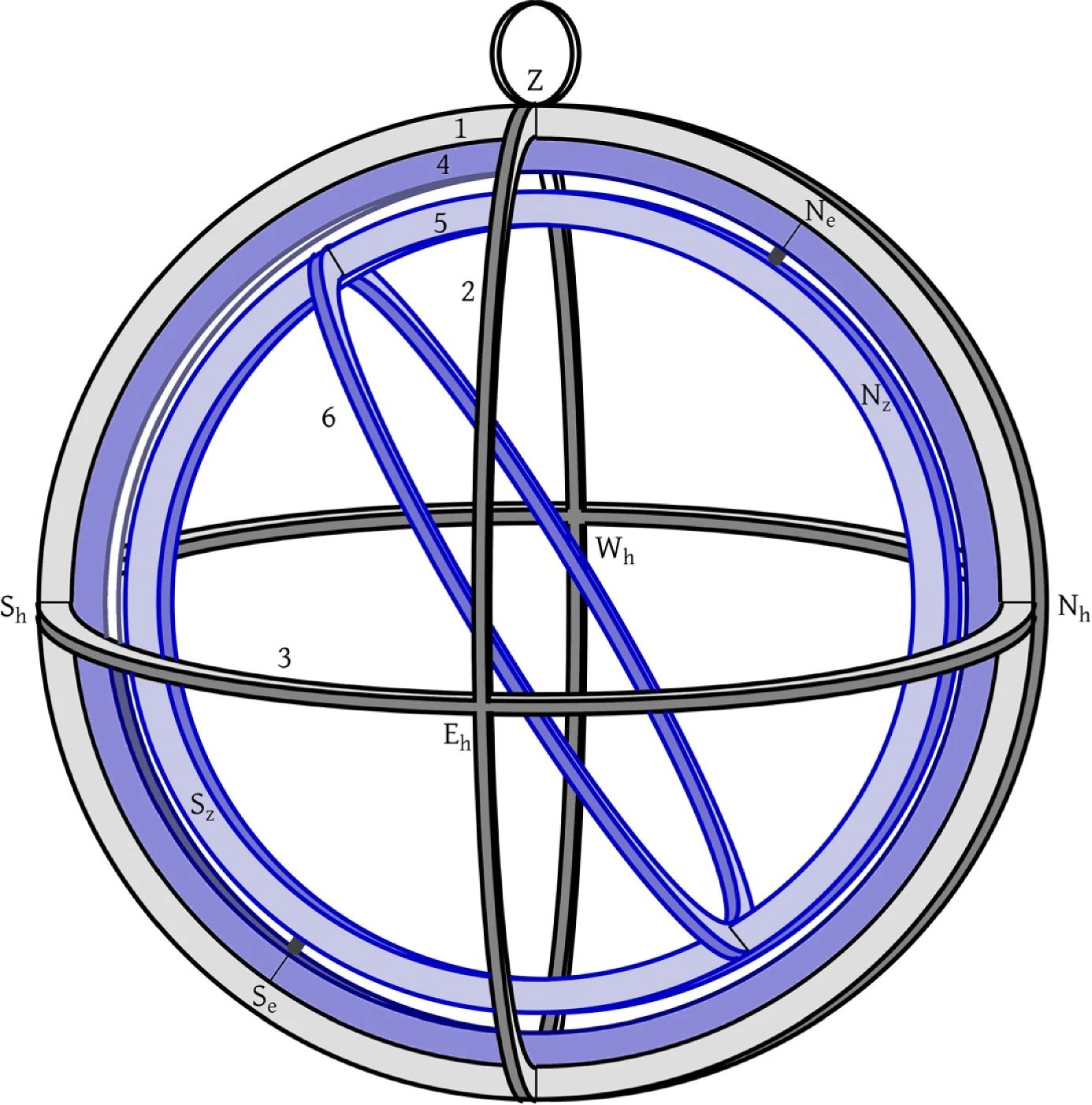
Outermost six rings of the meteoroscope, not to scale. Nh, Sh, Eh, and Wh are cardinal points of the horizon; Ne and Se are the north and south celestial poles; Nz and Sz are the north and south poles of the ecliptic; and Z is the zenith. (Gysembergh et al., 2023)

It is this last text that has now been identified, courtesy of work by Victor Gysembergh and colleagues. Whereas 19th century palimpsest recovery attempts by Angelo Mai involved reagents, during the 20th century ultraviolet illumination became the preferred method, followed by similar non-destructive analysis methods. For this study UV fluorescence and multispectral reflectance imaging was employed, which allowed for significant more of the original Greek text to be uncovered. Most notable, this revealed Ptolemy’s treatise on the Meteoroscope, which is an instrument for measuring the position, length, and direction of the apparent path of a shooting star.

This new recovery builds upon text previously recovered by other researchers since Mai’s attempts, and fills in more details, although it must be noted that not all of the text has been recovered. It’s hoped that in future imaging sessions more can be recovered of this irreplaceable text, that like so many of its kind nearly got destroyed during Europe’s darkest era.

(Top image: Ambrosianus L 99 sup., p. 190, ll. 14–23, UV fluorescence image by Lumière Technology. Upside-down Latin overtext in dark brown and Greek undertext in light brown.)

3D Print For Extreme Temperatures (But Only If You’re NASA)

At the level pursued by many Hackaday readers, the advent of affordable 3D printing has revolutionised prototyping, as long as the resolution of a desktop printer is adequate and the part can be made in a thermoplastic or resin, it can be in your hands without too long a wait. The same has happened at a much higher level, but for those with extremely deep pockets it extends into exotic high-performance materials which owners of a desktop FDM machine can only dream of.

NASA for example are reporting their new 3D printable nickel-cobalt-chromium alloy that can produce extra-durable laser-sintered metal parts that van withstand up to 2000 Fahrenheit, or 1033 Celcius for non-Americans. This has obvious applications for an organisation producing spacecraft, so naturally they are excited about it.

The alloy receives some of its properties because of its oxide-dispersion-strengthened composition, in which grains of metal oxide are dispersed among its structure. We’re not metallurgists here at Hackaday, but we understand that the inconsistencies in the layers of metal atoms caused by the oxides in the crystal structure of the alloy leads to a higher energy required for the structure to shear.

While these particular materials might never be affordable for us mere mortals to play with, NASA’s did previously look into how it could greatly reduce the cost of high-temperature 3D printing by modifying an existing open source machine.