Open Firmware For PinePhone LTE Modem – What’s Up With That?

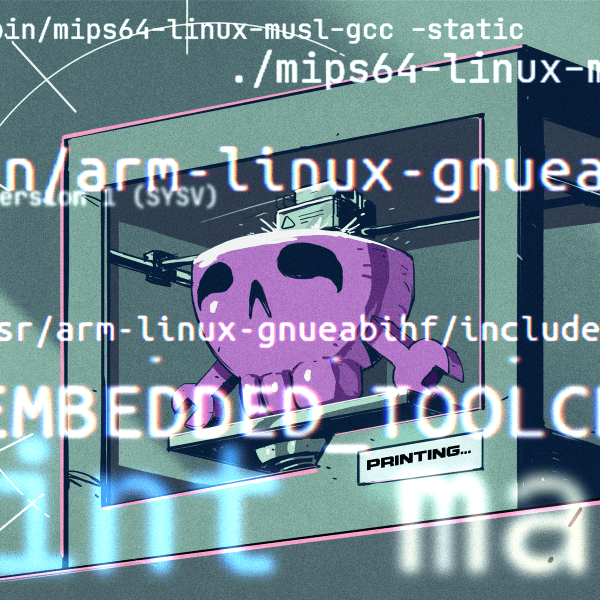
In their monthly announcement, among all the cool things Pine64, they talked about the open firmware for PinePhone’s LTE modem. The firmware isn’t fully open – a few parts remain closed. And Pine emphasizes that they neither pre-install nor officially endorse this firmware, and PinePhones will keep shipping with the vendor-supplied modem firmware image instead.

That said, the new firmware is way more featureful – it has less bugs, more features, decreased power consumption, and its proprietary parts are few and far between. I’d like to note that, with a special build of this firmware, the PinePhone’s modem can run Doom – because, well, of course.

And with all that, it’s become way easier to install this firmware – there’s fwupd hooks now! You can think of fwupd as the equivalent of Windows Update for firmware, except not abusive, and aimed at Linux. A perfect fit for keeping your open-source devices as functional as they can be, in other words.

What’s the deal? If open firmware is that much cooler, why don’t more of our phones have open firmware options available? Continue reading “Open Firmware For PinePhone LTE Modem – What’s Up With That?”

Where Are Our Video Phones?

Videoconferencing has been around in one form or another for quite a while, but it took the pandemic to thrust into prominence with just about everyone. In a way, it has been the delivery of something long-promised by phone companies, futurists, and science fiction writers: the picture phone. But very few people imagined how the picture phone would actually manifest itself. We thought it might be interesting to look at some of the historical predictions and attempts to bring this technology to the mass market.

The reality is, we don’t have true picture phones. We have computers with sufficient bandwidth to carry live video and audio. Your FaceTime call is going over the data network. Contrast that with, say, sending a fax which really is a document literally over the phone lines.

Continue reading “Where Are Our Video Phones?”

The Digital Ham Hack Chat

Join us on Wednesday, July 13 at noon Pacific for The Digital Ham Hack Chat with Rosy Schechter and John Hays!

For most of its existence, amateur radio has been the quintessence of the analog arts. From the very earliest days of radio, hobbyists have been piecing together circuits to ply the radio spectrum, using whatever bits of RF wizardry they managed to pick up — or invent — along the way. From the architecture of the radios to the nature of the conversations they had over the airwaves, ham radio was very much an analog experience.

But if hams are anything, they’re resourceful, and they’ve got a long history of leveraging whatever the current state of the art happens to be. And so when electrical engineering began to dive into the digital world, so too did the hams. Radioteletype, facsimile, and other text-and-data modes lead to things like packet radio, which in turn gave us powerful tools like APRS, FT8, and PACTOR, upon which the current rich infrastructure of location reporting, weak signal digital contacts and beacons, and email service independent of an Internet connection have been built. There’s even a complete TCP/IP network using amateur radio as the physical layer, which even predates the widespread public Internet by many years.

Amateur radio always has been at the forefront of digital communications, but it takes work to keep hams in their leadership position in the field. To help with that, Amateur Radio Digital Communications (ARDC) was established. ARDC is a non-profit dedicated to supporting amateur radio and digital communication science and technology, chiefly through their programs of grants that are available to fund the development of technically innovative open and non-profit projects in amateur radio.

join-hack-chatFor this Hack Chat, ARDC Executive Director Rosy Schechter (KJ7RYV) and Staff Lead John Hays (K7VE) will be joining us to discuss the world of digital communications on the ham bands. Here’s your chance to share your experiences with digital modes, find out about what’s new in digital comms, and find out how to participate in the ARDC grant program and possibly fund the next big thing for the digital ham.

Our Hack Chats are live community events in the Hackaday.io Hack Chat group messaging. This week we’ll be sitting down on Wednesday, July 13 at 12:00 PM Pacific time. If time zones have you tied up, we have a handy time zone converter.

Continue reading “The Digital Ham Hack Chat”

NASA’s Flying Telescope Is Winding Down Operations

NASA’s Hubble Space Telescope is arguably the best known and most successful observatory in history, delivering unprecedented images that have tantalized the public and astronomers alike for more than 30 years. But even so, there’s nothing particularly special about Hubble. Ultimately it’s just a large optical telescope which has the benefit of being in space rather than on Earth’s surface. In fact, it’s long been believed that Hubble is not dissimilar from contemporary spy satellites operated by the National Reconnaissance Office — it’s just pointed in a different direction.

There are however some truly unique instruments in NASA’s observational arsenal, and though they might not have the name recognition of the Hubble or James Webb Space Telescopes, they still represent incredible feats of engineering. This is perhaps best exemplified by the Stratospheric Observatory for Infrared Astronomy (SOFIA), an airborne infrared telescope built into a retired airliner that is truly one-of-a-kind.

Unfortunately this unique aerial telescope also happens to be exceptionally expensive to operate; with an annual operating cost of approximately $85 million, it’s one of the agency’s most expensive ongoing astrophysics missions. After twelve years of observations, NASA and their partners at the German Aerospace Center have decided to end the SOFIA program after its current mission concludes in September.

With the telescope so close to making its final observations, it seems a good time to look back at this incredible program and why the US and German space centers decided it was time to put SOFIA back in the hangar.

Continue reading “NASA’s Flying Telescope Is Winding Down Operations”

Hackaday Links Column Banner

Hackaday Links: July 10, 2022

We always like to call out a commercial success stemming from projects that got their start on Hackaday.io, and so we’re proud to announce the release of MAKE: Calculus by Joan Horvath and Rich Cameron, a book that takes a decidedly different approach to teaching calculus than traditional courses. Geared to makers and hackers, who generally tend to have a visual style of learning, the book makes heavy use of 3D-printed models to illustrate the relationships between functions. The project started five years ago as a 2017 Hackaday Prize entry, and resulted in a talk at the 2019 Supercon. Their book is now available for preorder, and might be a great way to reacquaint themselves with calc, or perhaps even to learn it for the first time. Continue reading “Hackaday Links: July 10, 2022”

When Is One Pixel Cooler Than Millions?

On vacation, we went to see a laser show – one of the old school variety that combines multiple different lasers of many different colors together into a single beam, modulates them to create different colors, and sends it bouncing off galvos to the roof of a planetarium. To a musical score, naturally.

When I was a kid, I had no idea how they worked, but laser shows were awesome. As a younger grownup hacker, and after some friends introduced me to the dark arts, I built my own setup. I now know how they work from the deepest innards out, and they are no less awesome. Nowadays, you can get a capable set of galvos and drivers for around a hundred bucks from the far east, it’s fair to say that there’s no magic left, but the awesome still remains.

RGB laser
“laser show” by Ilmicrofono Oggiono

At the same time, lasers, and laser shows, are supremely retro. The most stunning example of this hit me while tearing apart a Casio projector ages ago to extract the otherwise unobtainable brand new 455 nm blue laser diodes. There I was pulling one diode out of an array of 24 from inside the projector, and throwing away the incredibly powerful DSP processor, hacking apart the precision optical path, and pulling out the MEMS DLP mirror array with nearly a million little mirrors, to replace it with two mirrors, driven around by big old coil-of-wire electromagnets. Like a caveman.

But still, there’s something about a laser show that I’ve never seen replicated – the insane color gamut that they can produce. It is, or can be, a lot more than just the RGB that you get out of your monitor. Some of the colors you can get out of a laser (or a prism) are simply beautiful in a way that I can’t explain. I can tell you that you can get them from combining red, blue, green, cyan, and maybe even a deep purple laser.

What you get with a laser show pales in comparison to the multi-megapixel projectors in even a normal movie theater. Heck, you’ve really got one pixel. But if you move it around fast enough, and accompany it with a decent soundtrack, you’ve still got an experience that’s worth having while you still can.

[Banner image from a positively ancient RGB laser hack. We need more! Send us yours!]

Ceramic stove (credit: Felix Reimann)

Same Taste With Less Energy: Optimizing The Way We Cook Food

Preparing food is the fourth most energy-intensive activity in a household. While there has been a lot of effort on the first three — space heating, water heating, and electrical appliances — most houses still use stoves and ovens that are not too dissimilar to those from half a century ago.

More recent technologies that make cooking more efficient and pleasant have been developed, such as induction heating. Other well-known and common appliances are secretly power savers: microwaves and electric kettles. In addition, pressure cookers enable the shortening of cooking times, and for those who like dishes that take hours to simmer, vacuum-insulated pans can be a real energy-saver.

Continue reading “Same Taste With Less Energy: Optimizing The Way We Cook Food”