Know Audio: Amplifier Nuts And Bolts

As we’ve followed a trail through Hi-Fi and audio systems from the listener’s ear towards the music source, we’ve reached the amplifier. In our previous article we gave a first introduction to distortion and how some amplifier characteristics can influence it, and here we’ll continue along that path and look at the amplifier itself. What types of audio amplifier circuits will you encounter, and what are their relative merits and disadvantages?

A Few Amplifier Basics

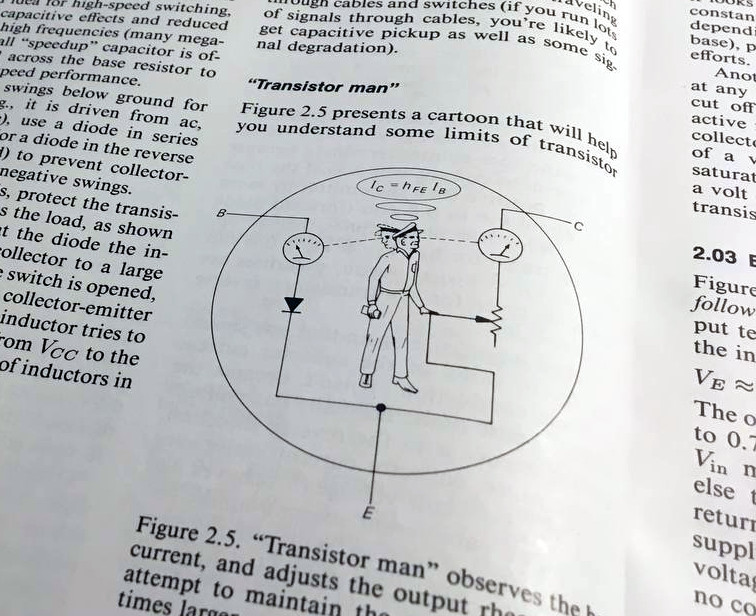
Horowitz and Hill's Transistor Man
Horowitz and Hill’s Transistor Man

If you know anything about a transistor, it’s probably that it’s a three terminal device whose output pin forms part of a potential divider whose state is dependent on what is presented to its input pin. The Art of Electronics had it as a cartoon of a man standing inside a bipolar transistor and adjusting a variable resistor between collector and emitter while watching an ammeter on the base.

Properly biased in its conducting range, a transistor can behave as a linear device, in which the potential divider voltage moves in response to the input in a linear relationship, and thus the voltage on the output is an amplified version of the voltage on the output. This is the simplest of transistor amplifiers, and because different types of amplifier are referred to by lettered classes, it’s known as a class A amplifier. Continue reading “Know Audio: Amplifier Nuts And Bolts”

As ISS Enters Its Final Years, Politics Take Center Stage

There was a time when the idea of an international space station would have been seen as little more than fantasy. After all, the human spaceflight programs of the United States and the Soviet Union were started largely as a Cold War race to see which country would be the first to weaponize low Earth orbit and secure what military strategists believed would be the ultimate high ground. Those early rockets, not so far removed from intercontinental ballistic missiles (ICBMs), were fueled as much by competition as they were kerosene and liquid oxygen.

Space Shuttle docked to Mir space station in 1995.
Atlantis docked to Mir in 1995.

Luckily, cooler heads prevailed. The Soviet Almaz space stations might have carried a 23 mm cannon adapted from tail-gun of the Tu-22 bomber to ward off any American vehicles that got too close, but the weapon was never fired in anger. Eventually, the two countries even saw the advantage of working together. In 1975, a joint mission saw the final Apollo capsule dock with a Soyuz by way of a special adapter designed to make up for the dissimilar docking hardware used on the two spacecraft.

Relations further improved following the dissolution of the Soviet Union in 1991, with America’s Space Shuttle making nine trips to the Russian Mir space station between 1995 and 1997. A new era of cooperation had begun between the world’s preeminent space-fairing countries, and with the engineering lessons learned during the Shuttle-Mir program, engineers from both space agencies began laying the groundwork for what would eventually become the International Space Station.

Unfortunately after more than twenty years of continuous US and Russian occupation of the ISS, it seems like the cracks are finally starting to form in this tentative scientific alliance. With accusations flying over who should take the blame for a series of serious mishaps aboard the orbiting laboratory, the outlook for future international collaboration in Earth orbit and beyond hasn’t been this poor since the height of the Cold War.

Continue reading “As ISS Enters Its Final Years, Politics Take Center Stage”

Drone Hits Plane — And This Time It’s A Real (Police) One!

Over the years we’ve brought you many stories that follow the world of aviation as it struggles with the arrival of multirotors. We’ve seen phantom drone encounters cause panics and even shut airports, but it’s been vanishingly rare for such a story to have a basis in evidence. But here we are at last with a drone-aircraft collision story that involves a real drone. This time there’s a twist though, instead of one piloted by a multirotor enthusiast that would prompt a full-on media panic, it’s a police drone that collided with a Cesna landing at Toronto’s Buttonville airport. The York Regional Police craft was part of an operation unrelated to the airport, and its collision with the aircraft on August 10th was enough to make a significant dent in its engine cowling. The police are reported to be awaiting the result of an official investigation in the incident.

This is newsworthy in itself because despite several years and significant resources being devoted to the problem of drones hitting planes, demonstrable cases remain vanishingly rare. The machine in this case being a police one will we expect result in many fewer column inches for the event than had it been flown at the hands of a private multirotor pilot, serving only to heighten the contrast with coverage of previous events such as the Gatwick closure lacking any drone evidence.

It’s picking an easy target to lay into the Your Regional Police over this incident, but it is worth making the point that their reaction would have been disproportionately larger had the drone not been theirs. The CTV news report mentions that air traffic regulators were unaware of the drone’s presence:

NAV Canada, the country’s air navigation service provider, had not been notified about the YRP drone, Transport Canada said.

Given the evident danger to aviation caused by their actions it’s not unreasonable to demand that the officers concerned face the same penalties as would any other multirotor pilot who caused such an incident. We aren’t holding our breath though.

Header image: Raysonho @ Open Grid Scheduler / Grid Engine, CC0.

Sad clown holding melted ice cream cone

Freezing Out Ice Cream Machine Competition

We always knew that McDonald’s soft serve (you can’t really call it ice cream) machines are known to be finicky. There’s even a website that tracks where the machines are broken and, apparently, it is usually about 10% or more of them at any given time. But when we saw a news article about a judge issuing a restraining order, we knew there must be more to the story. Turns out, these $18,000 soft serve machines are in the heart of something we are very interested in: when do you own your own technology?

Cold Tech

There are apparently 13,000 or so of these machines and they are supposedly high-tech marvels, able to produce soft serve and milkshakes at the same time. However, they are also high maintenance. Cleaning the machine every two weeks (try not to think about that) involves a complete teardown. Worse, if anything breaks, you need a factory-authorized service person.

Continue reading “Freezing Out Ice Cream Machine Competition”

Open-Source Insulin: Biohackers Aiming For Distributed Production

When you’ve got a diabetic in your life, there are few moments in any day that are free from thoughts about insulin. Insulin is literally the first coherent thought I have every morning, when I check my daughter’s blood glucose level while she’s still asleep, and the last thought as I turn out the lights, making sure she has enough in her insulin pump to get through the night. And in between, with the constant need to calculate dosing, adjust levels, add corrections for an unexpected snack, or just looking in the fridge and counting up the number of backup vials we have on hand, insulin is a frequent if often unwanted intruder on my thoughts.

And now, as my daughter gets older and seeks like any teenager to become more independent, new thoughts about insulin have started to crop up. Insulin is expensive, and while we have excellent insurance, that can always change in a heartbeat. But even if it does, the insulin must flow — she has no choice in the matter. And so I thought it would be instructional to take a look at how insulin is made on a commercial scale, in the context of a growing movement of biohackers who are looking to build a more distributed system of insulin production. Their goal is to make insulin affordable, and with a vested interest, I want to know if they’ve got any chance of making that goal a reality.

Continue reading “Open-Source Insulin: Biohackers Aiming For Distributed Production”

This Week In Security: Breaking Apple ID, Political Hacktivism, And Airtag Tracking

Have you ever thought about all the complexities of a Single Sign On (SSO) implementation? A lot of engineering effort has gone into hardened against cross-site attacks — you wouldn’t want every site you visit to be able to hijack your Google or Facebook account. At the same time, SSO is the useful ability to use your authentication on one service to authenticate with an unrelated site. Does SSO ever compromise that hardening? If mistakes are made, absolutely, as [Zemnmez] discovered while looking at the Apple ID SSO system.

Continue reading “This Week In Security: Breaking Apple ID, Political Hacktivism, And Airtag Tracking”

Neuromorphic Computing: What Is It And Where Are We At?

For the last hundred or so years, collectively as humanity, we’ve been dreaming, thinking, writing, singing, and producing movies about a machine that could think, reason, and be intelligent in a similar way to us. The stories beginning with “Erewhon” published in 1872 by Sam Butler, Edgar Allan Poe’s “Maelzel’s Chess Player,” and the 1927 film “Metropolis” showed the idea that a machine could think and reason like a person. Not in magic or fantastical way. They drew from the automata of ancient Greece and Egypt and combined notions of philosophers such as Aristotle, Ramon Llull, Hobbes, and thousands of others.

Their notions of the human mind led them to believe that all rational thought could be expressed as algebra or logic. Later the arrival of circuits, computers, and Moore’s law led to continual speculation that human-level intelligence was just around the corner. Some have heralded it as the savior of humanity, where others portray a calamity as a second intelligent entity rises to crush the first (humans).

The flame of computerized artificial intelligence has brightly burned a few times before, such as in the 1950s, 1980s, and 2010s. Unfortunately, both prior AI booms have been followed by an “AI winter” that falls out of fashion for failing to deliver on expectations. This winter is often blamed on a lack of computer power, inadequate understanding of the brain, or hype and over-speculation. In the midst of our current AI summer, most AI researchers focus on using the steadily increasing computer power available to increase the depth of their neural nets. Despite their name, neural nets are inspired by the neurons in the brain and share only surface-level similarities.

Some researchers believe that human-level general intelligence can be achieved by simply adding more and more layers to these simplified convolutional systems fed by an ever-increasing trove of data. This point is backed up by the incredible things these networks can produce, and it gets a little better every year. However, despite what wonders deep neural nets produce, they still specialize and excel at just one thing. A superhuman Atari playing AI cannot make music or think about weather patterns without a human adding those capabilities. Furthermore, the quality of the input data dramatically impacts the quality of the net, and the ability to make an inference is limited, producing disappointing results in some domains. Some think that recurrent neural nets will never gain the sort of general intelligence and flexibility that our brains offer.

However, some researchers are trying to creating something more brainlike by, you guessed it, more closely emulates a brain. Given that we are in a golden age of computer architecture, now seems the time to create new hardware. This type of hardware is known as Neuromorphic hardware.

Continue reading “Neuromorphic Computing: What Is It And Where Are We At?”