Radar Detector Integrated With Dashboard Display Screens And Steering Wheel Controls

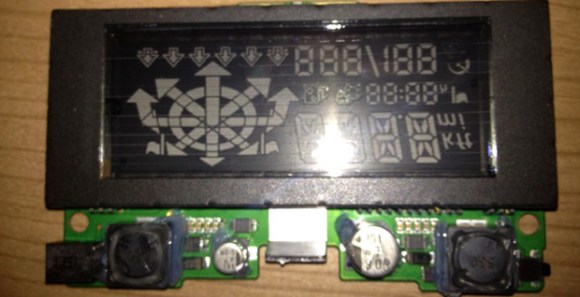
CAN Bus hacking is all the rage right now. This particular project uses an early development version of an Arduino compatible CAN bus tool to integrate radar detector control into a Mazda dashboard. This image shows the output as the Whistler Pro-3600 radar detector boots up. The self test demonstrates what you would see on the dashboard display if your speed is checked using any of a handful of technologies. But it’s not just the dash display that’s working. The steering wheel controls are also capable of affecting the radar detector so that it can always be hidden from sight.

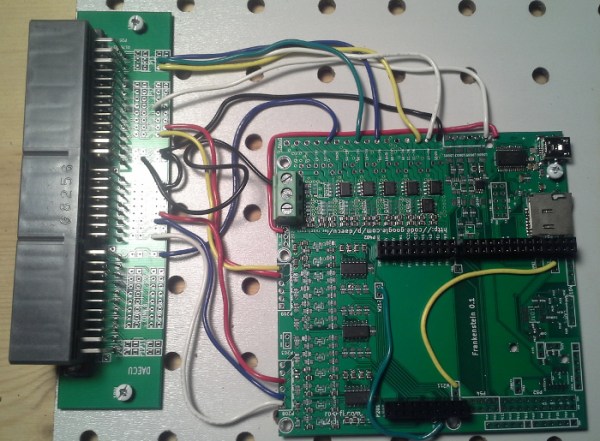
With auto manufacturers adding more numerous and larger displays to our vehicles it’s refreshing to see someone come up with a hack that makes pushing our own info to those screens possible. The CANBus Triple is an Arduino compatible board which patches into the data bus found in all modern vehicles. To integrate the Whistler for this hack [TheDukeZip] prototyped the interface on a regular Arduino board, then moved it over to the CANBus Triple once he had it working. Check out the video after the break to see the setup in action.

Continue reading “Radar Detector Integrated With Dashboard Display Screens And Steering Wheel Controls”

Yet Another Self-Balancing Unicycle

No one has time to hone their balancing skills these days, and if building your own Segway doesn’t generate enough head-turning for you, then the self-balancing unicycle from the guys at [Scitech] should. Their build is chain-driven, using easy-to-find salvaged Razor scooter parts. Throw in a motor controller, 5DOF IMU and some batteries and it’s almost ready to burn up the sidewalks in hipster-tech style.

Some of the previous unicycle builds we’ve seen are a little on the bulky side, but the [Scitech] cycle aims for simplicity with its square tube steel framing and footrests. As always, unicycle builds like these take some effort on behalf of the rider: shifting your weight controls steering and throttle. The [Scitech] gang also discovered that it’s usually best when you don’t accidentally wire the motors up to the controller backwards. We recommend that you find a helmet and watch the video after the break.

Too-cool-for-unicycle hackers can build a dangerously fast e-skateboard instead.

Continue reading “Yet Another Self-Balancing Unicycle”

Motorized Skateboard Controlled By Hand Gestures

hand-gesture-skateboard

This rough-looking contraption is a hand gesture controlled skateboard which [Aditya] built using parts on hand. So far the sensor for hand gestures is connected by a control wire, but he hopes to transition to an RF unit at some point in the future.

Having access to a couple of high torque brushless motors is what turned him onto the project. He hit up a couple of Mechanical Engineer friends of his to help assemble the chassis and then started on the electronics side of things. A breakout board for an ATmega16 is mounted on the corner of the deck. It monitors an accelerometer which acts as steering as well as throttle. The accelerometer had been abused in a previous project so he had to add an extra switch to bolster his available inputs. We were glad to hear that he also included a kill switch, since putting the control of those motors in the hands of a damaged accelerometer is a bit sketchy.

We remember seeing a similar trike design a few years back. That one powered a single rear wheel while this one powers two wheels and uses a caster for the third.

All Wheel Drive Motorcycle

Take one look at the front fork of this dirt bike and you’ll notice that it’s not really a front fork at all. A custom front end replaces the traditional design in order to give this motorcycle all wheel drive. Look closely and you’ll see the chain that drives the front wheel. The swing-arm like addition lets the front end retain all of its suspension and steering and that’s where the project gets tricky.

We actually saw this thing in person at the monthly meeting of our local hackerspace: Sector67. [Martin Lawson] got his seven minutes of fame during the presentations (they use a prototype of this scoreboard to limit each presenter), and then was mobbed with a ton of interest afterwards. We were able to get a pretty good look at how the front drive works. It starts with an additional cog fastened beside the one that drives the chain for the back end. This feeds up through some tensioners and transfers out on the left side (from the rider’s perspective) of the front end. From here the rotational force is transferred to the right right and includes a U-joint to account for steering. The last chain goes straight down to the wheel.

The idea is that when the rear wheel loses traction you’re still being pulled by the front. This is illustrated well in the video after the break. [Marty] — who has a patent on the design — is trying to get some interest from manufacturers. He says the ability ride right through poor traction terrain make this a lot easier than a traditional dirt bike for beginners to ride. But it’s obvious the professionals are having fun on the thing as well!

Continue reading “All Wheel Drive Motorcycle”

DIY 23mph+ Electric Skateboard

What’s the best way to get around NYC? If you asked [papo2110], he would probably suggest you build your own high-speed, long-range electric skateboard. You can’t cruise through any online maker community without tripping over a dozen e-vehicle projects these days. Nearly 18 months ago, even before the popular Boosted Boards Kickstarter, [papo2110] started piecing together a deck. His boards use a brushless outrunner motor, an RC car ESC (complete with brakes), and a chain drive to power him around Central Park at a top speed of 23mph.

The most impressive feat for this project, however, is the tireless revision through iterative design. The deck gets both an aluminum and a carbon fiber upgrade. Meaty 8S Headway LiFePo4’s replace a smaller 6S configuration. Even lights are added. As the build progresses, the board is pushing 27mph: with only one motor. Grab your helmet and motion-sickness pills and strap in for some videos after the break.

If four wheels are one too many and you want even more dangerous speeds, check out the E-trike build from a few months ago.

Continue reading “DIY 23mph+ Electric Skateboard”

The Hubless Horseman

hublessHorseman

Of all the free parts up for grabs at a friend’s house, nobody wanted the scrap wheelchair wheels: including [Eric]. That is, of course, until he spontaneously decided to try something a bit crazy and take on a bizarre yet remarkably imaginative hubless wheel bike build.

After attaching the wheelchair’s rim and its affixed handrail to the rim on his bike, [Eric] mounted pairs of rollerblade wheels to a separate piece of metal that essentially act as bearings. As the build progresses, the bike is further refined. More rollerblade wheels, a giant sprocket, and a pile of machined aluminum pieces. The valve stem for the tire had to be relocated to allow the wheel to spin freely.

The finished product is a stunning bicycle, which [Eric] later revisited, updating the rollerblade wheels to precision-lathed plastic (specifically UHMWPE) rollers. Make sure you watch the video of the Hubless Horseman in action. If, for some reason, your only prior exposure to hubless wheels is the TRON light cycle or [Kirk’s] motorcycle from the Star Trek reboot, do yourself a favor and check out their inventor, Franco Sbarro.

Racing Telemetry On A Cockpit View

ODB

[Martin] has a Lotus Elise and access to a track. Sounds like fun, huh? The only problem is that the dashcam videos he makes are a little bit boring. Sure, they show him flying around the track, but without some sort of data it’s really hard to improve his driving skills. After thinking about it for a while, [Martin] decided he could use his Raspberry Pi and camera module to record videos from the dashboard of his car, and overlay engine data such as RPM, throttle, and speed right on top of the video.

Capturing video is the easy part of this build – [Martin] just connected his Raspi camera module and used the standard raspivid capture utility. Overlaying data on this captured video was a bit harder, though.

[Martin] had previously written about using the Raspi to read OBD-II data into his Raspi. Combine this with a Python script to write subtitles for his movies, and he’s off to the races, with a video and data replay of every move on the track.

The resulting movie and subtitle files can be reencoded to an HD movie. Reencoding a 13 minute HD video took 9 hours on the Raspi. We’d suggest doing this with a more powerful compy, but at least [Martin] has a great solution to fix his slightly uninformative track videos.