Arduino Cinque – The RISC-V, ESP32, WiFi, Bluetooth Arduino

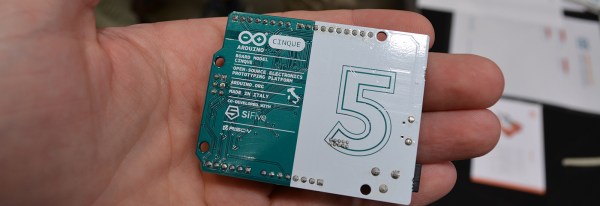
This weekend at the Bay Area Maker Faire, Arduino in conjunction with SiFive, a fabless provider of the Open Source RISC-V micros, introduced the Arduino Cinque. This is a board running one of the fastest microcontrollers available, and as an added bonus, this board includes Espressif’s ESP32, another wonderchip that features WiFi and Bluetooth alongside a very, very powerful SoC.

Details on the Arduino Cinque are slim at the moment, but from what we’ve seen so far, the Cinque is an impressively powerful board featuring the RISC-V FE310 SoC from SiFive, an ESP32, and an STM32F103. The STM32 appears to be dedicated to providing the board with USB to UART translation, something the first RISC-V compatible Arduino solved with an FTDI chip. Using an FTDI chip is, of course, a questionable design decision when building a capital ‘O’ Open microcontroller platform, and we’re glad SiFive and Arduino found a better solution. It’s unknown if this STM32 can be used alongside the FE310 and ESP32 at this point.

We’ve taken a look at SiFive’s FE310 SoC, and it is an extremely capable chip. It was released first at the HiFive1, and our hands-on testing revealed this is a chip that outperforms the current performance champ of the Arduino world, the Teensy 3.6. Of course, with any new architecture, there will be a few problems porting the vast number of libraries over to the FE310, but SiFive has included an Arduino compatible SDK. It’s promising, and we can’t wait to see SiFive’s work in more boards.
Hackaday Prize Entry: HeartyPatch

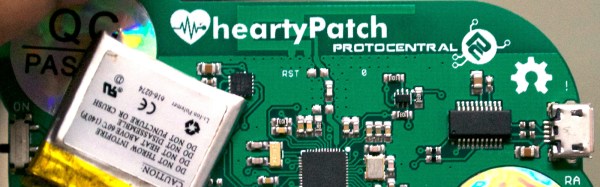
[Ashwin K Whitchurch] and [Venkatesh Bhat] Have not missed a beat entering this year’s Hackaday Prize with their possibly lifesaving gadget HeartyPatch. The project is a portable single wire ECG machine in a small footprint sporting Bluetooth Low Energy so you can use your phone or another device as an output display.

Projects like this are what the Hackaday Prize is all about, Changing the world for the better. Medical devices cost an arm and a leg so it’s always great to see medical hardware brought to the Open Source and Open Hardware scene. We can already see many uses for this project hopefully if it does what’s claimed we will be seeing these in hospitals around the world sometime soon. The project is designed around the MAX30003 single-lead ECG monitoring chip along with an ESP32 WiFi/BLE SoC to handle the wireless data transmission side of things.

We really look forward to seeing how this one turns out. Even if this doesn’t win a prize, It’s still a winner in our books even if it only goes on to help one person.

Hackaday Prize Entry: WiFi Game Boy Cartridge

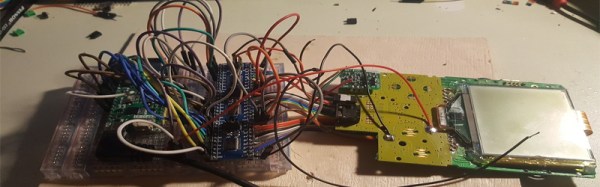
[DaveDarko] has entered a unique project into this years Hackaday Prize a WiFi Game Boy Cartridge. If you are active over at Hackaday.io I’m sure you’ll have run across Dave at some point or other, maybe we need to start charging him rent.

The aim of this project is to create a WiFi enabled Game Boy cartridge using an ESP32 which would then enable the user to do a number of different things. For example, it could be used as a portable war driving device. You could drive around scanning local WiFi networks all from the comfort of a classic Game Boy bringing back fond memories of your childhood.

This WiFi Game Boy cartridge may even be capable of some extremely light web browsing or be used as a unique controller for all your Internet connected things. Either way this project looks promising, We look forward to seeing how this progresses in the coming months.

Hands-On The Hot New WeMos ESP-32 Breakout

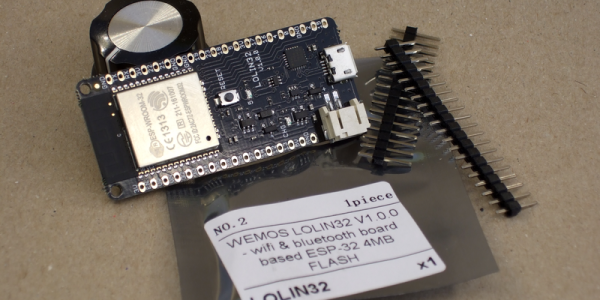
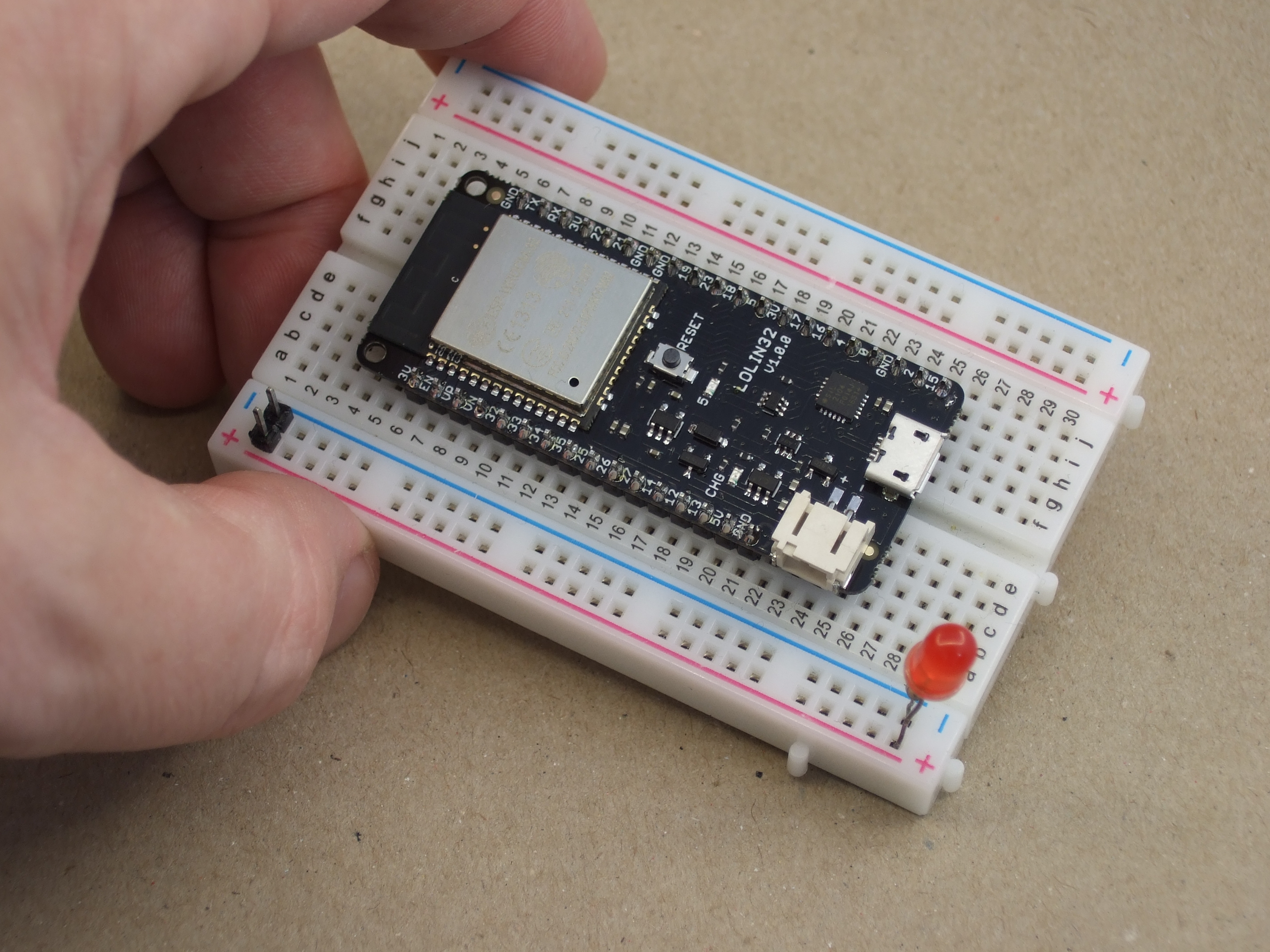
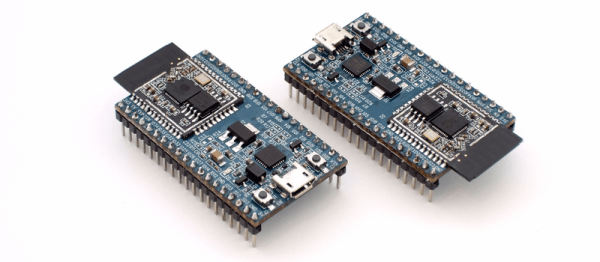
Just two weeks ago our favorite supplier of cheap ESP8266 boards, WeMos, released the long-awaited LOLIN32 ESP-32 board, and it’s almost a killer. Hackaday regular [deshipu] tipped us off, and we placed an order within minutes; if WeMos is making a dirt-cheap ESP32 development board, we’re on board! It came in the mail yesterday. (They’re out of stock now, more expected soon.)

If you’ve been following the chip’s development, you’ll know that the first spin of ESP-32s had some silicon bugs (PDF) that might matter to you if you’re working with deep sleep modes, switching between particular clock frequencies, or using the brown-out-reset function. Do the snazzy new, $8, development boards include silicon version 0 or 1? Read on to find out!

Continue reading “Hands-On The Hot New WeMos ESP-32 Breakout”

ESP32’s Freedom Output Lets You Do Anything

The ESP32 is Espressif’s new wonder-chip, and one of the most interesting aspects of its development has been the almost entirely open-source development strategy that they’re taking. But the “almost” in almost entirely open is important — there are still some binary blobs in the system, and some of them are exactly where a hacker wouldn’t want them to be. Case in point: the low-level WiFi firmware.

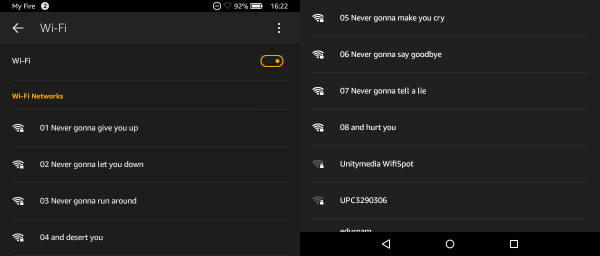
So that’s where [Jeija]’s reverse engineering work steps in. He’s managed to decode enough of a function called ieee80211_freedom_output to craft and send apparently arbitrary WiFi data and management frames, and to monitor them as well.

This ability is insanely useful for a WiFi device. With low-level access like this, one can implement custom protocols for mesh networking, low-bandwidth data transfers, or remove the requirement for handshaking entirely. One can also spam a system with so many fake SSIDs that it crashes, deauth everyone, or generally cause mayhem. Snoop on your neighbors, or build something new and cool: with great power comes great responsibility.

Anyway, we reported on [Jeija]’s long distance hack and the post may have read like it was all about the antenna, but that vastly underestimates the role played by this firmware reverse-engineering hack. Indeed, we’re so stoked about the hack that we thought it was worth reiterating: the ESP32 is now a WiFi hacker’s dream.

ESP32’s Dev Framework Reaches 2.0

We’ve been watching the development of the ESP32 chip for the last year, but honestly we’ve been a little bit cautious to throw all of our friendly ESP8266s away just yet. Earlier this month, Espressif released version 2.0 of their IoT Development Framework (ESP-IDF), and if you haven’t been following along, you’ve missed a lot.

We last took a serious look at the IDF when the chips were brand-new, and the framework was still taking its first baby steps. There was no support for such niceties as I2C and such at the time, but you could get both cores up and running and the thing connected to the network. We wanted to test out the power-save modes, but that wasn’t implemented yet either. In short, we were watching the construction of a firmware skyscraper from day one, and only the foundation had been poured.

But what a difference eight months make! Look through the GitHub changes log for the release, and it’s a totally new ballgame. Not only are their drivers for I2C, I2S, SPI, the DAC and ADCs, etc, but there are working examples and documentation for all of the above. Naturally, there are a ton of bugfixes as well, especially in the complex WiFi and Bluetooth Low Energy stacks. There’s still work left to do, naturally, but Espressif seems to think that the framework is now mature enough that they’ve opened up their security bug bounty program on the chip. Time to get hacking!

Continue reading “ESP32’s Dev Framework Reaches 2.0”

A Simple, Easy To Use ESP32 Dev Board

The ESP32 is Espressif’s follow-up to their extraordinarily popular ESP8266 WiFi chip. It has a dual-core, 32-bit processor, WiFi, Bluetooth, ADCs, DACs, CAN, a Hall effect sensor, an Ethernet MAC, and a whole bunch of other goodies that make this chip the brains for the Internet of Everything. Everyone has been able to simply buy an ESP32 for a few months now, but the Hackaday tip line isn’t exactly overflowing with projects and products built around this wonderchip. Perhaps we need an ESP32 dev board or something.

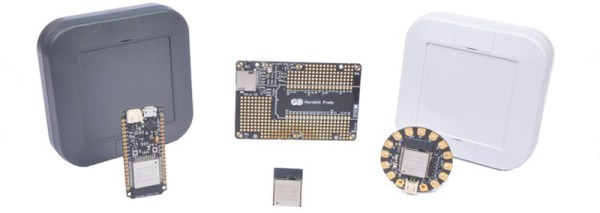
The Hornbill is the latest crowdfunding campaign from CrowdSupply. It’s an ESP32 dev board, packed with the latest goodies, a single cell LiPo charger, and a USB to serial chip that will probably work with most operating systems. The Hornbill comes in two varieties, a breadboardable module, with a breakout board that includes an SD card slot, sensors, an RGB LED, and a bunch of prototyping space. The second version is something like an Adafruit Flora with big pads for alligator clips.

While this isn’t the first ESP32 breakout we’ve seen — Adafruit, Sparkfun, and a hundred factories in China are pumping boards with this chip out — it is a very easy and inexpensive way to get into the ESP32 ecosystem.