Can Claude Write Z80 Assembly Code?

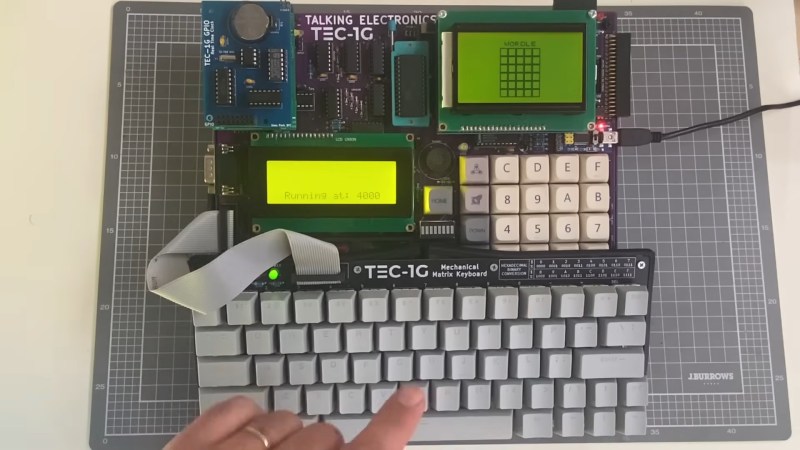
Betteridge’s law applies, but with help and guidance by a human who knows his stuff, [Ready Z80] was able to get a functioning game of Wordle out of the French-named LLM, which is more than we expected. It’s not like the folks at Anthropic spent much time making sure 40-year-old opcodes were well represented in their training data, after all.

For hardware, [Ready Z80] is working with the TEC-1G single-board-computer, which is a retrocomputer inspired by the TEC-1 whose design was published by Australian hobbyist magazine “Talking Electronics” back in the 1980s. Claude actually seemed to know what that was, and that it only had a hex keypad — though when [Ready Z80] was quick to correct it and let the LLM know he’s using a QWERTY keyboard add-on, Claude declared it was confident in its ability to write the code.

As usual for a LLM, Claude was overconfident and tossed out some nonexistent instructions. Though admittedly, it didn’t persist in that after being corrected. It’s notable that [Ready Z80] doesn’t prompt it with “Give me an implementation of Wordle in Z80 assembly for the TEC-1G” but goes through step-by-step, explaining exactly what he wants each section of the code to do. As [Dan Maloney] reported three years ago, it’s a bit like working with a summer intern.

In the end, they get a working game, but that was never in question. [Ready Z80] reveals over the course of the video he has the chops to have written it himself. Did using Claude make that go faster? Based on studies we’ve seen, it probably felt like it, even if it may have actually slowed him down.

Continue reading “Can Claude Write Z80 Assembly Code?”

What Can You Run On A 1960s Univac? Anything You’re Willing To Wait For!

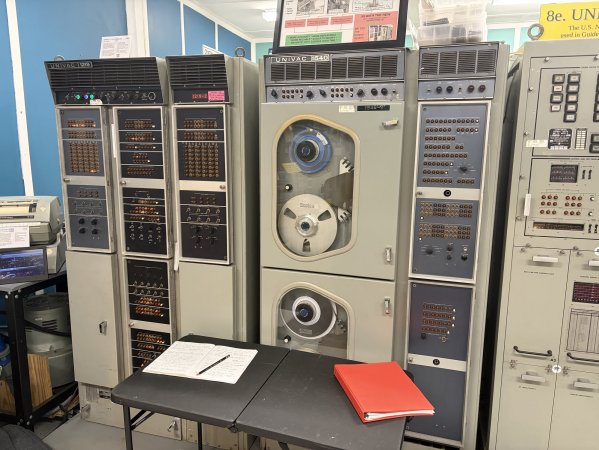
There are two UNIVAC 1219B computers that have survived since the 1960s and one of them is even operational. [Nathan Farlow] wanted to run a Minecraft server on it, so he did. After a lot of work, of course, which is described in a detailed blog post, and, a YouTube video by [TheScienceElf] we’ve embedded below.

The UNIVAC is a seriously weird architecture by modern standards: it’s got eighteen-bit words — yeah, not even a power of two — and one’s compliment arithmatic with a weird signed zero thing going on. There’s one 36-bit and one 18-bit register, and only 40,960 words of memory. Eighteen-bit words. Yeah, it was the 1960s and they were making it up as they went along.

[Nathan] wasn’t, entirely, as this weird system is both well-documented and already had an emulator — in BASIC, of all things. [TheScienceElf] used the docs and the existing emulator to recreate his own in Rust so he could test their somewhat crazy plan without wasting cycles on real hardware. The plan? Well, there are really only two options if you want to build modern software for a niche architecture: one is to add niche support to something like GCC, and the other is to write a RISC V emulator and compile to that. We’ve seen that second one before, and that’s the route [Nathan] took.

Of course, [Nathan] is a machine learning guy, so he made the best possible use of LLMs — though it’s interesting to see that unlike Z80 Assembly, Claude Code really couldn’t wrap its virtual head around the UNIVAC’s assembly language, and [Nathan] had to bang out the RISC V emulator himself. Emulator in hand, [Nathan] and friends had code to run on the museum UNIVAC. A single frame of an NES game took 40 minutes, but hey, at least it finished before they got back from lunch.

[TheScienceElf]’s YouTube treatment teases hosting Minecraft, but it wasn’t a full server, just the login portion. That they were able to get TCP/IP over serial and set up a handshake between a 2020s laptop and a 1960s computer is still mighty impressive. Just the work the Vintage Computer Federation put in to get and keep this antique running is mighty impressive all on its own, but it’s wonderful they let people play with it.

Continue reading “What Can You Run On A 1960s Univac? Anything You’re Willing To Wait For!”

So Expensive, A Caveman Can Do It

A few years back a company had an ad campaign with a discouraged caveman who was angry because the company claimed their website was “so easy, even a caveman could do it.” Maybe that inspired [JuliusBrussee] to create caveman, a tool for reducing costs when using Claude Code.

The trick is that Claude, like other LLMs, operates on tokens. Tokens aren’t quite words, but they are essentially words or word fragments. Most LLM plans also charge you by the token. So fewer tokens means lower costs. However, LLMs can be quite verbose, unless you make them talk like a caveman.

Continue reading “So Expensive, A Caveman Can Do It”

A Live ISO For Those Vibe Coding Experiments

Vibe coding is all the rage at the moment if you follow certain parts of the Internet. It’s very easy to dunk upon it, whether it’s to mock the sea of people who’ve drunk the Kool-Aid and want the magic machine to make them a million dollar app with no work, or the vibe coded web apps with security holes you could drive a bus through.

But AI-assisted coding is now a thing that will stick around whether you like it or not, and there are many who want to dip a toe in the water to see what the fuss is about. For those who don’t quite trust the magic machines in their inner sanctum, [jscottmiller] is here with Clix, a bootable live Linux environment which puts Claude Code safely in a sandbox away from your family silver.

Physically it’s a NixOS live USB image with the Sway tiling Wayland compositor, and as he puts it: “Claude Code ready to go”. It has a shared partition for swapping files with Windows or macOS machines, and it’s persistent. The AI side of it has permissive settings, which means the mechanical overlord can reach parts of the OS you wouldn’t normally let it anywhere near; the point of having it in a live environment in the first place.

We can see the attraction of using an environment such as this one for experimenting without commitment, but we’d be interested to hear your views in the comments. It’s about a year since we asked you all about vibe coding, has the art moved forward in that time?