Automating Window Shades With Home Assistant

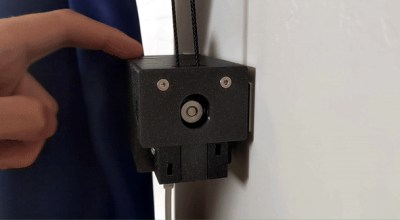
Most people love window shades, but many dislike the tedium of having to open and close them over the course of each day. While there are automation options here, if you’re in a rental place like [Rooster Robotics], then you’d prefer something less intrusive, as well as less cloud-bound. This is basically why he opted to build his own solution from scratch to open and close roller shades via Home Assistant.
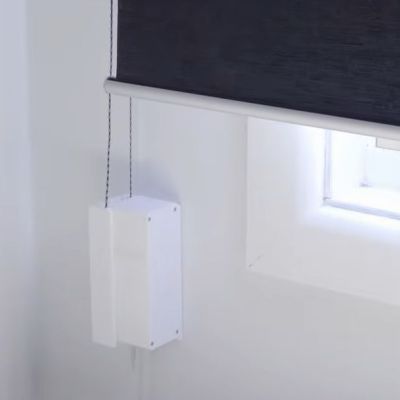
The comments to the video helpfully point out that technically his point about there not being commercial options with a forced remote account ‘feature’ is false, as the Aqara Roller Shade Driver E1 for example is just a regular Zigbee device which can be used with a wide range of home automation ecosystems. That said, it’s always nice to have your own device that you fully control.

Of course, these devices are deceptively simple, as you still have to somehow know how far open the curtain is, which is also useful if you just want to open the curtain a certain amount. The other issue is the need to have the motor parallel with the wall unless you enjoy having a big wart sticking out from the wall.

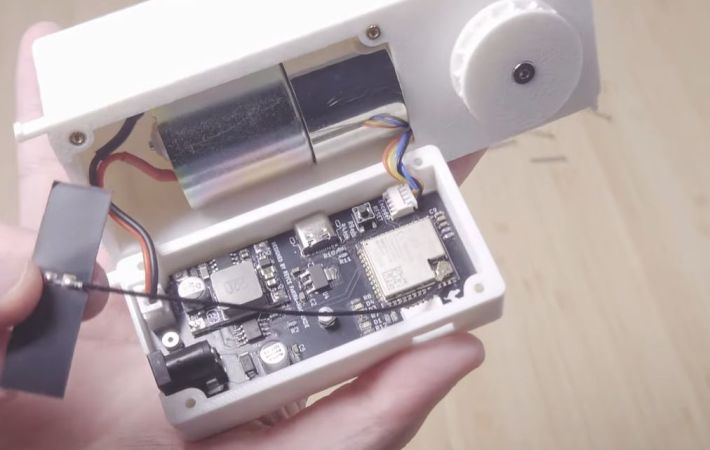
Solving the first issue was attempted with a Hall effect sensor, and the second with angled gearing. With some refinements this led to a functioning design, allowing the development of a custom PCB with an ESP32-S3 module for WiFi control. In the final design the Hall effect sensor and magnets were replaced with an AS5600 magnetic rotatory position sensor that requires just one magnet and offers a much higher resolution.

Currently the design files are not available, but [Rooster Robotics] has indicated that they are looking at open sourcing the files in the future.

Continue reading “Automating Window Shades With Home Assistant”
an image of the mechanism used to move the curtains

Clever Mechanism Easily Automates Pulling The Blinds

There are few things that we all can agree we hate, and the shrill of your alarm clock waking you from a wonderful slumber is definitely high on that list. To wake up more naturally, [nutstobutts] created an automated curtain opener.

the automated curtain's driving motor

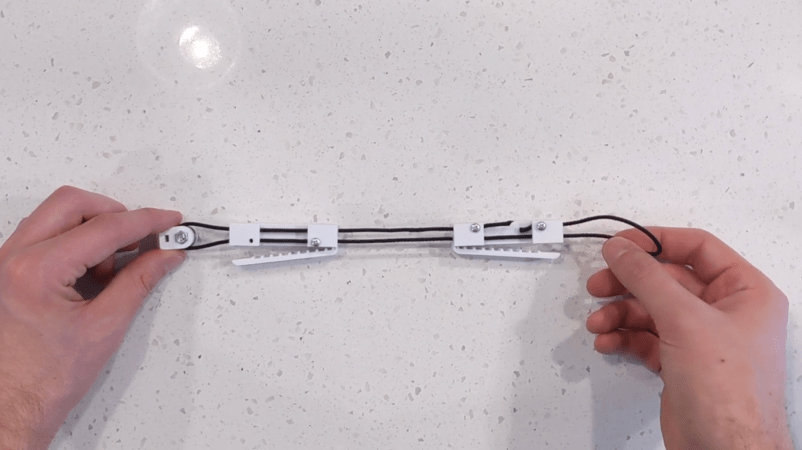
The curtain opener is very simple; a stepper motor in the control box pulls a string, which is run to an idler on the far side of the curtain rod and through two clips, attached to the back of each curtain. This design makes it so that both curtains will open smoothly at the same time, and will always come closed again directly in the center. This design is especially favorable for students in dorms or those that live in an apartment, as the installation requires no screws in the wall or permanent modification to the curtains.

The curtains can be opened and closed either by pressing a button on the control box or by sending HTTP requests to the ESP32 that controls everything. This allows for integration with many different IoT systems, for instance [nutstobutts] has been having Home Assistant open the curtains every morning at 6:30 a.m. in lieu of an alarm clock, and then closing them automatically at 9:00 a.m. to help save on cooling costs.

Automated curtains are a great first IoT project if you are looking to just get your feet wet, check out a different style we covered a few months back for more inspiration!

[via r/functionalprint]

The MorningRod Wants Your Mornings Easier, Not Harder

Curtains are about as simple as household devices get, but they can be remarkably troublesome to automate. Everyone’s window treatments are slightly different, which frustrates a standardized solution. [dfrenkel] has a passion for DIY and wanted his mornings flooded with sunlight for more peaceful awakenings, so the MorningRod Smart Curtain Rod was born.

Replacing the curtain rod with aluminum extrusion and 3D printed fixtures goes a long way towards standardizing for automation.

MorningRod’s design takes advantage of affordable hardware like aluminum extrusions and 3D printed parts to create a system that attempts to allow users to keep their existing curtains as much as possible.

The curtain rod is replaced with aluminum extrusion. MorningRod borrows ideas from CNC projects to turn the curtain rod into a kind of double-ended linear actuator, upon which the curtains are just along for the ride. An ESP32 serves as the brains while a NEMA17 stepper motor provides the brawn. The result is a motorized curtain opening and closing with a wireless interface that can be easily integrated into home automation projects.

[dfrenkel] is offering a kit, but those who would prefer to roll their own should check out the project page on Thingiverse.

It’s Curtains For Blu Chip

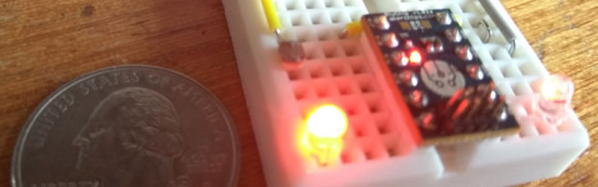
In theory, there is no reason you can’t automate things all over your house. However — unless you live alone — you need to consider that most people won’t accept your kludgy looking circuits on a breadboard hanging everywhere. Lighting has become easy now that there are a lot of commercial options. However, there are still plenty of things that cry for automation. For [jeevanAnga], the curtains were crying out for remote control.

Since cellphones are ubiquitous, it makes sense to use the phone as a controller and BlueTooth Low Energy (BLE) is perfect for this kind of application. But you can’t hang a big ugly mess of wires off the curtain rods. That’s why [jeevanAnga] used a tiny (16.6 x 11.5 mm) BLE board knows as a BluChip.

We didn’t verify it, but [jeevanAnga] claims it is the smallest BLE board available, and it is certainly tiny. You can see the result in the video below.

Continue reading “It’s Curtains For Blu Chip”