Defcon Calls For New CTF Organizer

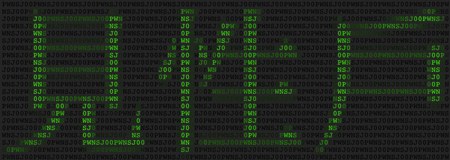
Kenshoto, organizer of the official Defcon Capture the Flag contest for the last four years, has stepped down from the position, and thus Defcon is looking for a new organizer for the event. If you’re highly competent, and maybe a little crazy, this might be your chance to step in and run one of the most well-known and prestigious hacking contests in the world. Please understand that the staff is looking for someone who wants to take ownership of the contest and make something new, unique, and challenging, and that Kenshoto has left extremely huge shoes to fill. Merely offering to replicate the existing contest and keep things mostly unchanged isn’t going to cut it.

If you’re up to the challenge, check out Dark Tangent’s post on the Defcon forums (which, for some odd reason, sounds strikingly like his 2005 post calling for a CTF organizer), where he comprehensively lays out what the staff is looking for in a new event organizer. If it jives well with you, get in touch with the Defcon staff, and maybe we’ll be covering your contest later this year.

BSoDomizer Blue-screens Your Enemies

In case you were wondering what industrious hacker [Joe Grand] was doing when he’s not building stuff for Prototype This!, designing Defcon badges, or testifying before congress, it’s this: The BSoDomizer is a VGA pass through device that displays an image of your choice on the victim’s screen. It can do this either periodically or via an IR trigger. The image of choice is a Windows style Blue Screen of Death. It’s powered by a watch battery. The project site has all the schematics you need plus ASCII goatse imagery; you’ve been warned. Embedded below is a demo of the device. We unfortunately didn’t get to see it when it was originally presented during Defcon 16. Continue reading “BSoDomizer Blue-screens Your Enemies”

Subway Hacker Speaks


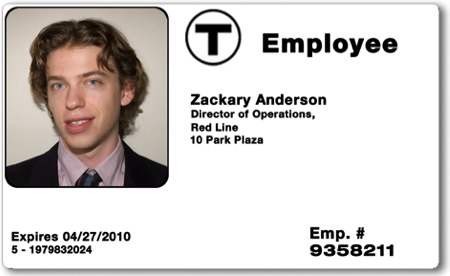
Popular Mechanics has an interview with [Zach Anderson], one of the MIT hackers that was temporarily gagged by the MBTA. The interview is essentially a timeline of the events that led up to the Defcon talk cancellation. [Zach] pointed out a great article by The Tech that covers the vulnerabilities. The mag stripe cards can be easily cloned. The students we’re also able to increase the value of the card by brute forcing the checksum. There are only 64 possible checksum values, so they made a card for each one. It’s not graceful, but it works. The card values aren’t encrypted and there isn’t an auditing system to check what values should be on the card either. The RFID cards use Mifare classic, which we know is broken. It was NXP, Mifare’s manufacturer, that tipped off the MBTA on the actual presentation.

Defcon 16: List Of Tools Compiled


Zero Day posted a list of tools and applications that were released at Defcon 16. The applications run the gamut, from Beholder, an open source wireless IDS tool, to CollabREate, a reverse-engineering plugin that allows multiple people to share a single project. The list covers a lot of ground, and there’s a lot for hackers to play around with and explore. It’s nice to see someone bothering to maintain a list since the majority of conference tools just get lost in the shuffle and are never seen again.

Biometric Locks Turned Trojan


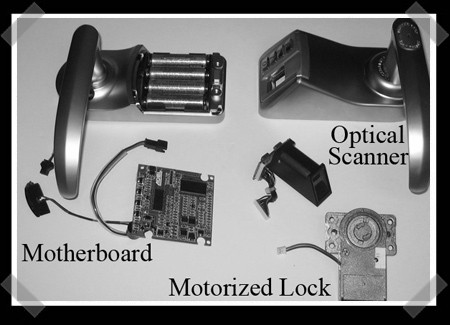
In the same vein as our recent Defcon article on biometric cloning, White Wolf Security has released this article about turning a biometric door lock into a trojan. They note that there are many common ways to break into one, from harvesting fingerprints to using gummy bears to fake a finger. This hack involves having full access to the unit so you can disassemble it.

The unit has a system built-in where you can touch a 9-volt battery to some connectors on the bottom to power it in case of a building power failure. The researchers simply routed some wires from the motorized lock to the plates used for the 9-volt and then reassembled the lock. The door can then be opened at any time without verification, even if the software on the unit is reset.

[Thanks, dwight]

Defcon 16: Biometric Cloning


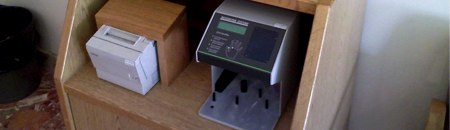
One of the more novel talks we saw at Defcon was [Zac Franken] presenting on access control systems. He covered several different types, but the real fun was his live demo of bypassing a hand geometry scanners like the one pictured above. With the help of two assistants, 4 pounds of chromatic dental alginate, and 5 liters of water, he made a mold of his hand. The box he placed his hand in had markings to show where the pegs on the scanner are located. After 2 minutes he could remove his hand from the cavity. They then filled the mold with vinylpolysiloxane, making sure to remove all bubbles. 20 minutes later the hand was solid and passed the scanner’s test. This may not be a completely practical attack, but it does defeat the overall idea of biometrics; biometrics are built on the assumption that every person is unique and can’t have their features reproduced.

[Zac] also showed an interesting magnetic card spoofer that emulated all three tracks using coils of magnet wire. We hope to see more about that in the future.

[photo: morgan.davis]

Defcon 16: Glimpses Of The Network Operations Center


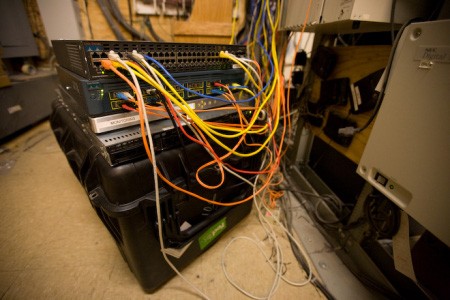
Wired’s Threat Level takes us on a photo tour of the Defcon Network Operations Center, giving a unique behind-the-scenes perspective of one of the largest computer security conventions. The Defcon Network Operations Center is run by a volunteer group named the “Goons”. They keep operations running smoothly and securely with both high and low-tech resources, like a Cisco fiber switch and an armed guard, to protect the router and firewall.