TEMPEST: A Signal Problem

TEMPEST is the covername used by the NSA and other agencies to talk about emissions from computing machinery that can divulge what the equipment is processing. We’ve covered a few projects in the past that specifically intercept EM radiation. TEMPEST for Eliza can transmit via AM using a CRT monitor, and just last Fall a group showed how to monitor USB keyboards remotely. Through the Freedom of Information Act, an interesting article from 1972 has been released. TEMPEST: A Signal Problem (PDF link dead, try Internet Archive version) covers the early history of how this phenomenon was discovered. Uncovered by Bell Labs in WWII, it affected a piece of encryption gear they were supplying to the military. The plaintext could be read over that air and also by monitoring spikes on the powerlines. Their new, heavily shielded and line filtered version of the device was rejected by the military who simply told commanders to monitor a 100 feet around their post to prevent eavesdropping. It’s an interesting read and also covers acoustic monitoring. This is just the US history of TEMPEST though, but from the anecdotes it sounds like their enemies were not just keeping pace but were also better informed.

[via Schneier]

Use The CPU Cache To Prevent Cold Boot? No.

coldboot

Frozen Cache is a blog dedicated to a novel way to prevent cold boot attacks. Last year the cold boot team demonstrated that they could extract encryption keys from a machine’s RAM by placing it in another system (or the same machine by doing a quick reboot). Frozen Cache aims to prevent this by storing the encryption key in the CPU’s cache. It copies the key out of RAM into the CPU’s registers and then zeroes it in RAM. It then freezes the cache and attempts to write the key back to RAM. The key is pushed into the cache, but isn’t written back to RAM.

The first major issue with this is the performance hit. You end up kneecapping the processor when you freeze the cache and the author suggests that you’d only do this when the screen is locked. We asked cold boot team member [Jacob Appelbaum] what he thought of the approach. He pointed out that the current cold boot attack reconstructs the key from the full keyschedule, which according to the Frozen Cache blog, still remains in RAM. They aren’t grabbing the specific key bits, but recreating it from all this redundant information in memory. At best, Frozen Cache is attempting to build a ‘ghetto crypto co-processor’.

We stand by our initial response to the cold boot attacks: It’s going to take a fundamental redesign of RAM before this is solved.

[via Slashdot]

Pirate Bay Hits The Road, Angles For Encryption


Piratbyrån and their hearties from The Pirate Bay are on a pan-European summer journey that will end at the Manifesta art biennial in Italy, but in the meantime they’ve been hard at work lobbying for total network encryption, a system that would protect users of a network (say, a P2P network) from deep packet inspection and other forms of activity analysis.

The system by which this will be achieved is called IPETEE, and it works by replacing the basic operating system network stack and doing all encryption and decryption itself. More details can be found in the IPETEE technical proposal.

Ars Technica pointed out numerous holes in the scheme, noting that most torrent apps already have encryption options. IPETEE applies to more than just torrents, though, so the larger problem is that encrypted packet still need source and destination IP addresses, meaning that one of the most crucial things you’d want to keep private (your destination site) is still accessible.

IronKey USB Key Has Military Grade Encryption


Plenty of USB storage keys are on the market, but Ironkey is the first to use military level encryption. Sold in 1GB, 2GB, and 4GB sizes, the key features a processor called the Cryptochip, which uses Public Key Cryptography ciphers linked to an online account to create encryption keys on the hardware. A Federal Information Processing standard 140-2 compliant true random number generator on the Cryptochip ensure that encryption keys are extremely secure and totally random.

Ironkeys come in different sizes, but there are also three different versions, each with unique features. The basic version has a very James Bond-esque feature to destroy the data on it in case of an emergency. The personal version is loaded with Firefox 3 with various addons that make browsing encrypted and anonymous. The enterprise version is made to order with no specific price on the IronKey site, just a form to order one built to your specifications. All of them support Windows, OS X, and a large amount of Linux distros, and they all come in tamper proof and water resistant cases with a brushed metal finish. We tend to think this level of security is overkill for the average person, but people can’t seem to get with our freewheeling approach to security; remember, we leave our WLAN open.

[via LinuxDevices]

Eavesdropping Encrypted Compressed Voice


A team from Johns Hopkins University has discovered a way to eavesdrop on encrypted voice streams. Voice data like the kind used by Skype for its VoIP service sends encrypted packets of varying sizes for different sounds. The team learned that by simply measureing the size of the packets, they could determine what was being said with a high rate of accuracy. VoIP providers often use a variable bit rate to use bandwidth more efficiently, but it is this compression that makes audio streams vulnerable to eavesdropping.

The team’s software is still in its early stages of development, yet incapable of parsing entire conversations. It is capable, though, of finding pre-determined keywords and inferring common phrases bases on the words it detects. It also has a higher rate of accuracy in identifying long complicated words than short ones. The team’s goal was not to eavesdrop, but to expose the vulnerability; team member [Charles Wright] notes, “we hope we have caught this threat before it becomes too serious.”

[via Schneier on Security]
[photo: altemark]

FPGA Projects Roundup


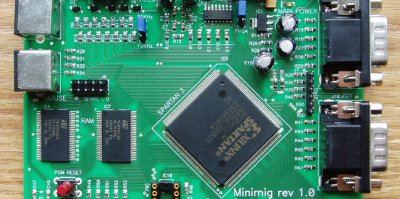
FPGA’s have become especially useful to the hacker community of late. Once upon a time, these lovely pieces of dedicated hardware were fabled to only be within reach of deep pocketed graphics card producers working to up their shader and vertex counts. Today they’re often found in the bowels of high end network gear. As reprogrammable arrays of logic gates, FPGAs represent a happy middle ground between general purpose CPUs and dedicated silicon. After the break, we’ll recount some of the more interesting FPGA projects we’ve seen, like the open source graphics card we featured yesterday.

Continue reading “FPGA Projects Roundup”