Tiny Arduino Ethernet Board

[sgk] built this tiny ethernet board to be used with the Arduino. It’s based on a WIZnet W5100 chip. The chip handles all of the TCP/IP communication and you talk to it via SPI. It’s compatible with the standard Arduino ethernet library. [sgk] hand soldered these boards including the 80pin LQFP main chip. His next project is to put the AVR and W5100 all on the same board. It sounds like he’ll use components larger than 1005 though.

Passive Network Tap

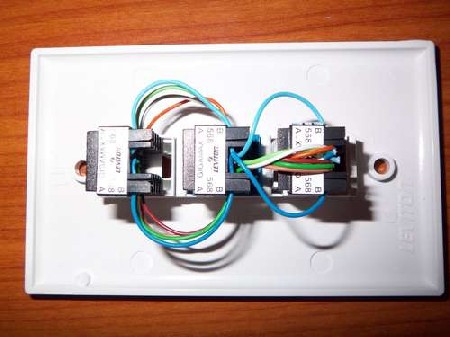
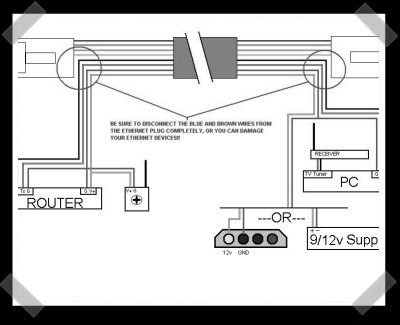
Making a passive network tap can be an easy and inexpensive undertaking as shown in this Instructable. Passive monitoring or port mirroring is needed because most networks use switches which isolate the network traffic and this does not allow for the entire network to be monitored.  This example uses a single tap, using multiple taps will provide access to the full-duplex data separately. By using two taps you are able to monitor inbound data that is passed through one tap, and outbound data that is passed through the other tap.  Separate taps are desired because most sniffer software handles half-duplex traffic only and requires two network cards for full-duplex.

Continue reading “Passive Network Tap”

Twittering From The Command Line

Twitter users often have trouble explaining just exactly what the service is for. The site specifically asks “What are you doing right now?” A simple interface and multiple ways to update means people have started hooking it to different real world objects… objects that aren’t reporting what they had for lunch. After the break, we’ll cover a couple devices that have interfaced Twitter to the real world and how you can update from your command line.

Continue reading “Twittering From The Command Line”