Investigating The Health Impacts Of UFPs And VOCs From FDM Printers

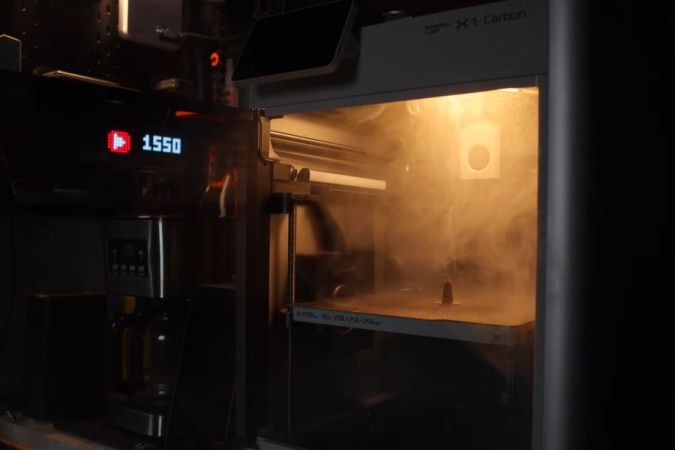
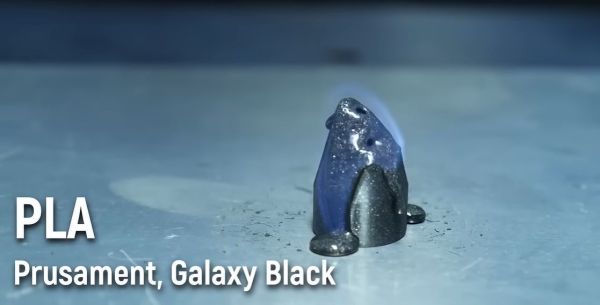
FDM 3D printing is fairly messy on a molecular scale, with the filament being heated up to temperatures high enough to melt it, which produces ultra-fine particles (UFPs) and volatile organic compounds (VOCs) in addition to the new plastic item on the build plate. Recently [Simon Pow] got somewhat worried about this pollution considering that he spends a considerable amount of time in the same room as FDM printers, sharing air.

While there is a lot of context within the topic, it’s notable that even ‘low risk’ PLA already emits formaldehyde, a group 1 carcinogen. Studies like this 2022 one by [Taehun Kim] et al. on formaldehyde, PM10 and PM2.5 show that common filaments like PLA, ABS and TPU score pretty bad here, even compared to the often maligned resin printing, also in the study. Having good ventilation in a room helps a lot, but it doesn’t reduce the levels to zero.

As noted by [Simon], PETG is much better in the VOC area, while TPU emits siloxanes, some of which are dangerous but most are considered harmless. Once you hit nylon (e.g. PA6), you’re adding caprolactam, which is mildly toxic but mostly just an irritant. Where things get serious is with ABS and ASA, when you add styrene to the mix. This substance is very dangerous, being toxic, mutagenic and possibly carcinogenic, but on the plus side it smells kind of sweet.

Polycarbonate (PC) emits BPA, with its worrying long-term health implications, while carbon fibers in particular can have asbestos-like long-term effects, as we covered previously. Definitely wear PPE while doing things like sanding CF parts and safely dispose of any debris.

Of course, you can do something about this problem, such as having an enclosure around the printer, with HEPA filtration and activated carbon, potentially exhausting into the outside air. The options here are covered in the video, including a BentoBox filter. For [Simon] the biggest improvement – as measured by a whole room sensor – came from a big fan in the window, while the default activated carbon filter in the Bambu Lab printer did effectively nothing.

The problem here is mostly one of long-term exposure, so even basic precautions like filtration and ventilation can already make all the difference. Ideally you’d not have the printer in the same room as where you work, of course, but adding a good filtration setup doesn’t have to be expensive or hard.

Continue reading “Investigating The Health Impacts Of UFPs And VOCs From FDM Printers”

How Industrial Robot Safety Was Written In Blood

It was January 25th of 1979, at an unassuming Michigan Ford Motor Company factory. Productivity over the past years had been skyrocketing due to increased automation, courtesy of Litton Industry’s industrial robots that among other things helped to pick parts from shelves. Unfortunately, on that day there was an issue with the automated inventory system, so Robert Williams was asked to retrieve parts manually.

As he climbed into the third level of the storage rack, he was crushed from behind by the arm of one of the still active one-ton transfer vehicles, killing him instantly. It would take half an hour before his body was discovered, and many years before the manufacturer would be forced to pay damages to his estate in a settlement. He only lived to be twenty-five years old.

Since Robert’s gruesome death, industrial robots have become much safer, with keep-out zones, sensors, and other safety measures. However this didn’t happen overnight; it’s worth going over some of the robot tragedies to see how we got here.

Continue reading “How Industrial Robot Safety Was Written In Blood”

Zinc Fever: A Look At The Risks Of Working With Hot Metal

For as raucous as things can get in the comments section of Hackaday articles, we really love the give and take that happens there. Our readers have an astonishing breadth of backgrounds and experiences, and the fact that everyone so readily shares those experiences and the strongly held opinions that they engender is what makes this community so strong and so useful.

But with so many opinions and experiences being shared, it’s sometimes hard to cut through to the essential truth of an issue. This is particularly true where health and safety are at issue, a topic where it’s easy to get bogged down by an accumulation of anecdotes that mask the underlying biology. Case in point: I recently covered a shop-built tool cabinet build and made an off-hand remark about the inadvisability of welding zinc-plated drawer slides, having heard about the dangers of inhaling zinc fumes once upon a time. That led to a discussion in the comments section on both sides of the issue that left the risks of zinc-fume inhalation somewhat unclear.

To correct this, I decided to take a close look at the risks involved with welding and working zinc. As a welding wannabe, I’m keenly interested in anything that helps me not die in the shop, and as a biology geek, I’m also fascinated by the molecular mechanisms of diseases. I’ll explore both of these topics as we look at the dreaded  “zinc fever” and how to avoid it.

Continue reading “Zinc Fever: A Look At The Risks Of Working With Hot Metal”