All That’s Needed Is A Retro Paintjob, MiniMAME

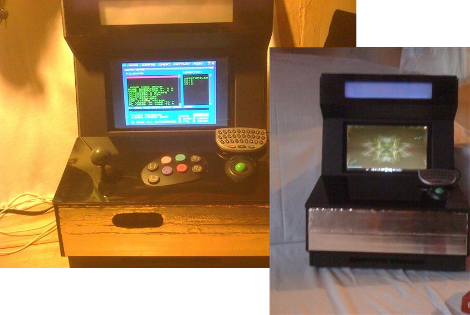
[Tim’s] miniMAME‘s construction follows the “light and cheap” approach, using foam core board and hot glue. Sure it won’t last a nuclear attack, but at least it’s light enough to carry to a friend’s house.

With a removable netbook at the core, CCFLs, speakers, trackball, and mini arcade fighting stick, the project completely surpassed our expectations. For those looking to build a miniMAME, [Tim] includes lots of pictures, details, and plans allowing anyone to make their own in about an afternoon.
3D Printing With Chemicals

From the horse’s mouth,

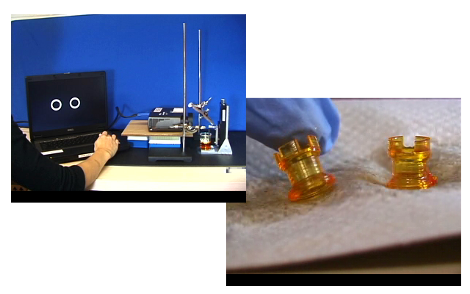
“In this lithography experiment light creates free radicals from phenylbis(2,4,6-trimethylbenzoyl)phosphine oxide which induce polymerization of 1,6-hexanediol diacrylate.”

Or for those without a Chemical Engineering degree, light from a (high resolution) projector interacts with a special liquid, producing a hard polymer on the surface. A platform within the liquid is lowered, taking the layer of polymer with it. Shine the projector again to produce another layer: lather, rinse, repeat. Long story short, an atypical 3D printer using light on a very small scale.

You get the chemicals and lab equipment, we’ll get the laptop and projector, and for goodness sake [Jimmie] stop bumping the table.

[Thanks Tomas]

No Touch LED Lamp

[youtube=http://www.youtube.com/watch?v=8wV2UIOV1Fk]

This elegant looking lamp uses capacitance sensing to turn on and off. [Mikey77] takes us through the process of making the curved circuits and putting it all together. The circuit is built to be modular, so he could use it elsewhere. That’s a pretty good idea for someone who is always tossing projects together. As usual, schematics are available in the instructable. We love this design and would proudly use this at our office desk.

May The Phorse Be With You

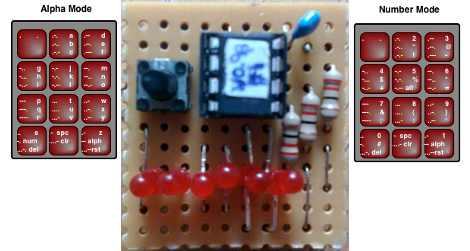
The PhorsePOV by [Julian Skidmore] almost slipped by, but we thought it was a nice easy hack for your Memorial Monday. The gadget uses an ATTINY25 to drive 6 LEDs aren’t standard characters 7 units high? Which when waved in the air produces a readable message. What we were really interested in is the use of a single button for text entry, called Phorse code, or an “easier to learn and remember” version of Morse code. While it seemed silly at first, most of us here could enter messages within a few minutes of trying.

Spinning Ball Of LED Awesomeness

[youtube=http://www.youtube.com/watch?v=sO2-tqoyGik]

Take a few moments and watch this 3 axis rotating LED light display fire up.  The final effect of being an RGB glowing ball is nice, but we’re fascinated with the structure. There are tons of great detailed pictures of the assembly on the forum thread to feast your eyes on. Just getting power to the LEDs was a feat, he passes their power through 6 slip contacts. Parts were pulled from an old VCR and some old fans.

[via HackedGadgets]

Lucid Dreaming

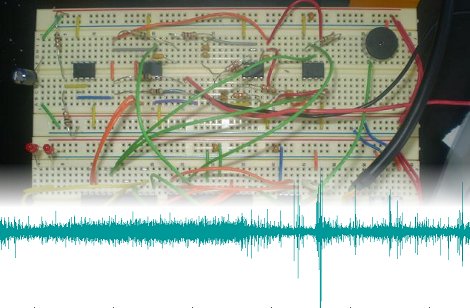
When we saw [merkz] use of an Arduino to produce lucid dreaming we were quite shocked. Unlike typical setups that just flash a light through sleep, his system monitors eye movement through electrodes and is able to send the data to a computer for graphing and analyzing.  The only problem being we couldn’t find a circuit diagram or code.

Not ones to be shot down so quickly, a Google revealed this thread on making ‘Dream Goggles’, which was really a Brain-Wave Machine based on the parallel port. Some modifications of an ECG collector’s electrodes using sound cards, and you could have your own lucid dreaming.

[Thanks Phil]

Cooling LEDs By Heating The Water Saves On Electricity

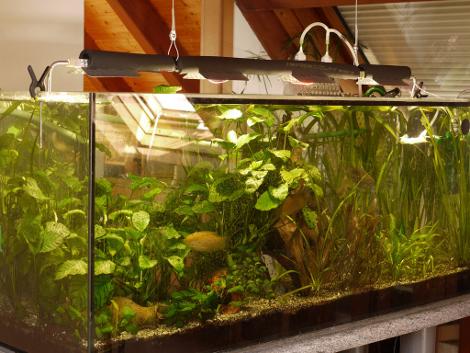
[Matthias] swapped out his twin-tube florescent aquarium lights for LEDs. By running tank water through the aluminum LED mounts he’s transferring excess heat into the water in the tank, in turn saving some of the electricity that would have been used to heat the tank. Couple this with roughly 35 Watts saved by moving away from fluorescent tubes and he’s got a great energy-saving hack. The LEDs used in the last aquarium light conversion were cooled by heat sinks and fans. We’d love to see this concept incorporated into that design.