Control Media Center With Programmable IR Receiver

This IR receiver based on ATtiny13 microcontroller is used to control a Media Center box via a remote. The circuit is powered by 20 pin ATX connector pin 9 “+5VSB” because it is the only pin that is powered when the computer is off, or in standby. The receiver is programmed to accept the codes from the remote by holding down the switch while pressing the remote button. The circuit can use “Girder” or “PC remote control” as controlling software on the Media Center.
How-To: Web Server On A Business Card (Part 1)

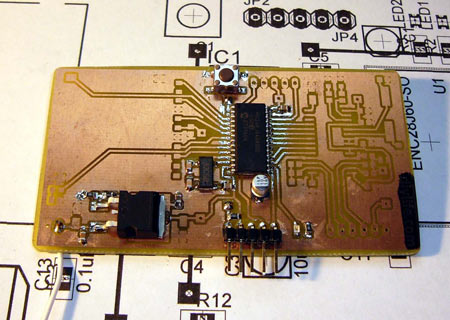
For years, Microchip PIC microcontrollers dominated; PIC16F84 hacks and projects are everywhere. The 8-bit 16F and 18F lines are supported by several coding environments and easy-to-build serial port programmers. Microchip’s 16-bit PIC24F is cheaper, faster, and easier to work with, but largely absent from hacks and projects.

We recently used a Microchip PIC24F microcontroller in a mini web server project, but didn’t find many introductory references to link to. In this article we’ll cover some PIC 24F basics: support circuitry and programming options. We’ll also talk about our favorite features, and how we figured them out. Our next article will outline a web server on a business card based on the PIC 24F.

Continue reading “How-To: Web Server On A Business Card (Part 1)”

PIC Based Boiler Controller


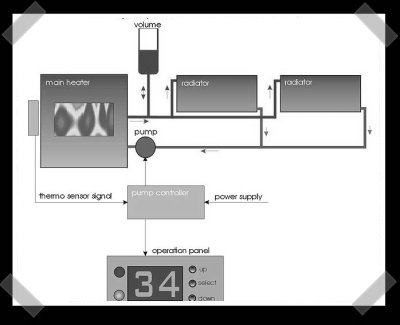
We’re used to central A/C, so we were surprised by this PIC controller based heater controller. It’s based around a pump controlled boiler/radiator system. A PIC 16F84 is used to input the set point and control a pump to circulate the heated water as needed. You can grab full schematics on the project page.

Update: We added a screen capture of the schematic after the break since the site keeled over.

Continue reading “PIC Based Boiler Controller”

Breath Controlled LED Candles


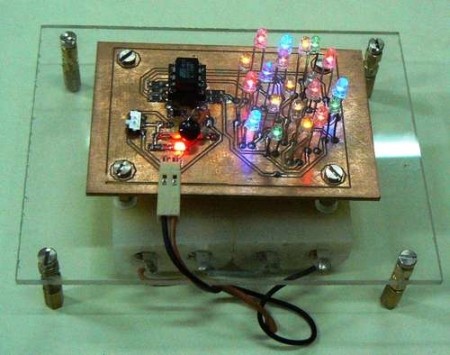
Instructables user [cedtlab] has posted an interesting LED project that simulates birthday candles. The circuit runs on an AVR ATTiny45, and is powered by 4 AA or AAA batteries. By using a Charliplexing technique, they are able to drive all 20 LEDs with only 5 pins of the ATTiny. A thermistor is used for detecting breath by measuring temperature changes, and then blocks of LEDs turn off depending on the change detected. They have provided schematics and source code for everything. Make sure to check out the video of the “ficticious birthday party” after the break.

Continue reading “Breath Controlled LED Candles”

DuinoStamp


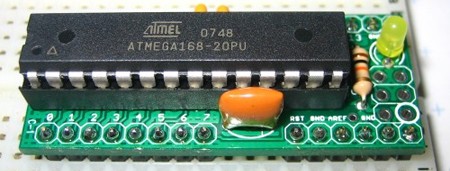
We think that in honor of the DuinoStamp’s small size and big power, the post about it should also be small and powerful. About the size of 34-pin DIP, the DuinoStamp is a breakout board that fits in DIP sockets and is Arduino compatible. It features an ATmega 168-20PU chip, a 16MHz resonator, decoupling capacitors and more. It doesn’t come with the necessary 5V power supply or any kind of interface cable, but what do you expect for under $10?

Arduino Environment On ATmega644

Our friend [Zach Hoeken] at NYC Resistor is porting the Arduino environment to an ATmega644 chip. This doesn’t really add new functionality to the ATmega644 as it is already fully programmable, but it does add a user-friendly and familiar environment to the ATmega, allowing users to build their Arduino-based projects with more powerful hardware. The ATmega is, after all, the biggest DIP package AVR makes, featuring 64k flash and 4k RAM (both four times as much as an Arduino) and 32 I/O pins, which is 12 more than an Arduino. The video is only proof of concept, so we will let you know when [Zach] releases more details.

[via NYC Resistor]

Tom’s RGB Mood Lamp


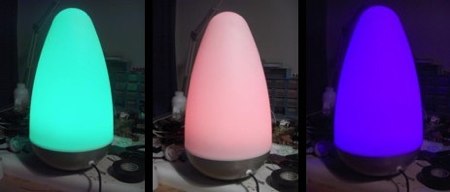
[Tom] has been refining a board that drives a high power RGB LED for applications like this moodlight. It’s based around an ATmega8 microcontroller. The goal was to make an RGB LED easy to work with: It can cycle between colors in standalone mode. You can control it via a serial interface. It also has a pin header to hooking up three potentiometers for manual color mixing. Boards aren’t available yet, but he’s already posted a build tutorial. The board looks straightforward enough that it shouldn’t be too hard to layout if you really want to.