Five Concept Mice Add Multi-touch Control

[youtube=http://www.youtube.com/watch?v=SLw1MXTDlAE]

Microsoft is showing off five concepts for added mouse functionality. All of them seek to replace traditional move-and-click with touch sensitivity through either capacitive sensing, video recognition, sensor articulation, or laser scanning. We’re excited about the prospects of some of these features but at the same time wonder what this does to the price of this much-abused peripheral. After the break we’ll touch on each of the devices, along with time references for the video embedded above. Continue reading “Five Concept Mice Add Multi-touch Control”

Microsoft Unveils Open Source Multi Core OS

group (Custom)

A new operating system, code named Barrelfish is being developed by Microsoft research labs and ETH Zurich in Switzerland. This operating system is being built with multi core operations foremost in priority. It is supposed to be extremely scalable and able to function on a very wide range of hardware. You can download the current snapshot of it on their site and dig into the source code, released under a 3-clause BSD style license. If you would like to learn the primary differences between this OS and Windows or Linux, you can read this PDF.

[via Engadget]

Zune HD Teardown

dfkaj

Our friends over at ifixit are at it again, how they get these devices so early before release and make a complete teardown in time still amazes us. Today they bring us the latest Microsoft media device, the Zune HD. Some features worth mentioning: The astoundingly thin, 1mm we’re talking, OLED screen. The Nvidia Tegra 2600 processor, hinting at 3D game capability. And finally who could forget the 660 mAh battery. But isn’t that 129 mAh less than the iPod touch? Microsoft’s reply, supposedly the Zune HD is using many more low power hardware solutions in this device. Either way, the competition is on, who will be the victor?

CableCard Card Tuners On The Way

cablecard

We were momentarily excited when we heard that CableCARD compatible tuners will be available for purchase by the end of the year. A card like this would allow you to hook up your digital cable to your computer and record programs natively. This has been possible for a long time with analog cable and PVR software such as MythTV. Up to this point, recording digital cable has required a dedicated cable box and workarounds to allow the computer to change channels.

Wait a minute though, the announcement was made by Microsoft? Indeed. Microsoft has been making a big push into the home theater PC market with Media Center. Redmond’s PVR offering is also limited to recording analog television;opening up digital would expand the marketplace for them. But here’s where it gets hairy: if you read the Microsoft announcement, TV shows flagged as CF (copy freely) are the only ones that can be recorded.

So, if we have this right:  you shell out money for a new tuner then you pay more for the rental of the CableCARD. Both of these expenditures are on top of a digital cable subscription. And yet you can only record shows marked with a “Copy Freely” flag. Who makes the decision on which shows we can pay to record?

Cain And Abel: Windows Password Recovery Utility

cain

As far as password recovery utilities go, Cain & Abel is by far one of the best out there. It’s designed to run on Microsoft Windows 2000/XP/Vista but has methods to recover passwords for other systems. It is able to find passwords in the local cache, decode scrambled passwords, find wireless network keys or use brute-force and dictionary attacks. For recovering passwords on other systems Cain & Abel has the ability to sniff the local network for passwords transmitted via HTTP/HTTPS, POP3, IMAP, SMTP and much more. We think it is quite possibly one of the best utilities to have as a system administrator, and definitely a must have for your toolbox.

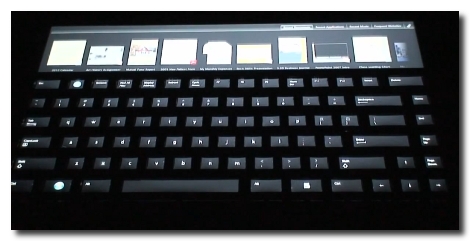
Pressure Sensitive Keyboard

[youtube=http://www.youtube.com/watch?v=PDI8eYIASf0]

The Applied Sciences group in Microsoft Hardware have come up with an interesting tool. This is a pressure sensitive keyboard. Our minds went strait to gaming, as theirs did too apparently. They show how this could give you more control in your games based on how hard you push the button. Remember the first time you got to use an analog stick, it sure is hard to go back to a D-pad. We want to know when we’ll get to play with these cool toys made by Microsoft.

Augmented Network Interfaces

agarwal-nsdi09-somniloquypdf-page-7-of-16

Here’s an interesting bit of research to come out of Microsoft and UCSD. The Somniloquy project is a new type of network interface. It’s a USB device that allows a computer to continue network communications after being put to sleep. By offloading these tasks, machines that would normally stay awake for RDP and file transfers are only powered up when absolutely necessary. The device uses a Gumstix board like the one used in the Tor hardware adapter. The device pictured above has two USB interfaces, but the second is just for debugging and not needed for proper operation. The board runs BSD and creates a USBNet bridge to the Vista host. When the host daemon detects the computer going to sleep, it hands off active communication to the gumstix. They developed “stub” applications to handle the various types of communication. For downloads, they used wget to download only the portion of the data that was still left. For bittorrent, they customized the command line client ctorrent to manage the download. Both programs wake up the PC upon completion and transfer the file off of the SD card.

[via Engadget]