Receipt Racer Wastes A Lot Of Paper

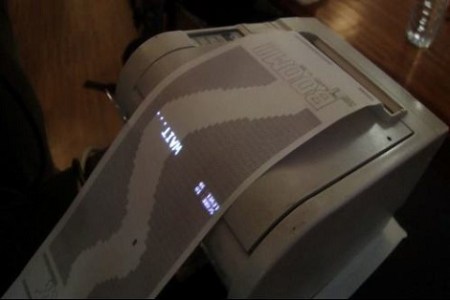
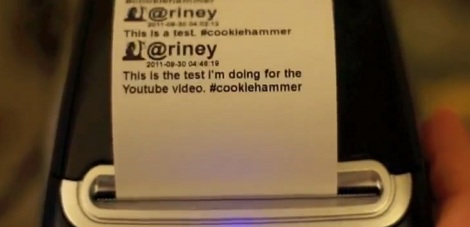
[Joshua Nobel] and the team at undef came up with a receipt printer game for the OFFF 2011 festival in Barcelona.

The game is a small openFrameworks app that prints a maze on a thermal printer. A ‘car’ is guided through the maze with input taken from a DualShock 3 controller. The game is limited to a maximum distance of 50 meters, the length of the roll of paper. We wondered about the waste of paper this would be until undef pointed out, “ecologically it’s pretty much a disaster, just like any real car.”

The undef team tried to use the printer for the entire visual representation of the game but that didn’t quite work out until [Joshua Noble] came up with a ‘beamer’ to project the car and score onto the paper. We’re not quite sure what the ‘beamer’ is, but everything syncs up and the resulting game is quite nice.

The game itself reminds us of a certain flash game, but that can’t be where the original idea came from. Check out the Receipt Racer gameplay video after the break.

Continue reading “Receipt Racer Wastes A Lot Of Paper”

DIY Inkjet Printer Begs To Be Hacked

diy_inkjet

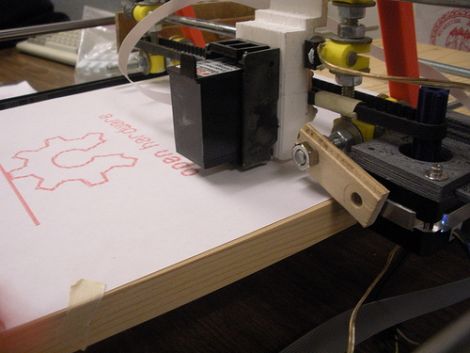
[Nicholas C Lewis, Patrick Hannan, Jared Knutzen, and Joy Markham], students from the University of Washington, have recently taken the wraps off a project which they have been collaborating on, a DIY inkjet printer. The group set out to construct a low cost, open source inkjet printer for personal use that utilizes standard inkjet technology. Their working prototype, pictured above, satisfies all of those requirements, making it an ideal device for the at-home hobbyist.

The printer was constructed from easy to obtain components such as steel rods and stepper motors, along with other parts that can be printed using a RepRap or similar machine. An Arduino Mega manages the steppers and repurposed print head, recreating whatever Processing-generated image it has been given.

The printer is quite a hit so far, and people are already talking about adapting the design to print on spherical objects (think EggBot), to create direct etch resist PCBs, and more. We think it would make a great direct to garment printer with just a few small tweaks.

Check out the short video embedded below to see the printer in action.

[via Make]

Continue reading “DIY Inkjet Printer Begs To Be Hacked”

Xerox Phaser Drum Unit Hacked, Lives To Print Another Day

Faced with a printer that would stop printing for no apparent reason, Finnish pirate and hacker [Janne] decided he had had enough. After doing a bit of research, he disassembled the drum assembly and replaced some components. The end result? Supposedly ‘broken’ printers started working again.

Continue reading “Xerox Phaser Drum Unit Hacked, Lives To Print Another Day”

knex_plotter

K’nex Whiteboard Plotter

[Jerry] has been wanting to put together a whiteboard plotter for some time and just recently got around to building one.

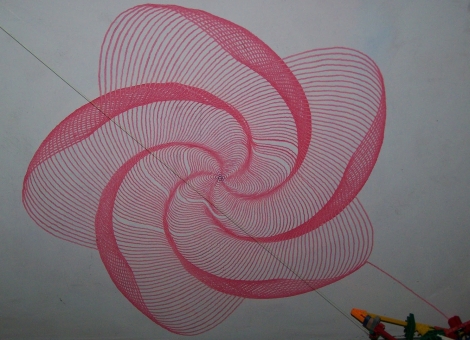
The plotter draws pretty much about anything he can imagine on a white board measuring just shy of 2′ x 3′. The design first started off with a Basic Stamp board at the helm, which he sourced from another project he no longer had any use for. The Stamp worked for awhile, but eventually he ran into problems due to the board’s limited 128 bytes of program space. Needing a more robust micro controller, he switched to an Arduino mid-project, which he says runs the plotter far faster than the Stamp ever did.

The plotter uses a pair of stepper motors mounted on a horizontal platform situated above the whiteboard. Much like this large-format printer we featured earlier this week, the steppers vary the length of a pair of fishing lines, moving the pen precisely across the board.  As you can see in the image above, [Jerry] has been able to create some pretty intricate patterns with his plotter, and we imagine they will only get better with more refinement.

Be sure to check out his site for more details on his build process as well as several additional samples of the plotter’s capabilities.

Redeye Printer Interface

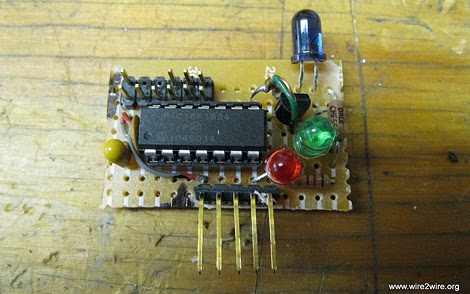
This handy printer interface started out as a request on our very own forums when forum member [victorf] needed some output via thermal printers. He had scored a number of HP82240B thermal printers intended for use with HP calculators, but of course they used the somewhat arcane HP protocol first drafted in the 1960’s and needed some help.

Fellow forum member [wireb] started to look into it, found out it uses a standard 32KHz carrier signal, and started asking questions about its use. Grabbing a pdf of the manual he was able to find out all the details to what the printer was expecting in the form of communications.

After a few weeks, [wireb] was able to make a convenient, logic level serial to HP-IR adapter based around a PIC16F1824 who’s firmware supports 9600 8N1 or 2400 8N1 speeds, ASCII text, and the printer’s “advanced” graphical modes via escape sequences.

If you have not checked out our forums yet we suggest you do!

Hackaday Links: March 27, 2011

Magnified glasses

A late hacking session, and parts-on-hand came together as the inspiration for [BadWolf’s] magnified glasses with LED lighting.

Pendulum Printer

This orb, when swung like a pendulum, prints images by dropping ink out the bottom. A processing sketch works in conjuction with a Wii Remote and an IR LED in the orb to sense when the print head is in just the right position for dispensing ink.

ITead PCB fab house tips and tricks

[Flemming] uses a PCB fab house called ITead Studio. We hadn’t heard of it before but if you consider giving it a try make sure you look over his tips and tricks about the service before submitting your designs.

Katamari Bookmarklet

[Spi] wrote in to let us know about this Java Bookmarklet he came across that lets you turn any webpage into a Katamari Damacy level. It’s a pretty clever bit of code.

Color-picker pen

Here’s a pen concept inspired by Photoshop. On one end there’s a scanner that lets you pick your color from any physical object. Then just turn it around and write with the exact same color. Now go out and make this reality! [Thanks Frank]

Direct To PCB Resist Printing Requires Minimal Additional Components

epson_inkjet

Printing PCBs using the toner transfer method works pretty well, but there are some downsides, such as incomplete trace transfers and the like. HackHut user [rucalgary] decided to go the inkjet route instead, and picked up an Epson printer on clearance at his local electronics shop. This method is not new by any means, but his printer conversion is one of the simplest we’ve seen as it does not rely on any additional sensors to function.

Once he got home, he tore the printer down immediately, removing the paper input and output trays as well as the scanner bed. After all of the extraneous parts were removed, he got to work raising up the printer head, as well as the printer head rest mechanism. He mentions that the latter component is absolutely crucial to proper functionality down the line. Once the print head and its associated components were relocated, he added a pair of aluminum rails for feeding his print tray into the machine.

With everything complete, he filled up a spare cartridge with ink (he says that MISPRO yellow works best) and ran some test boards through. He is quite pleased with how things turned out, and is more than happy to give you a quick tour of his completed printer via the video below.

Continue reading “Direct To PCB Resist Printing Requires Minimal Additional Components”