Wireless RGB Light Bulb

img_3953

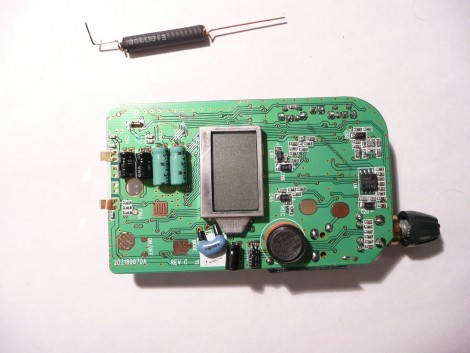
Want to make the above yourself? [Sprite_tm] did a thorough job documenting the build step by step (complete with pics, schematics, graphs, and links to the parts used). In summary, [Sprite_tm] busted open an Ikea CFL bulb to reuse the housing. Inside, he installed a scavenged power supply, ATtiny44, RGB LED module, and a radio receiver. A remote control allows [Sprite_tm] to change the lighting of his room to nearly any color. The cost of the project is a little under $30. The price tag isn’t so steep when one considers the insanely long lifetime of LEDs.

Hard Rock Radio

rock_radio

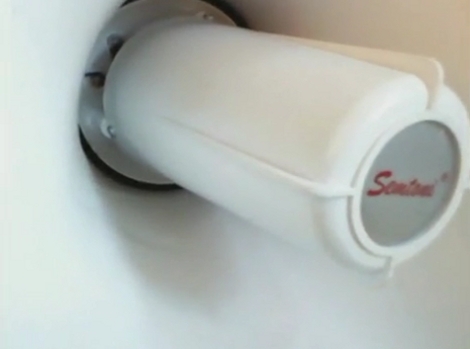
[Guus] sent in his project where he put a radio inside of a rock. He started with a 1970’s car stereo and encapsulated it in cement by wrapping it in duct tape, building a wooden form around it, and pouring in the wet cement. Three ports are included on the back for power, antennae, and speaker. He included an outline of how he did this but we’d love to hear some tips on how he made it look like a rock and not just a brick of concrete.

Homemade Regenerative Tube Radio

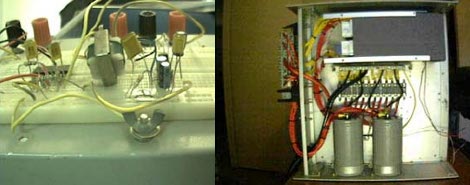
There are no microcontrollers in this project. In fact you wont find a single transistor. This classic regenerative tube radio, modeled after an early 20th century homebrew is complete with schematic and additional photos. For those who are not familiar with tube designs and for simplicity, the regeneration circuit can be thought of as feedback though this relation may be argued. Read the rest after the break which includes a crash course in tube operation. Continue reading “Homemade Regenerative Tube Radio”

Lego Modded Antenna Tuner

legomoddedtunner

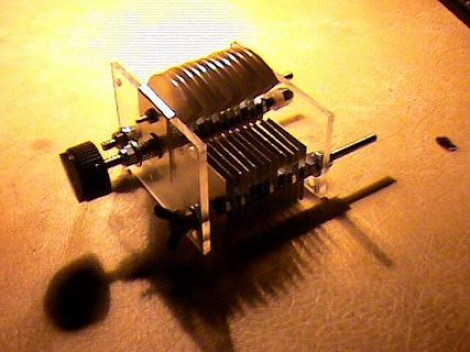
This antenna tuner is controlled remotely using geared motors and legos. The tuner needed to be closer to the antenna for performance reasons. This created a problem; most of the radio gear is inside while the tuner is outside. The gear motors and Legos combine to form a closed loop servo, operating two air core caps and an inductor switch. A control box placed near the radio is hard wired to the modded tuner outside. We would like to see something like this under gesture control using the Wii MotionPlus + Arduino.

WSPRing Across The Atlantic

wspr

Host of the Soldersmoke podcast, [Bill Meara], contributed this guest post.

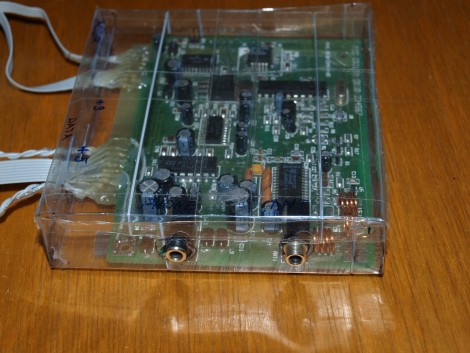
WSPR is a new communications protocol written by radio amateur and Nobel Prize winner [Joe Taylor]. Like the very slow QRSS system described in a previous post, WSPR (Weak Signal Propagation Reporter) trades speed for bandwidth and allows for the reception of signals that are far below the level of radio noise. WSPR takes “low and slow” communications several important steps ahead, featuring strong error correction, high reliability, and (and this is really fun part) the automatic uploading (via the net) of reception reports — [Taylor]’s WSPR web page constantly gathers reports and produces near real-time Google maps of showing who is hearing who. The WSPR mode is very hack-able: [Bill Meara] is running a 20 milliwatt homebrew transmitter from Rome, Italy that features an audio amplifier from a defunct computer speaker pictured below. This contraption recently crossed the Atlantic and was picked up by the Princeton, New Jersey receiving station of WSPR’s esteemed creator, [Joe Taylor]. Continue reading “WSPRing Across The Atlantic”

WiFi Streaming Radio Update

[flickr video=3238566442]

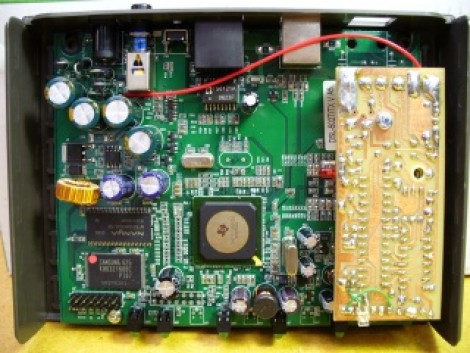
Since our last post about his WiFi Streaming Radio Project, [Jeff] has been hard at work to release part 8 of the project where he adds tuning control to the radio. Interestingly enough, the addition of the tuning control only requires a potentiometer and the completed AVR LCD board from part 7. After wiring the potentiometer to the analog to digital converter on the AVR and adding a few lines of code, the radio can now be tuned quickly and easily. In addition to thoroughly explaining the hardware changes, [Jeff] details the configuration changes required to the OpenWRT framework so that bidirectional communication between the router and AVR is possible, allowing the tuner to function properly. Be sure to check out the video above to see the tuner in action.

Hack A Walkie Talkie For Music

radio1

[nepheron] shows us how he hacked his walkie talkie to broadcast music. While using this to broadcast music is possibly illegal, it could be used to make actual upgrades to your system as well. He has replaced the microphone input with a headphone cable and extended the antenna. It is only mono, and he states it will only run for a minute before shutting off, so there is definitely room for improvement.