Passive Network Tap

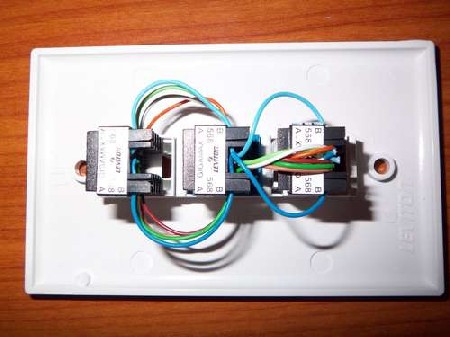
Making a passive network tap can be an easy and inexpensive undertaking as shown in this Instructable. Passive monitoring or port mirroring is needed because most networks use switches which isolate the network traffic and this does not allow for the entire network to be monitored.  This example uses a single tap, using multiple taps will provide access to the full-duplex data separately. By using two taps you are able to monitor inbound data that is passed through one tap, and outbound data that is passed through the other tap.  Separate taps are desired because most sniffer software handles half-duplex traffic only and requires two network cards for full-duplex.

Continue reading “Passive Network Tap”

PC Stands For “Patriotic Computer”

[vimeo http://vimeo.com/1709336%5D

On the seventh anniversary of the events of September 11, 2001, it’s important to reflect on patriotism, nationalism, and responsibility to your country and motherland. This USB memorial lets us think about our contributions to our great nation. Or it’s just a tribute to misguided nationalism and capitalism via insipid flag waving. Instructions are available at Instructables.

[via F.A.T.]

Monster Truck Lawn Mower


It’s no secret that we’re gear heads at heart. Our transportation hacks category is full of unfortunate machinery like [Steven Laurie]’s motor art, weed whacker bikes, and electric motorcycles of all types. Even we have trouble justifying the existence of this monster truck style lawn tractor though. We haven’t found a project site for it and can’t help but wonder what kind of person would build such a thing? It’s obviously the type that would own a car sized American flag. We just need to realize with the popularity of lawn mower racing, this sort of thing was bound to happen.

[via Toolmonger]

Waterproof IPod Touch Video Boombox


Popular Mechanics contributor [Anthony Veducci] wanted a virtually indestructible video player that he could use anywhere. Not finding a commercial solution, he decided to build his own. He already had a large waterproof case and another for the iPod Touch. The 8″ display came from an iPod accessory. Unfortunately it was developed before Apple implemented their stupid accessory locking, so he had to use an Apple approved video cable through several adapters to get it to work. The speakers were also salvaged parts. The case was assembled using a jigsaw and a whole lot of epoxy. The speaker openings are covered with latex from a pair of gloves and everything is sealed with silicone. We’re usually trying to escape technology when we head outside, but we’ll be looking back at this the next time we need to ruggedize something.

[via Gizmodo]

SIGGRAPH 2008: The Quest For More Pixels


Long before we started reporting on [Dan Kaminsky]’s DNS chicanery, he contributed a guest post about one of our favorite sources of new technology: SIGGRAPH. The stars have aligned again and we’re happy to bring you his analysis of this year’s convention. [photo: Phong Nguyen]

So, last week, I had the pleasure of being stabbed, scanned, physically simulated, and synthetically defocused. Clearly, I must have been at SIGGRAPH 2008, the world’s biggest computer graphics conference. While it usually conflicts with Black Hat, this year I actually got to stop by, though a bit of a cold kept me from enjoying as much of it as I’d have liked. Still, I did get to walk the exhibition floor, and the papers (and videos) are all online, so I do get to write this (blissfully DNS and security unrelated) report.

Continue reading “SIGGRAPH 2008: The Quest For More Pixels”