Flickr photo bike

posted Sep 15th 2008 5:19pm by
filed under: cellphones hacks, digital cameras hacks, transportation hacks

Lifehacker’s [Gina Trapani] has one of Flickr’s photo bikes and wrote up how it works. As you ride, the bike automatically takes photographs, geotags them, and uploads them to Flickr. The handlebar unit contains a Nokia N95 cellphone. The rear is a solar powered charging unit. It has a custom python script that starts the photo taking sequence when it detects the bike is in motion using the phone’s accelerometer.

Most of the engineering seems to be for usability’s sake. We’re guessing they probably wanted to disguise that they’re bolting a $600 cellphone to a bike as well. Out of the box the Nokia N95 already does almost everything required. It has a 5 megapixel camera with an interval timer that can vary from 10 seconds to 30 minutes. It supports Flickr uploading, but with software like ShoZu you can streamline the geotagging and make all uploads automatic. Just build a solid mount for your N95 and you’ve pretty much got it, and when you park your bike you can take the phone with you.

Solder paste fridge

posted Jul 28th 2008 4:05am by
filed under: misc hacks, tool hacks


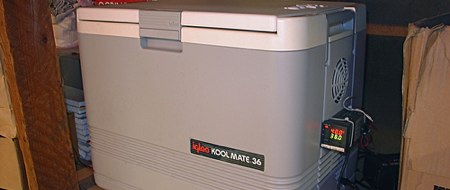
MightyOhm’s laboratories have recently decided to start tackling more surface mount work. As part of this upgrade to SMD hot air reflow stations, they’re handling a lot of solder paste. Solder paste is happy at less than 50degF and above freezing, and [Jeff] didn’t want to chance that lead infiltrating his Manwich, so he built this solder paste fridge. The main unit is a standard 12V peltier based travel cooler. He attached a surplus PID controller with a K-type thermocouple to maintain the temperature while preventing the cooler from being always on. The only adjustment he really had to make was adding a bleed resistor to force the MOSFET to turn off. You can find more pictures of his project on Flickr.


Nokia color LCD Flickr frame

posted Jun 16th 2008 11:40am by
filed under: cellphones hacks


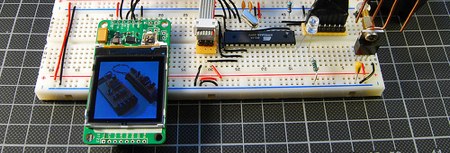
Tinkerlog got their hands on a color LCD from SparkFun and set it up to receive images from Flickr. These color LCDs are 128×128 pixel and the include a breakout board with a separate power supply for the backlight. Communication is via a three wire SPI bus plus a reset line. [Alex] used an ATmega48 for control, which is connected to the computer using an RS232 to USB converter. The wiring schematic is here.

For the software side of things, he adapted Sparkfun’s example ATmega8 code for the microcontroller (he couldn’t get the Arduino code to work). Beej’s Python Flickr API was used to grab the images. The Python Imaging Library converted them, and finally, they were sent to the display using pySerial. SparkFun has been offering these displays for quite some time; it’s good to see a quality writeup of one in use.

[via Make Flickr Pool]

Stabilized video collages

posted Jun 12th 2008 2:00pm by
filed under: digital cameras hacks


This is some beautiful work. The clip features multiple video streams stabilized and then assembled into a whole. First, [ibftp] used the “Stabilize” feature in Motion 3 (part of Apple’s Final Cut Studio 2) to remove the camera shake from the clips. Then he was able to blend the videos with “fusion” set to “multiplication”. If you’ve got access to the tools, this shouldn’t be too hard to do yourself. We’re certain someone in SIGGRAPH is already attempting to do the same thing live. If you want to see image stabilization really making a difference, have a look at the stabilized version of the Zapruder film embedded below.

Read the rest of this entry »

Hack a Day serves up fresh hacks each day, every day from around the web as well as hacking related news.

Send us your hacks


Hacks

Resources