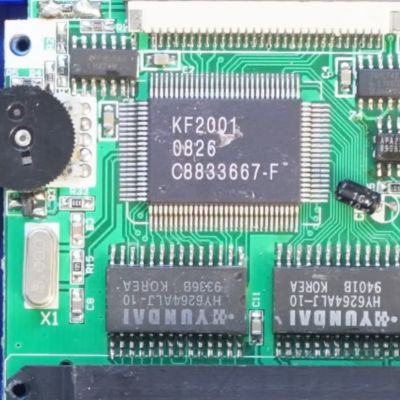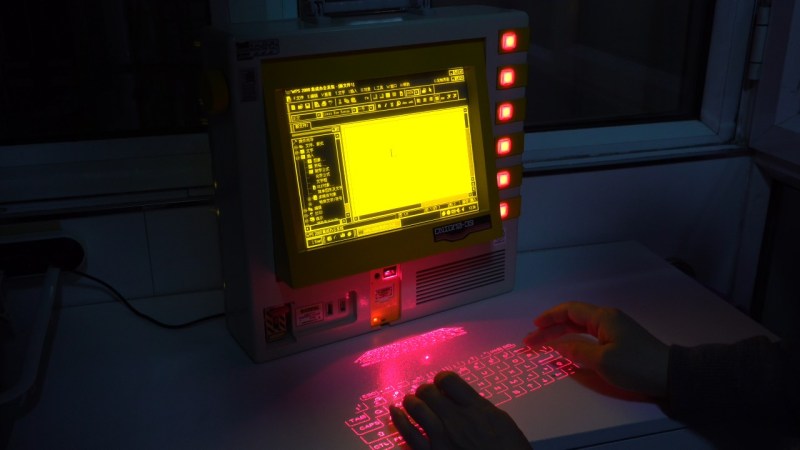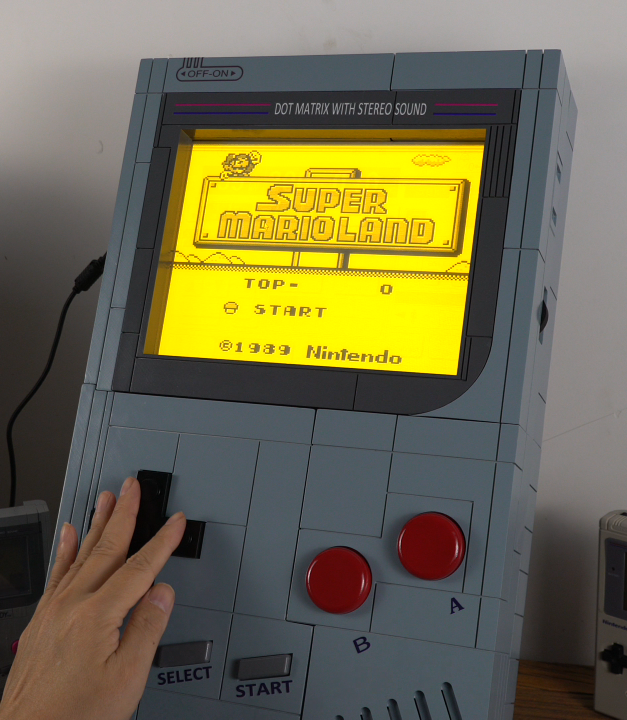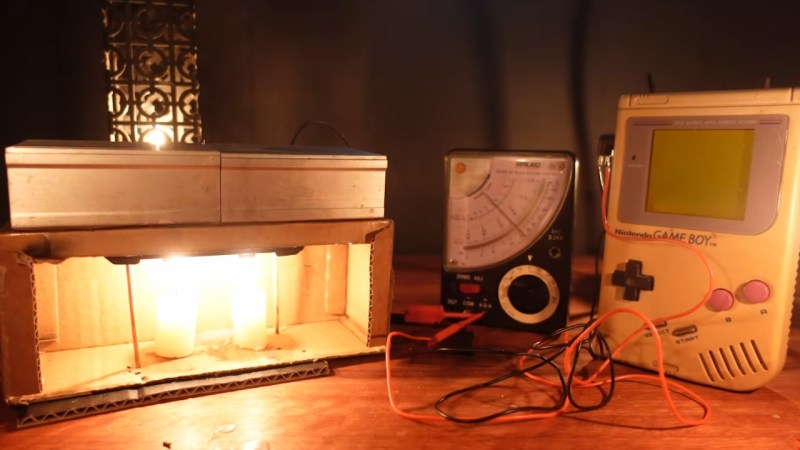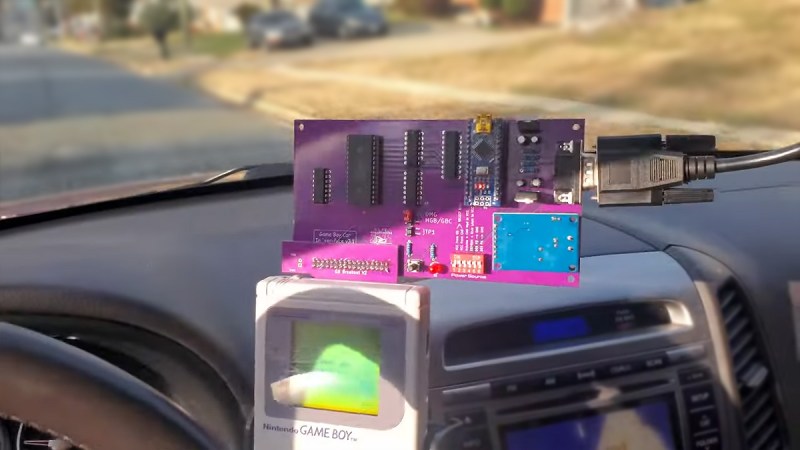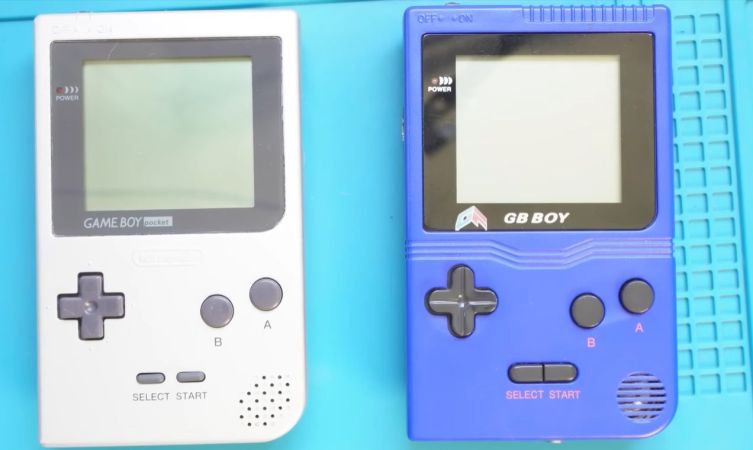
In honor of Gameboy’s 20th birthday, Stupidinventions has released a video showing how to replace the screen. They tend to be a common weak point. Essentially, they just bought another , we’re assuming broken, Gameboy and swapped them out. Not a horribly complicated hack, but nice to know that it’s so easy. We have fond memories of the Gameboy, which came flooding back when he blew in the cartridge. Happy Birthday Gameboy.
[palmertech] and [Bibin] have both completed backlight projects for the Game Boy Pocket recently. The most difficult part of the transplant is carefully removing the reflective backing on the LCD. After a thorough cleaning, a diffuser and backlight panel were added. [palmertech] used a backlight salvaged from a DS, while [Bibin] built his own using LEDs. You can see his backlight in the video embedded below. There’s a disassembly video too.
Here is a video of a GameBoy Color being played on an LED matrix. He has built it up to 140×140 LEDs so far and it seems to be going well. He needs to add the final 20 LEDs to get the 160×140 resolution of the GameBoy. He notes in the comments that he had some problems with dead LEDs in the boards he got from eBay. Trying to remove the dead LED with a hot air rework station resulted in massive damage to the board. At one point he says that the power consumption is 1KW when showing all white. Wow, that’s a drain.
[Kevtris] gave us some more info in the comments with a link to the build pictures in his blog.
[Mark] had a broken TI-83 graphing calculator and an overwhelming urge to play Pokemon in math class. The solution to his predicament, obviously, is to hack a GameBoy color into the body of his TI-83. He gutted the calculator and connected the front buttons to the contacts on the GameBoy. After some cramming and taping bits together, he got it all working. Now he just needs to find a way to make the cartridge a little bit less conspicuous.
For roughly $250, you too can have this sweet bit of gadgetry based off of the Arduino platform. It is open source, and has some pretty impressive specs. Sporting a rumble pack, lithium ion battery, OLED display, and space for expanson. You can buy the pieces pre assembled, or as a kit. If you get the kit, you’ll see that the controller board has been laid out so that you can solder your buttons and joystick in as either left handed or right handed. The only problem? No games yet.
[Bacteria] sent us this sweet video of the Multi Platform Plug’n'Play system running his new GameBoy Advance module. He’s made an addon for his unit that allows him to play his GameBoy Advance cartridges as well as GameBoy ones. Watch the vid for the details and some views of the insides.
Reader [John Grayson], known for his multiconsole portable, has constructed a brand new portable. Not liking the controls or the tethered nature of retro TV games he decided to build a modular portable system. He built a custom system that uses cartridges created from TV game systems. The device has a 5.4″ screen and two Canon batteries for 4.5 hours of play.
Pitchfork.tv is showing the documentary Blip Festival: Reformat the Planet for one week only. The Blip Festival is an annual chiptune event in New York City featuring musicians who use video game consoles as part of their production. The documentary has a ton of artist interviews and music from all across the spectrum. Most of the initial featured artists are using the Game Boy LSDJ tracker cartridge. [Nullsleep] has put together a tutorial for the device. You’ll see a lot of other old hardware and hear discussions of coveted mods like adding backlights as well. [Mark Denardo] is shown using a PSP as part of his performance. Other people are using software like Fruity Loops to build tracks with Nintendo samples. Honestly, our favorite part was a clip of the loud objects doing a live soldering circuit bending performance on top of an overhead projector at the Bent Festival. Although not musical, Element Labs’ Versa TILE makes a fairly mesmerizing backdrop throughout the film too. You can find links to all the featured artists on last year’s festival page.
Fresh off the tips line, [Jake] sent in his portable NES project. We’ve seen quite a few portables, but we love that the entire thing is built into an old NES cartridge. It’s got 99 games and some clever control placement. Three N cells nestled in the former connector slot power the system. You can see more pic over at [Ben Heck]’s forum.
The fine folks at remaincalm.org, who brought you the wireless mcu controller dsmcu, have put together a list of 24 homebrew music apps for the Nintendo DS. We’ve mentioned programs like Protein[DS] before, but the list has others like this monome emulator. If you notice anything they’re missing, let them know and they’ll be sure to add it in.
This is a video of [Joey Mariano] from animal style demoing his Game Boy pedal board. He added a D15 port to the back of the Game Boy, which is wired to each of the 8 buttons. The port is connected to a breakout box for 8 piano sustain pedals. The box also provides power to the Game Boy. The Game Boy is running the Nanoloop step sequencer. If you’re wondering about the guitar sound, he’s probably using an 8-Bit Fuzz pedal.
Yesterday, I was standing on a tropical island off the coast of Belize. Vacation rocked with lots of SCUBA diving, spearfishing and snorkeling. I’m back home, shaking off the jet lag and clearing up my inbox. Thanks to [fabienne] for filling in and letting me unplug for a while!
[Darkrom] has set a new standard for Hack-A-Day readers… I haven’t seen it in person, but that looks like a legit Hack-A-Day tattoo.
[null] sent in a new use for a frequency generator, a spare car amp, a sub-woofer and a plastic coffee can – brass cartridge polishing.
[LoopyMind] sent in this Game Boy Advanced Movie Player IDE hack. It’s pretty much a direct CF to laptop drive cable with an external battery supply.
[Dingolishious] sent in a POE UPS/remote power control solution. Could be handy if you’re using many POE devices, or if you’re having power issues. He added an inexpensive remote power monitor/switch solution behind his UPS. It senses power outages and kicks out an email – and allows remote power cycling of his POE devices. Of course, if you’ve got a linux box behind the UPS, it can monitor the output from the UPS and send notifications.
[William] added a preamp stage to his iKEY usb recorder. looks like an interesting toy – it’ll record audio directly to a USB flash key. The pre-amp allows him to record in more challenging environments.
[Andrew] noted a simple mod to increase the deadly fire power of the ubiquitous airsoft pellet gun. It’s just a matter of reducing some extra space in the spring compression area.
Last but not least, [VIPER] modded his projector to use a 12v halogen headlight bulb. Not a bad idea – at one point I was pondering a 550 watt source four halogen as a possible replacement.
[Jowan] sent in this excellent gameboy cartridge hack. The cartridge contains 1MB of flash and an 8 bit serial I/O interface. He’s using it to play percussion with some solenoids and a custom rom. If you guys like it, he might be convinced to put together a how-to on hacking the cartridge.